the elastic ruler
Montreal session
about this contribution
Measurement is always a fiction from the metaphysical point of view.
(Stengers 2010, 100).
We do not have units (unités) of measure, only multiplicities or varieties of measurement.
(Deleuze and Guattari 1987, 8).
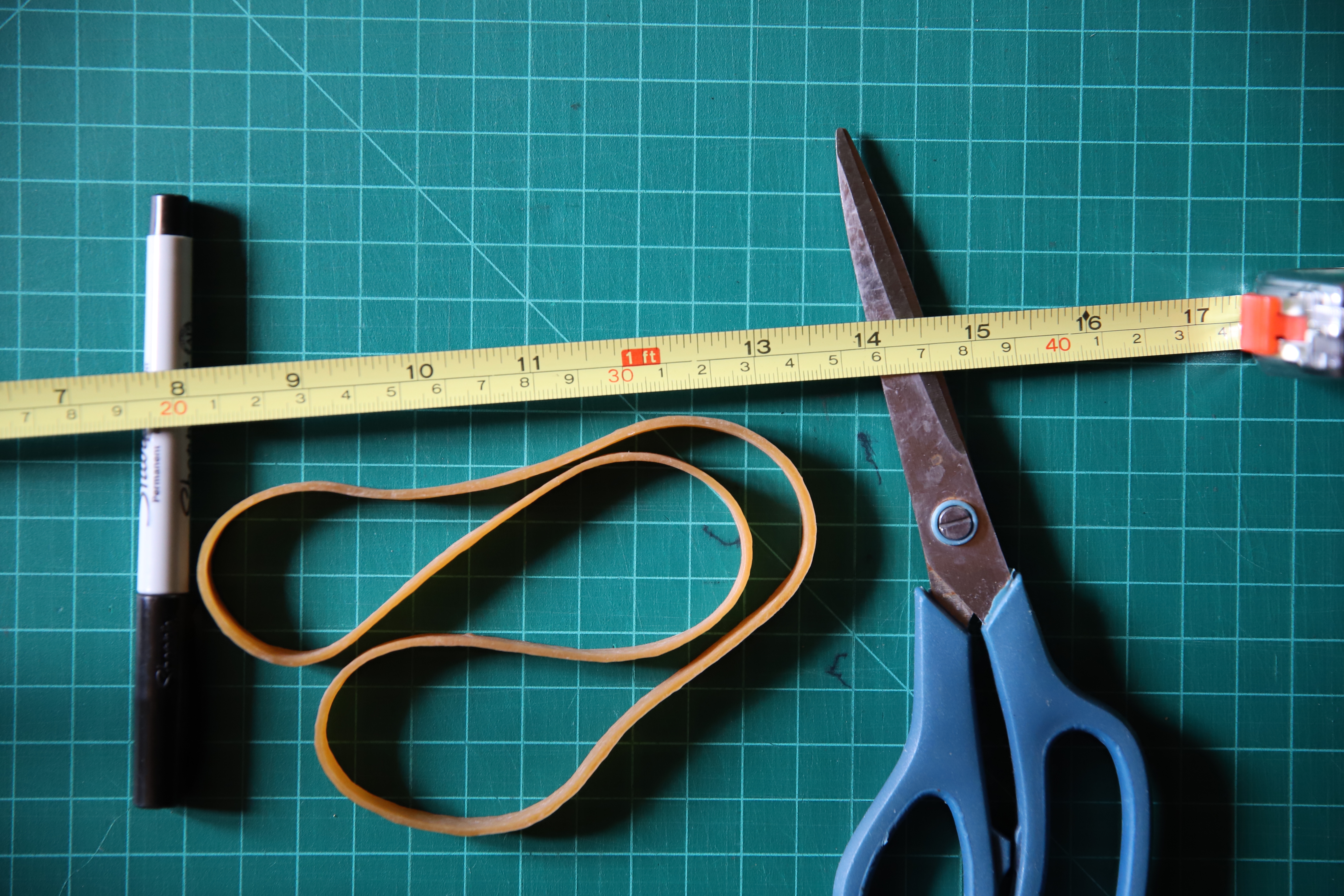
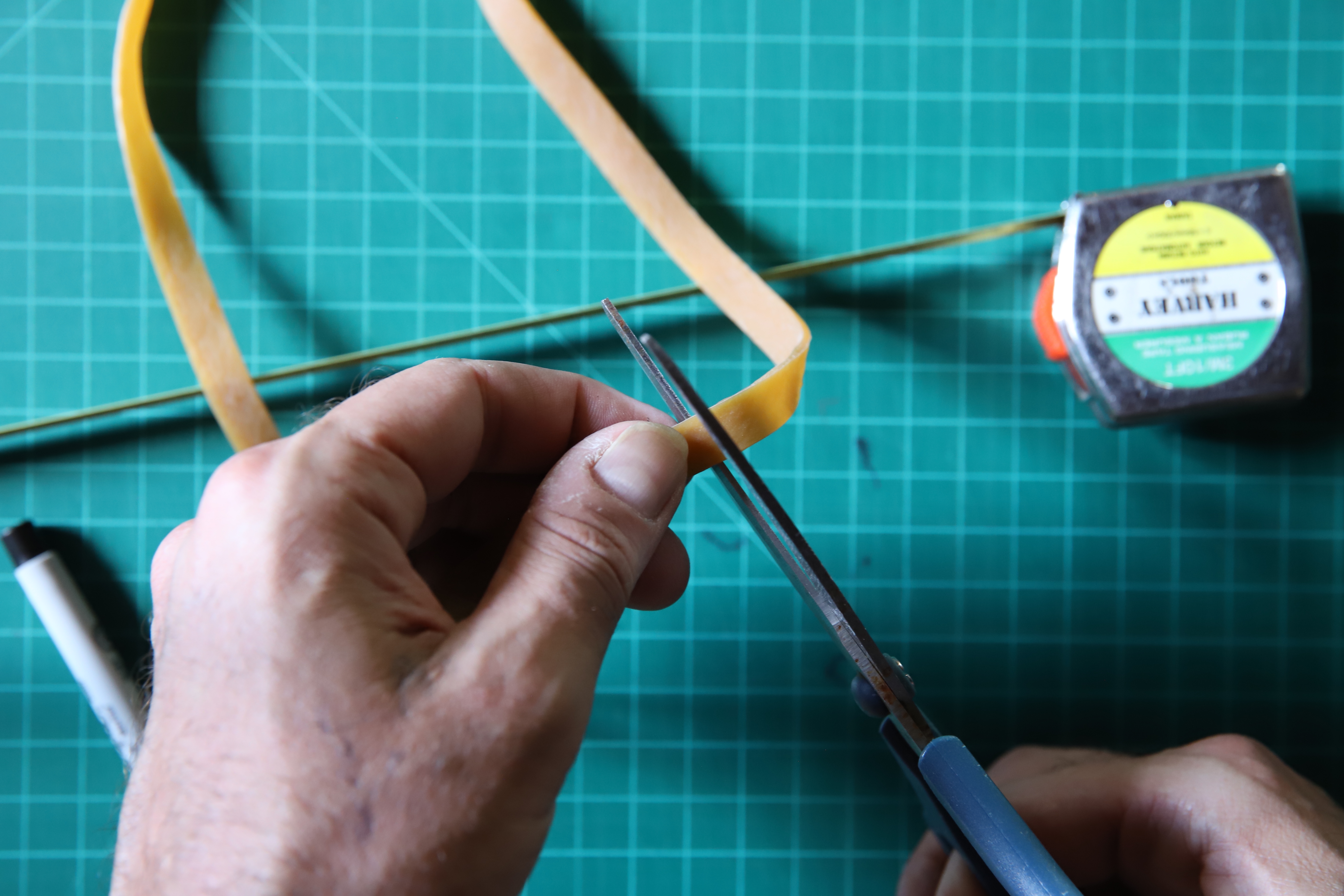
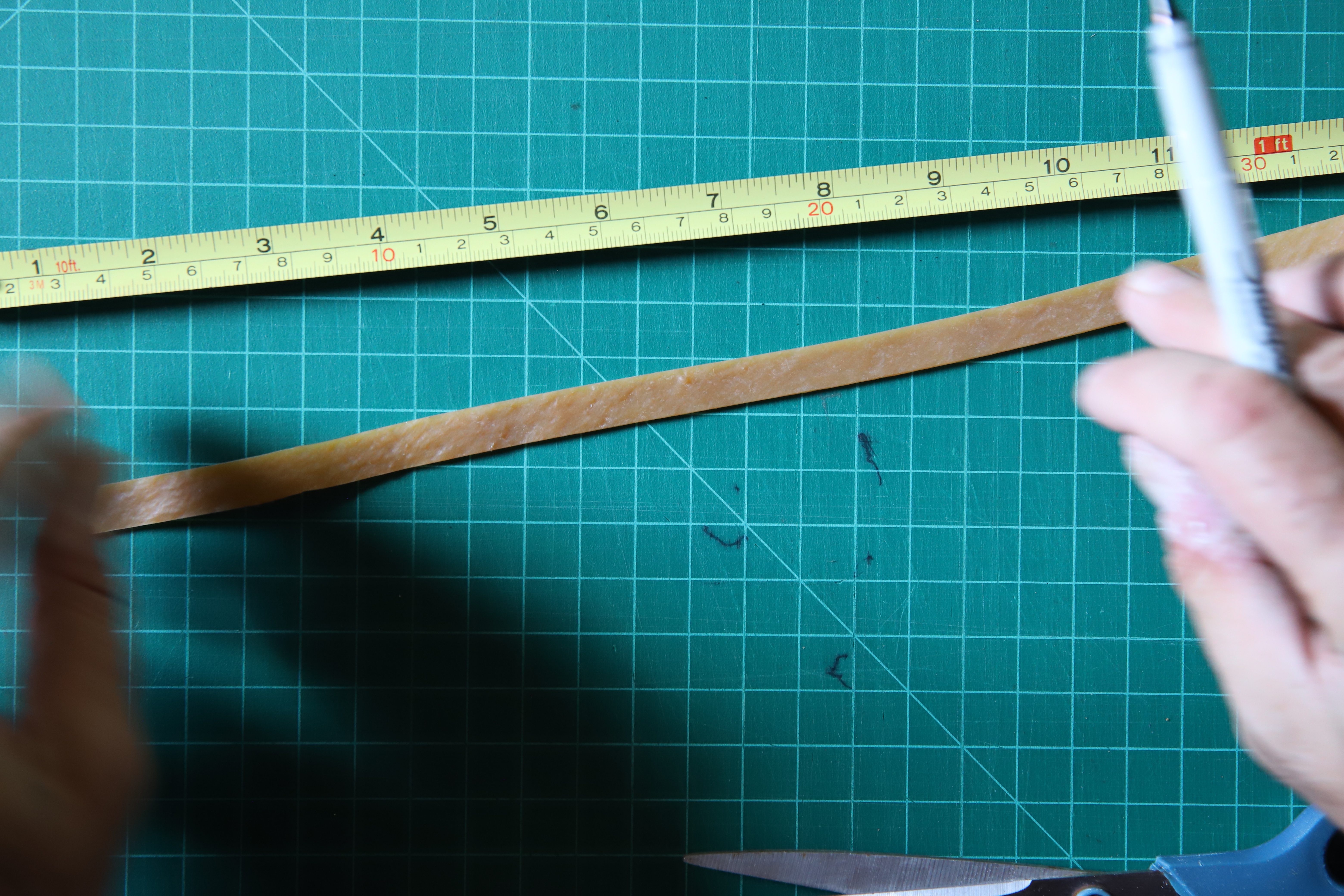
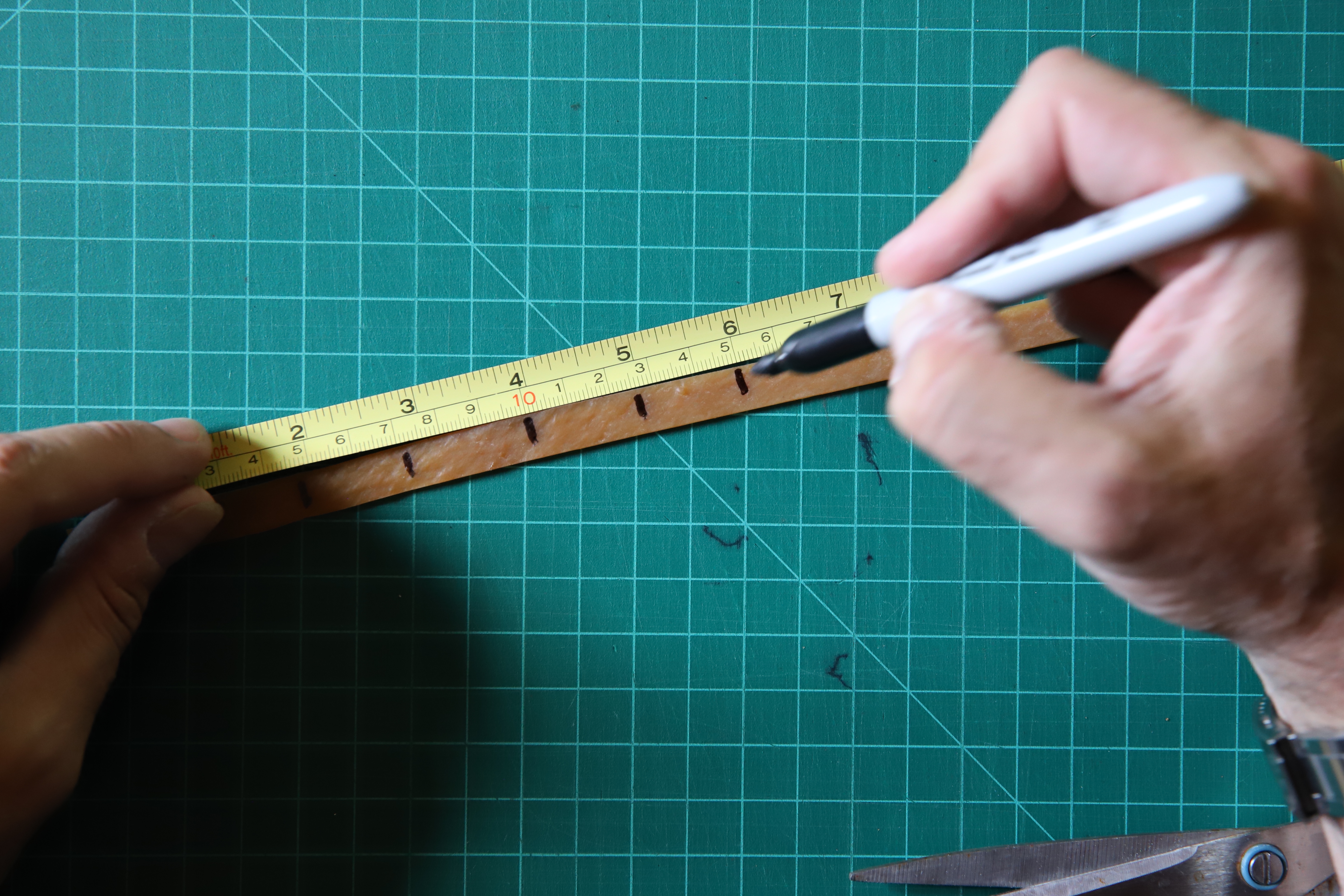
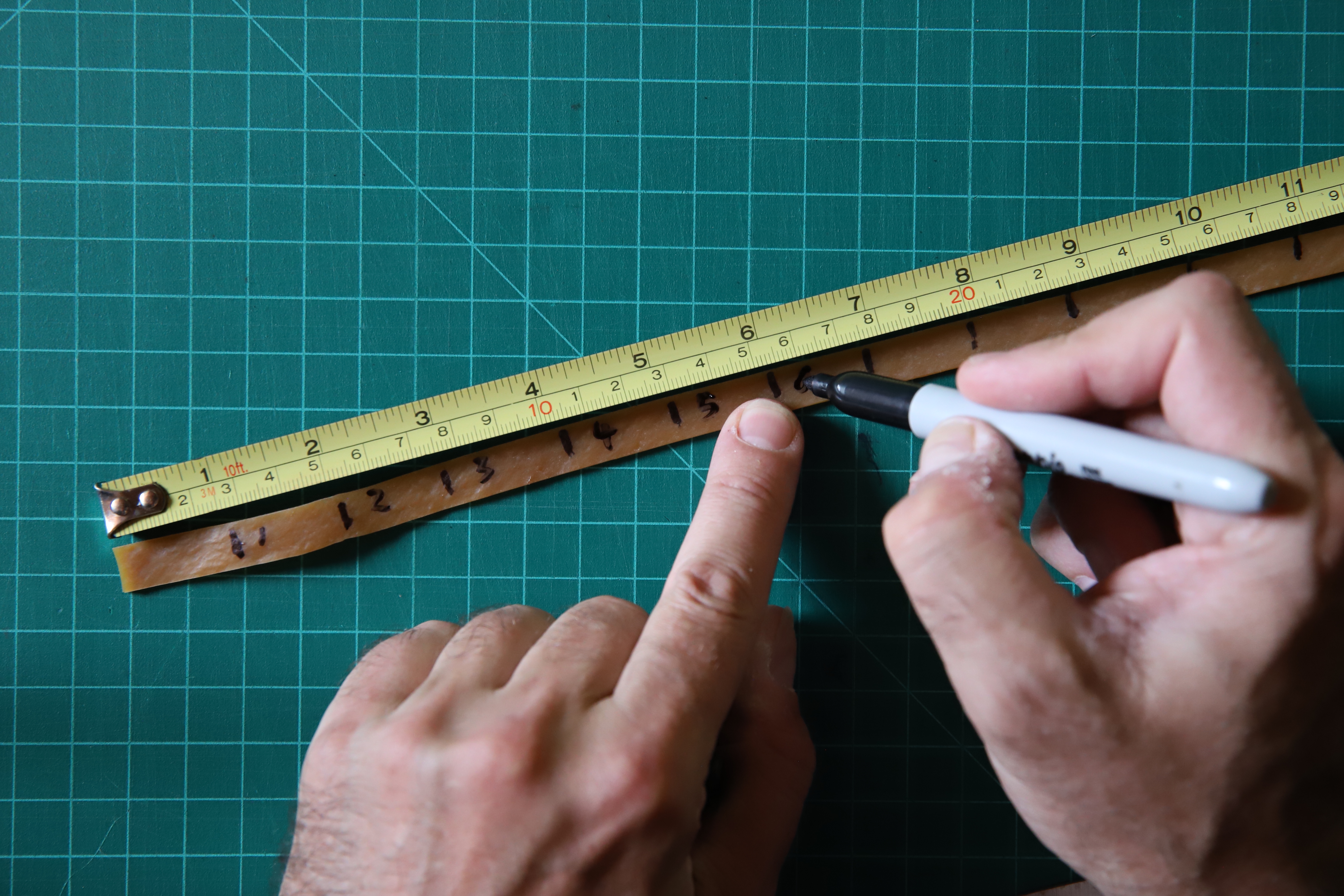
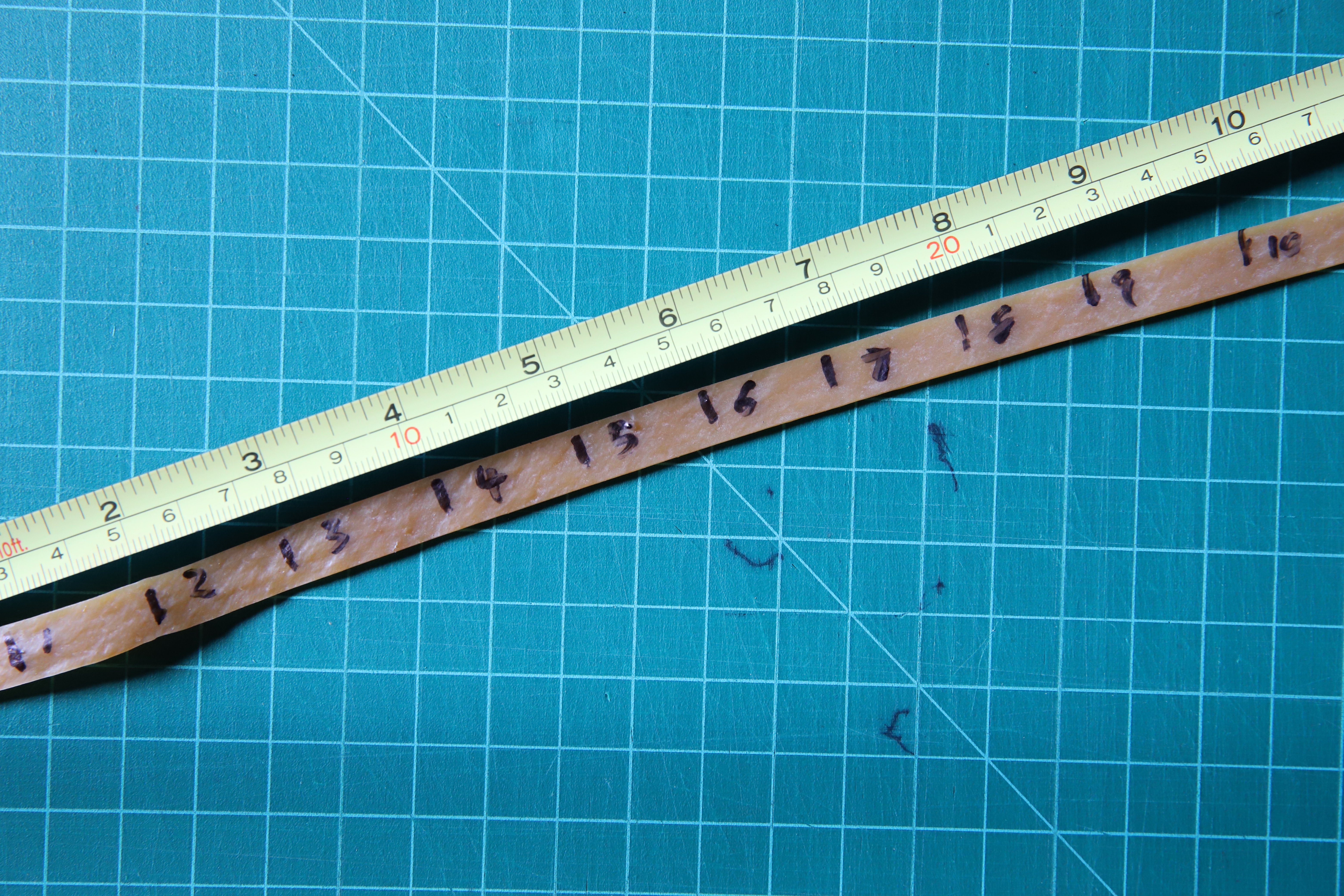
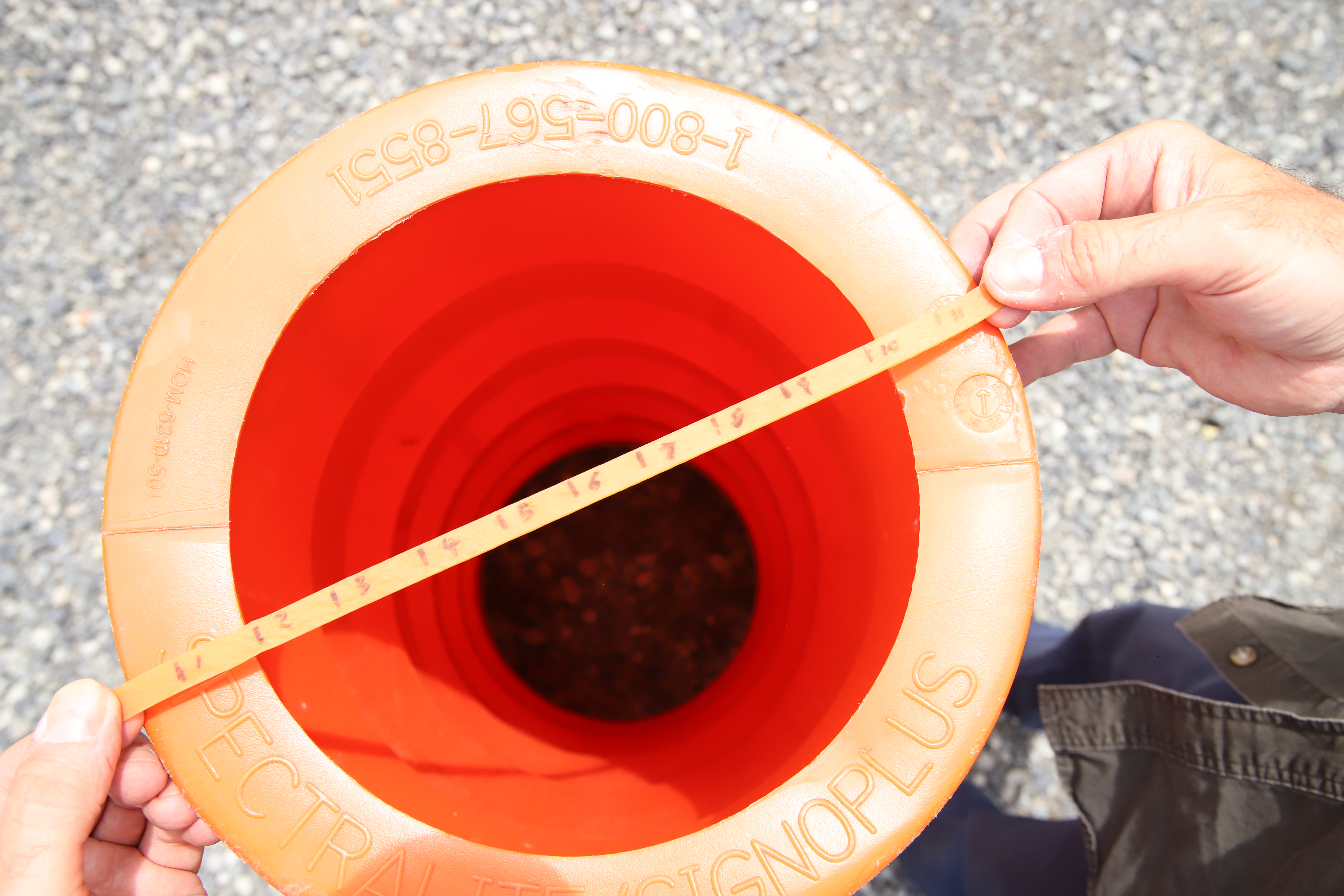
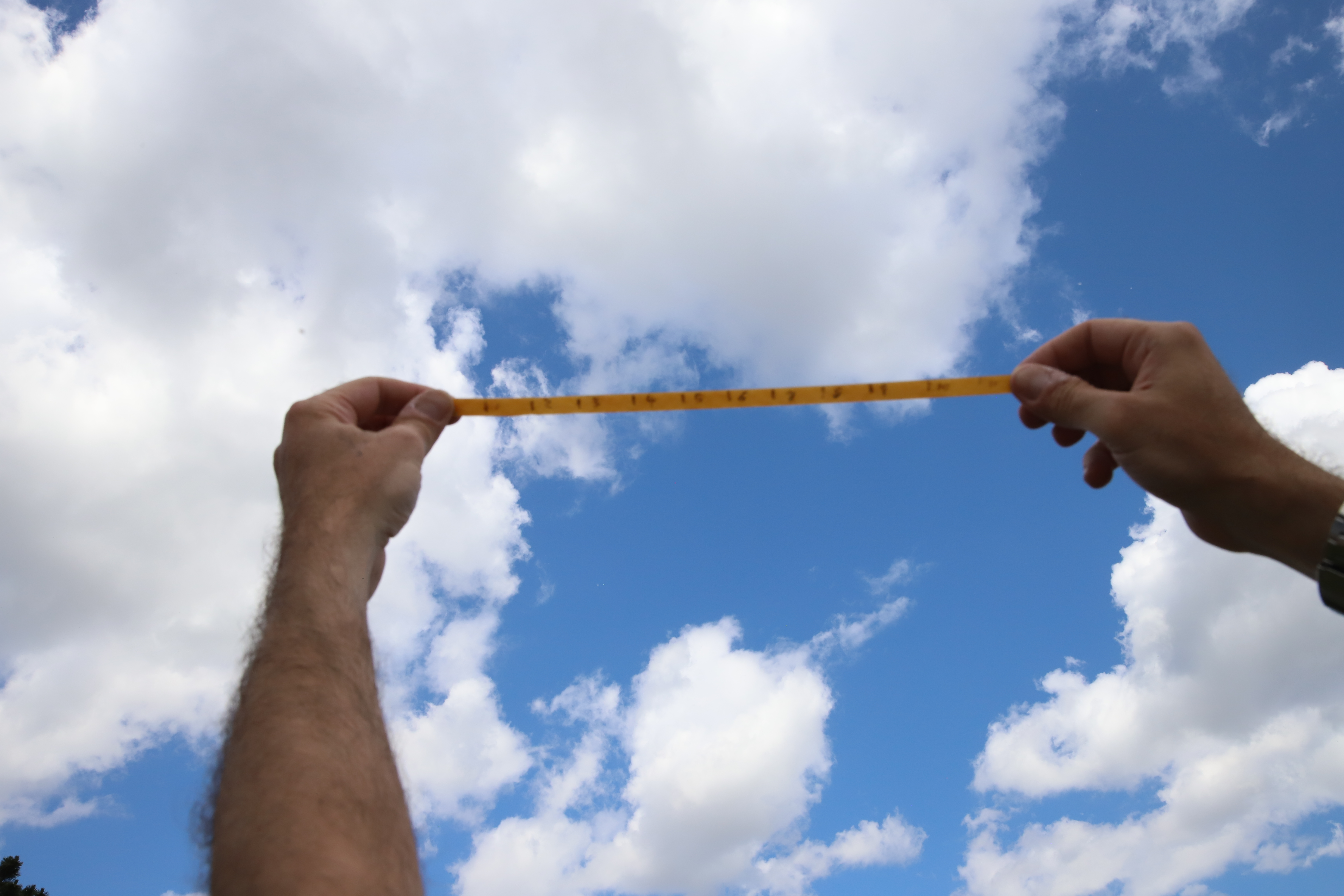
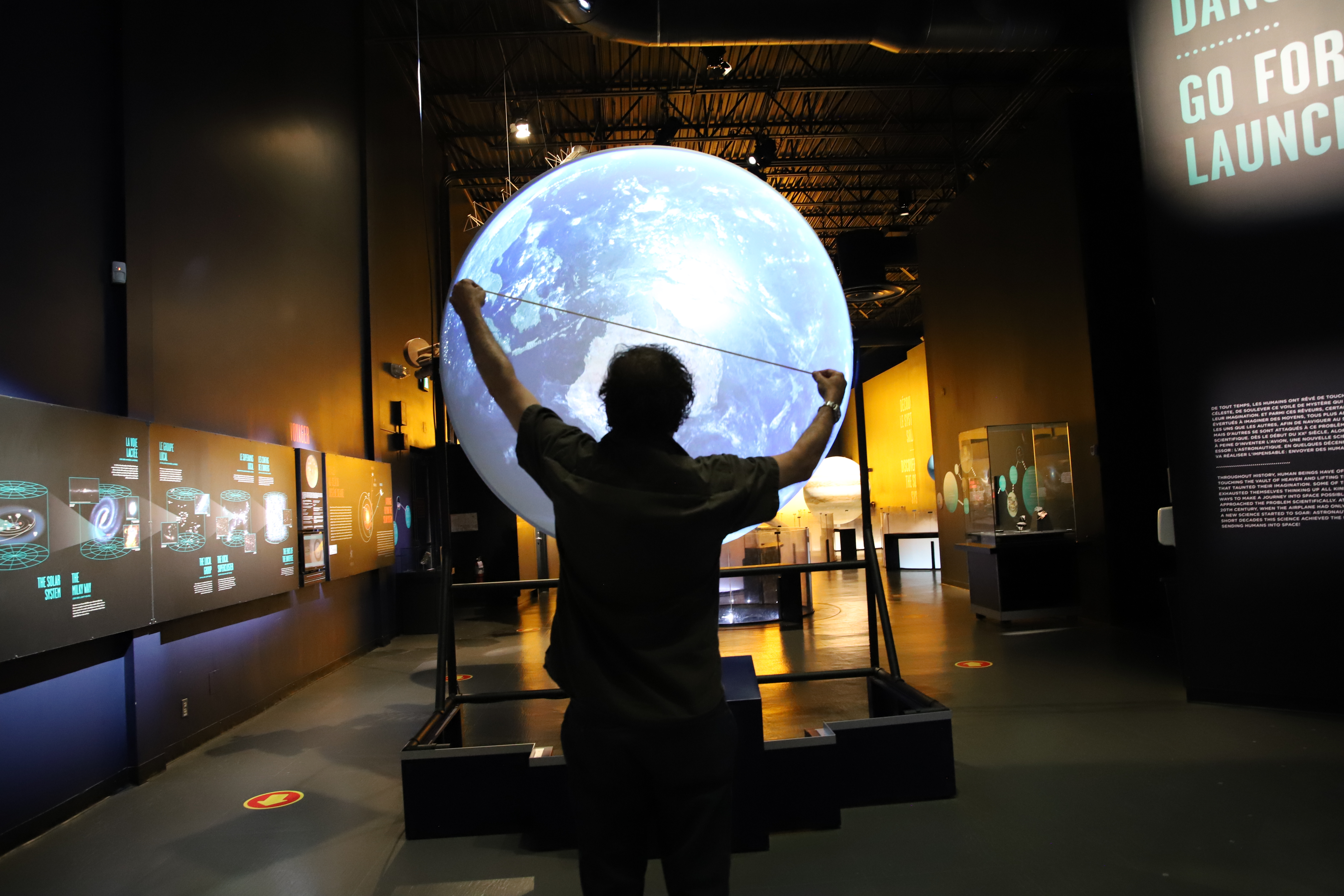
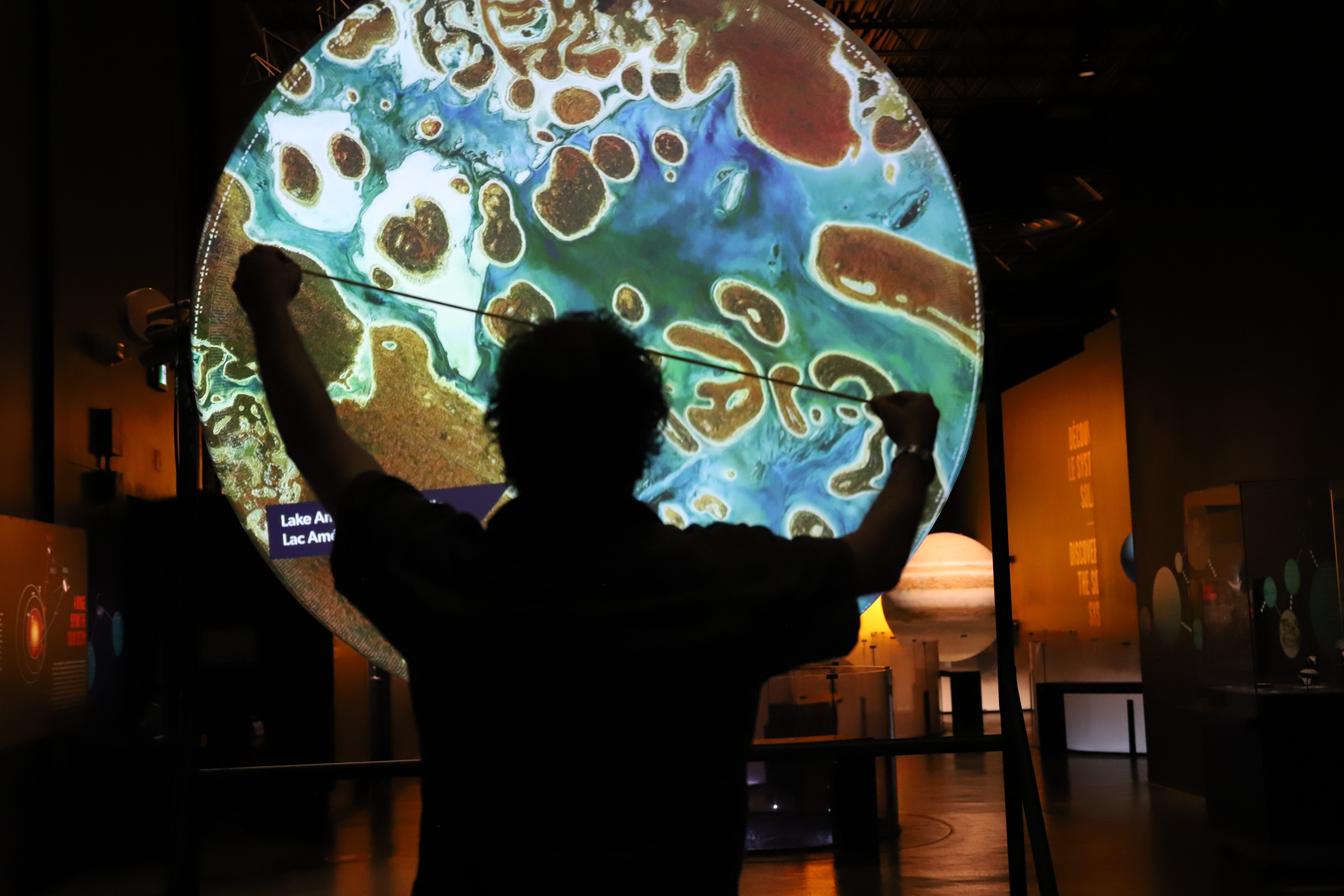
The Elastic Ruler is a do-it-yourself (DIY) tool conceived of by artist and filmmaker Dominic Gagnon[1]. Reminiscent of Fluxus event scores, it requires a large rubber elastic band, a ruler, and a pen. The elastic band needs to be cut to make a strip and then the ruler’s standardized units are printed onto its surface.
The Elastic Ruler was used to trigger the imagination of the participants of Outer Space and the City (MIT, 2019), a research-creation workshop whose objective was to sketch artistic propositions that creatively assess the complex entanglement and reciprocal tensions between space exploration and urbanization. While the calculation of the Earth’s circumference—arrived at by extrapolating from the distance measured between two locations—gave rise to the nautical mile and the meter, the workshop used the ruler to pose a methodological question: What alternative regimes of measurement and ecologies of correspondences between the urban and the cosmic might emerge from the ruler’s elasticity?
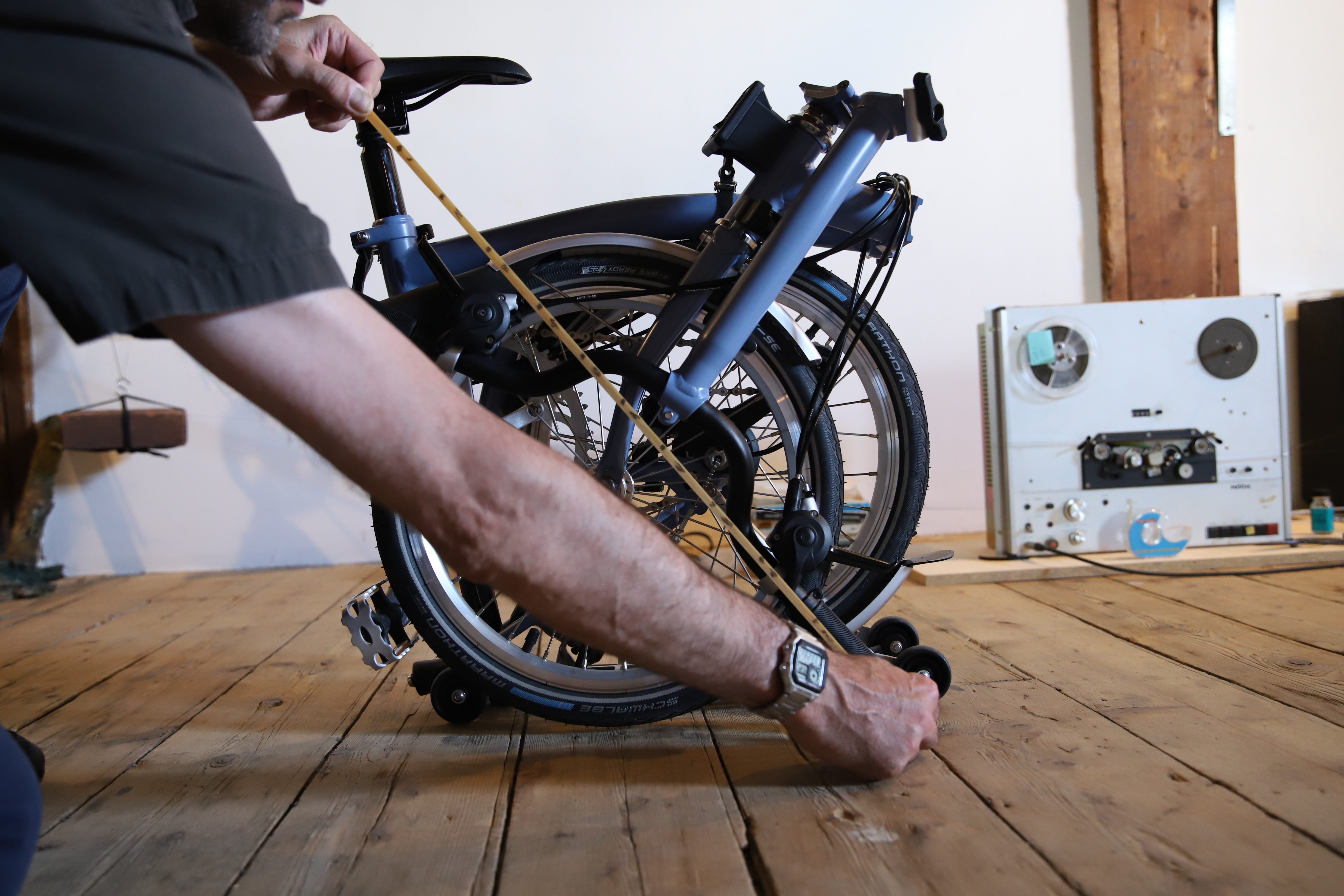
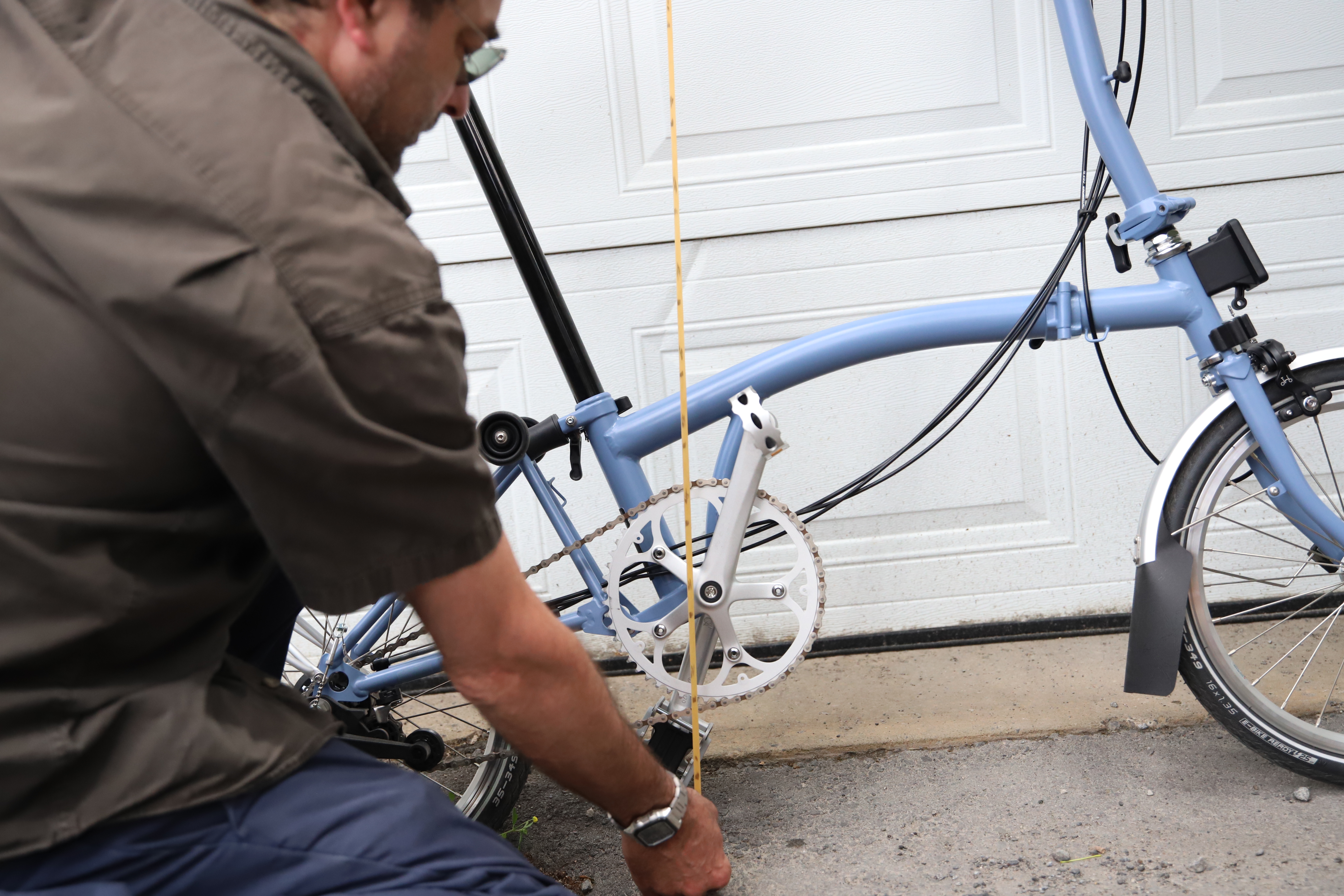
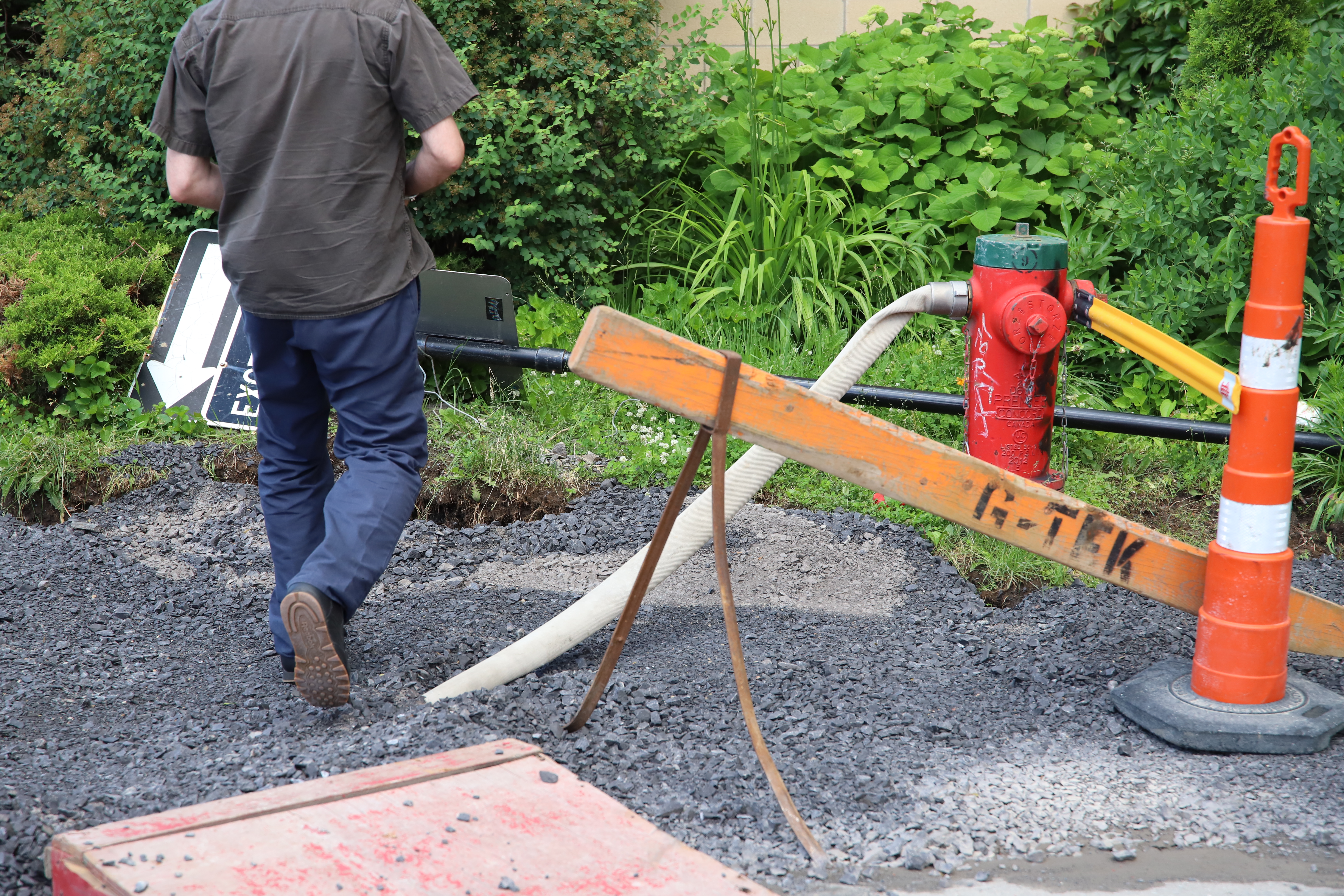
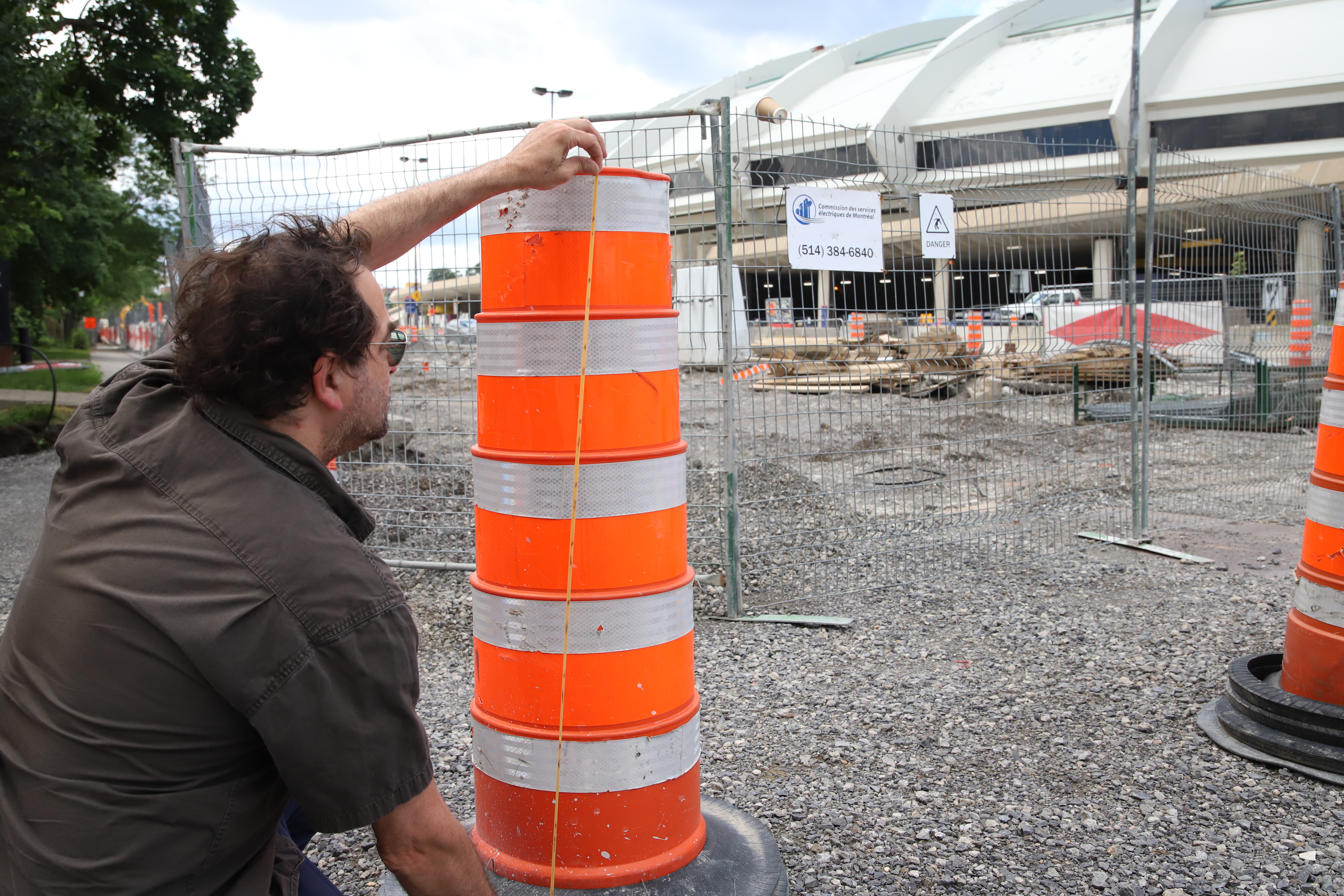
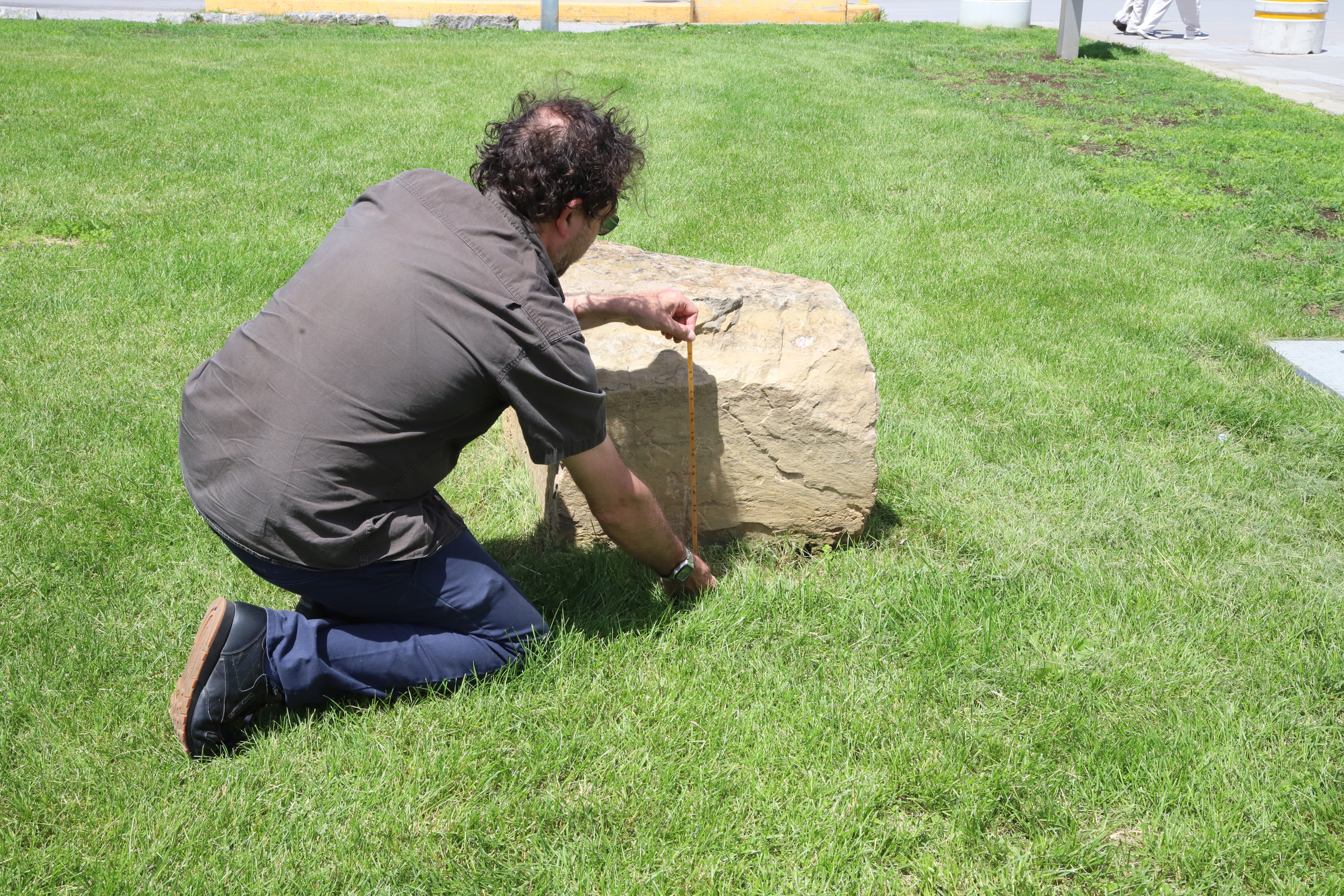
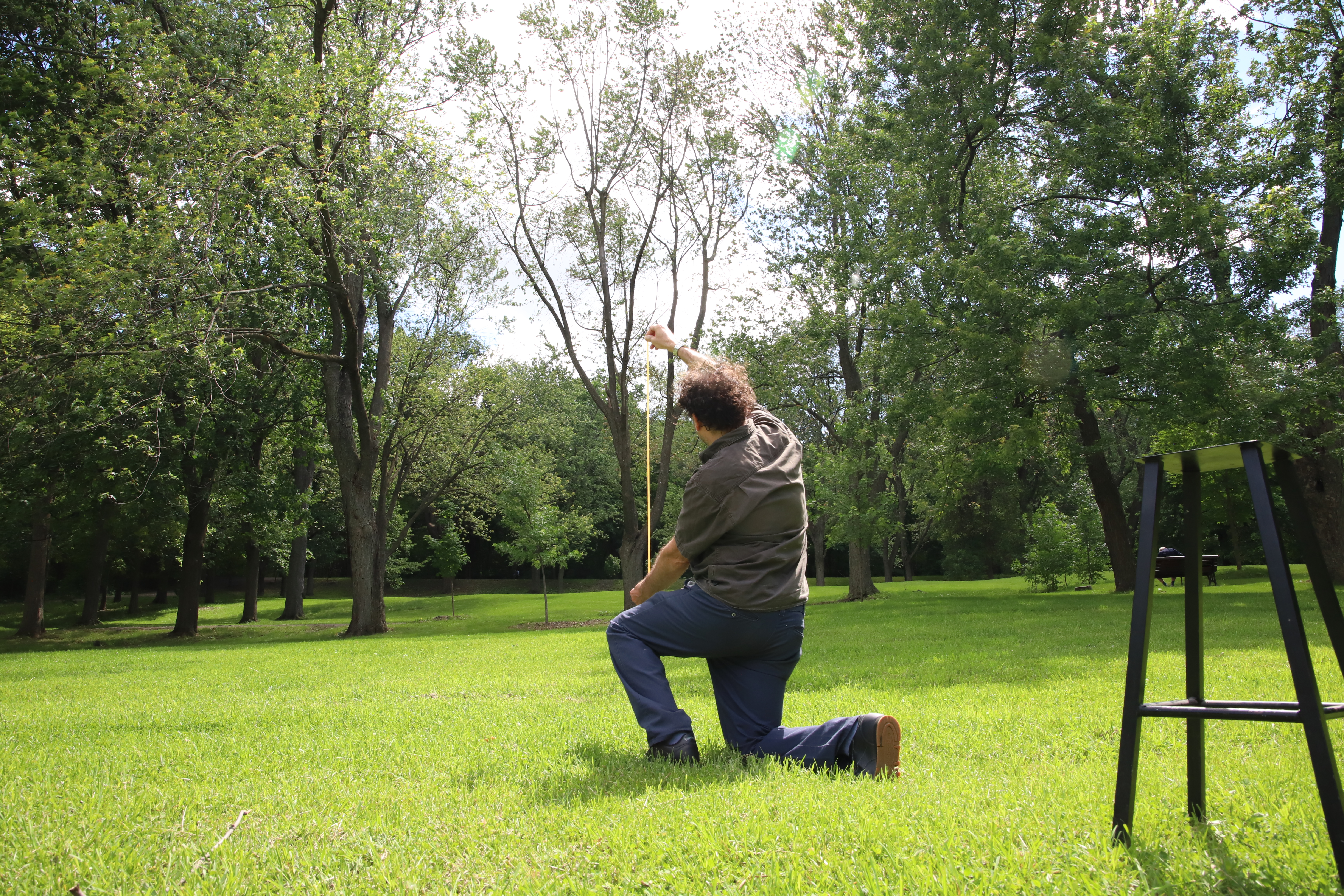
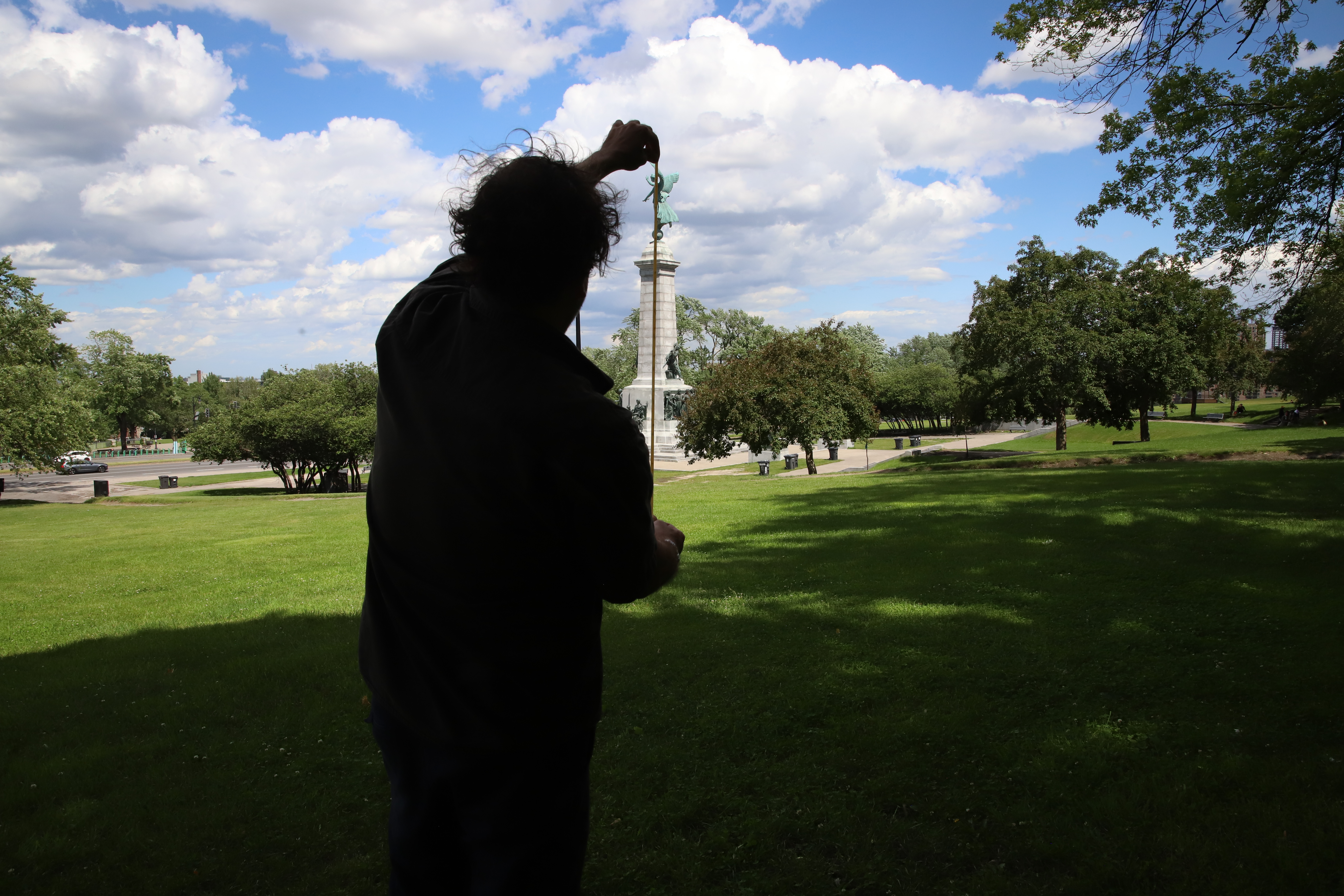
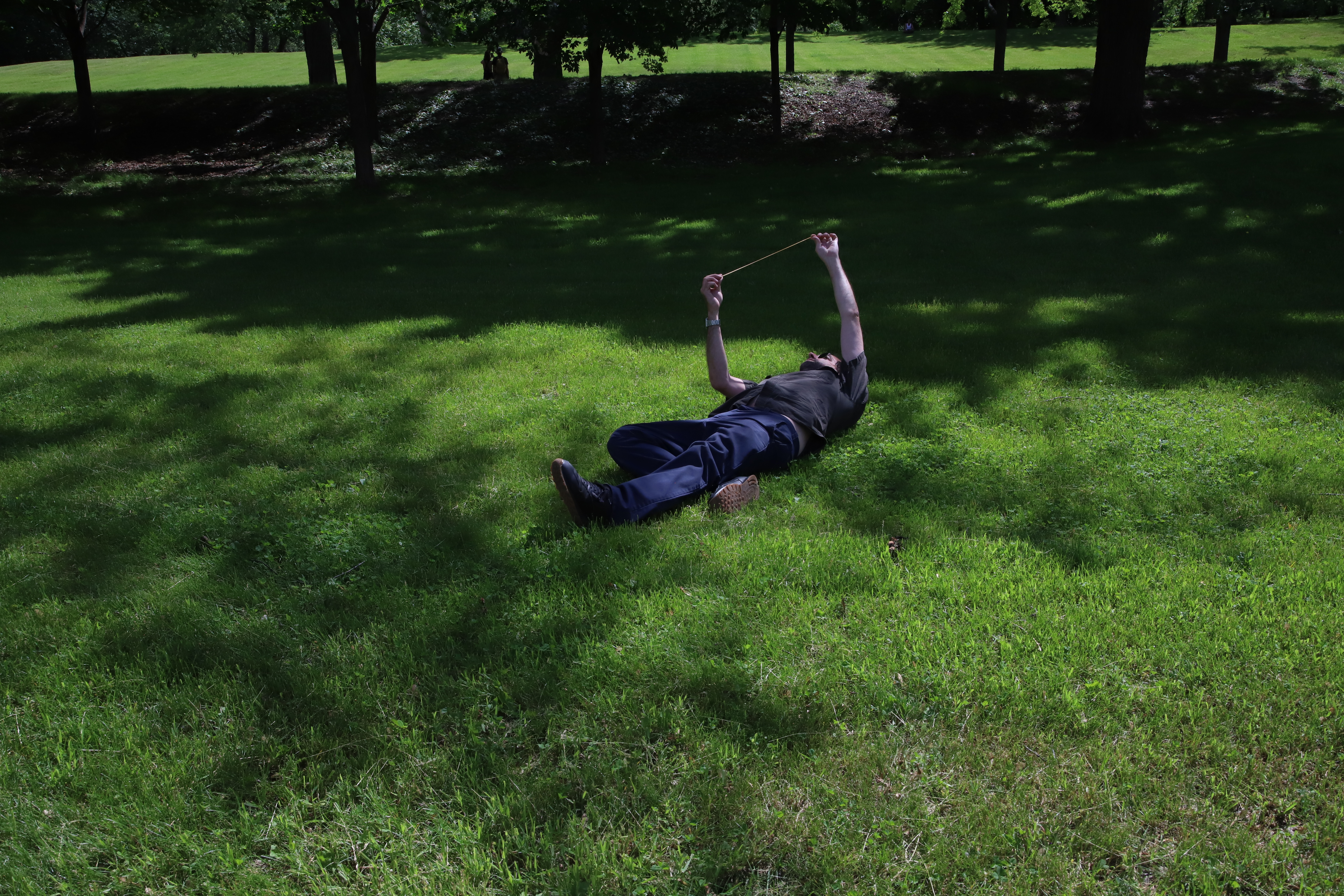
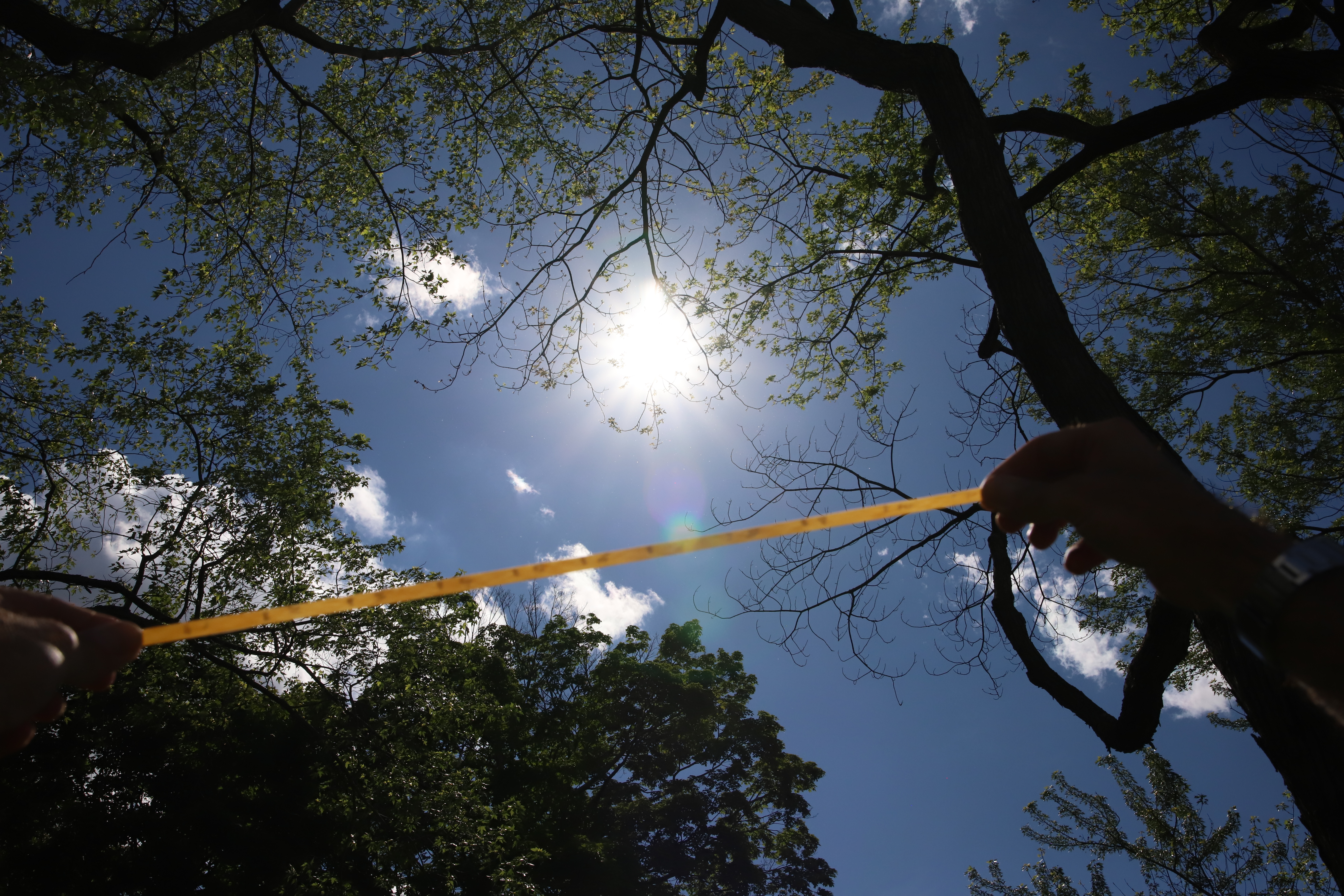
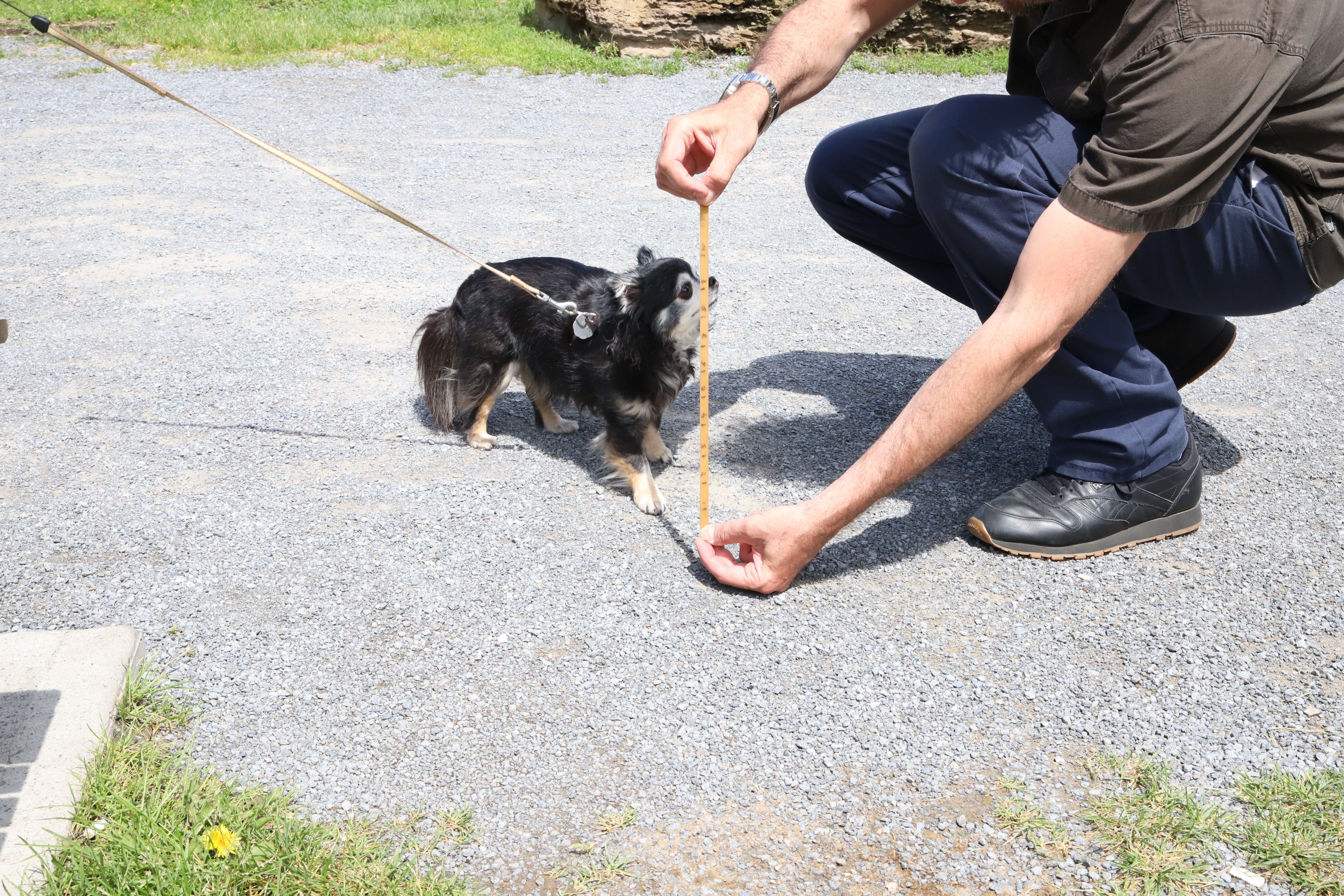
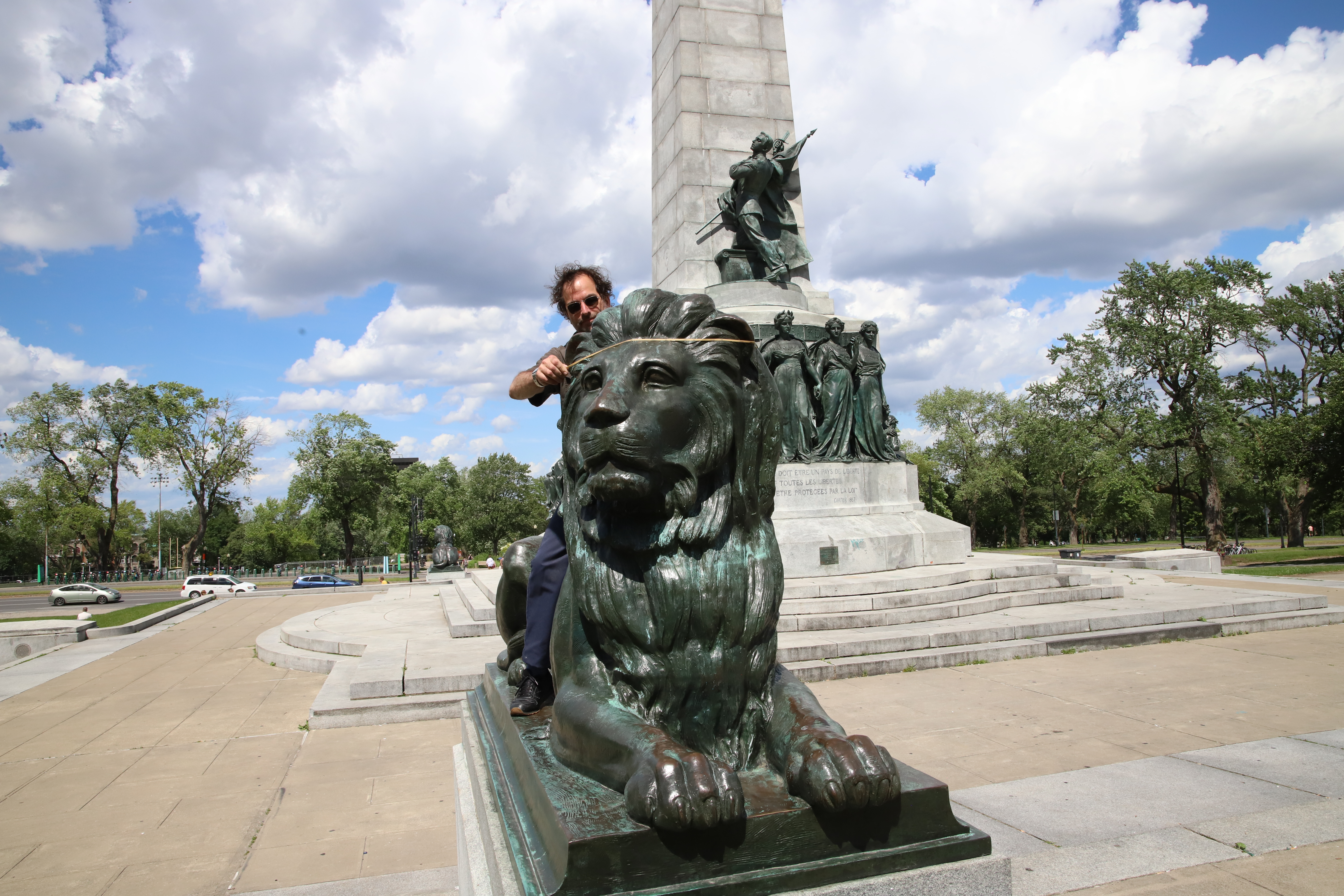
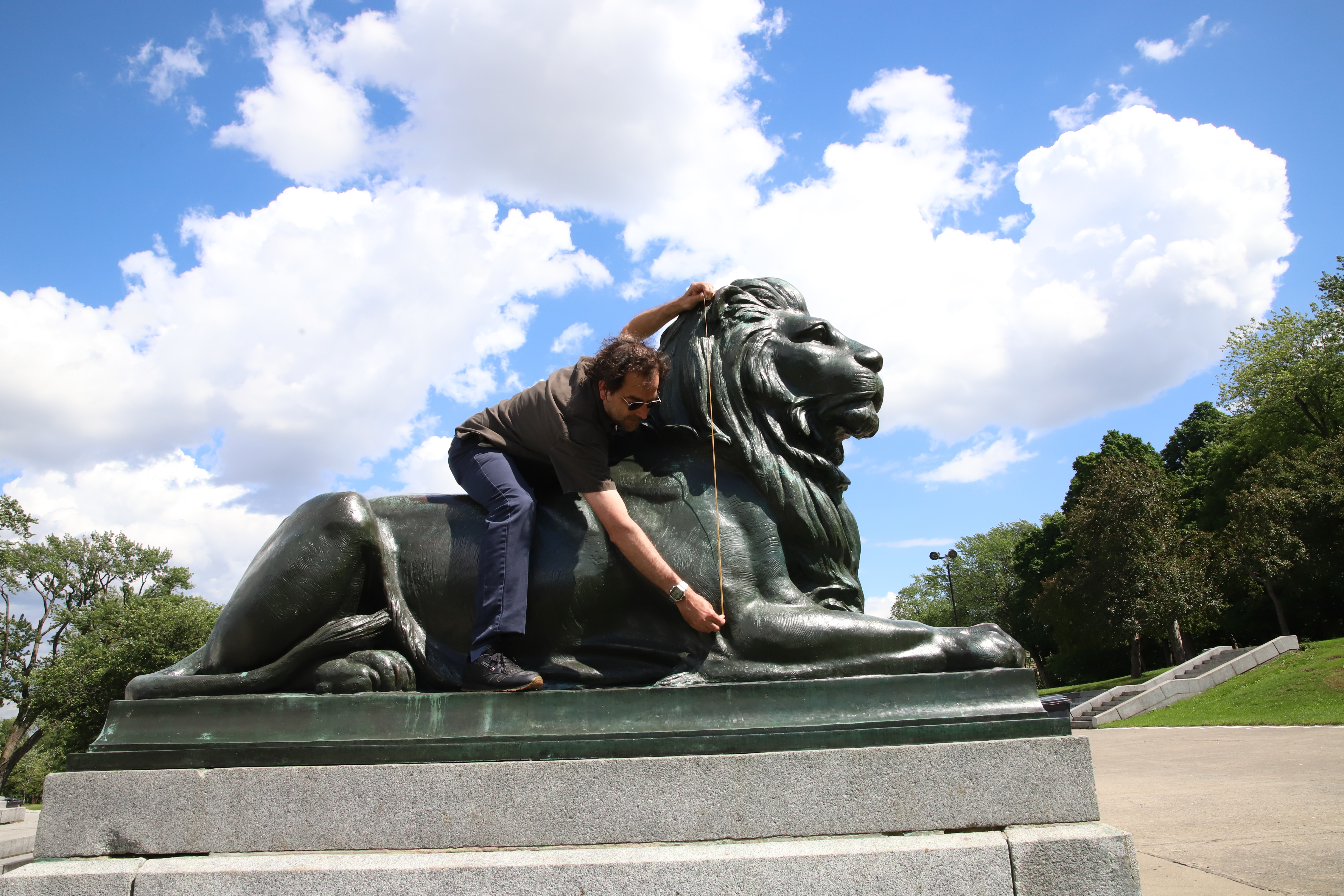
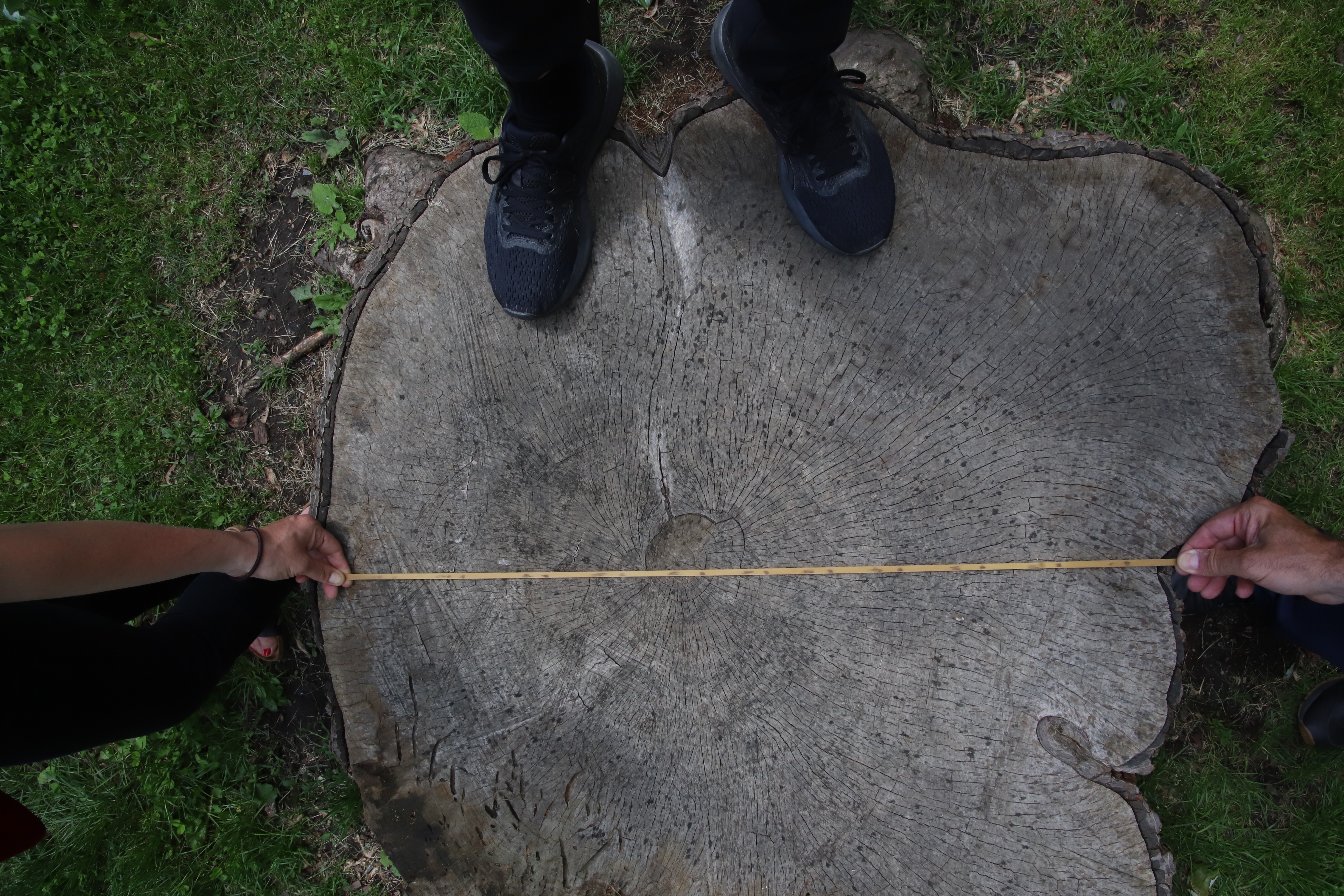
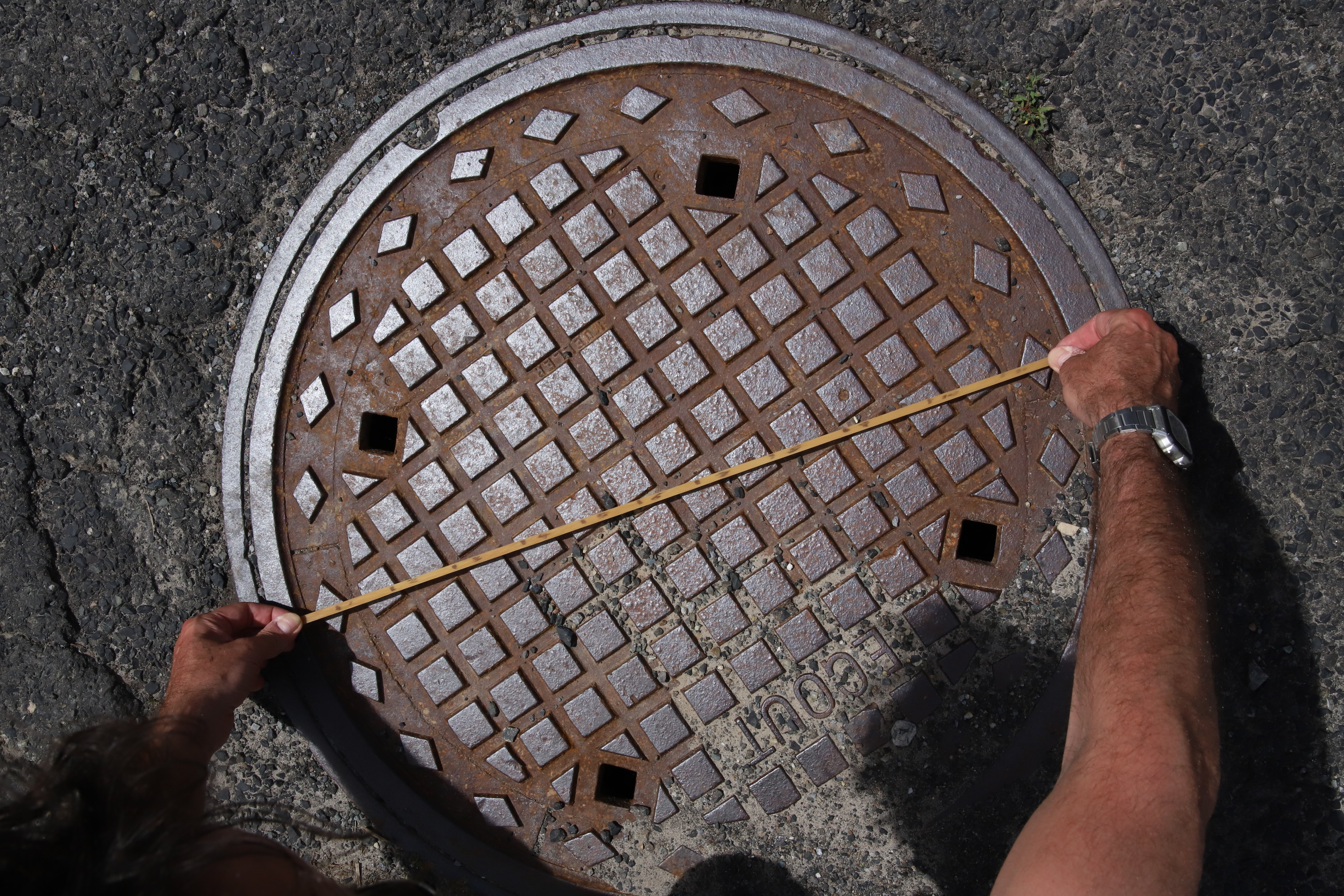
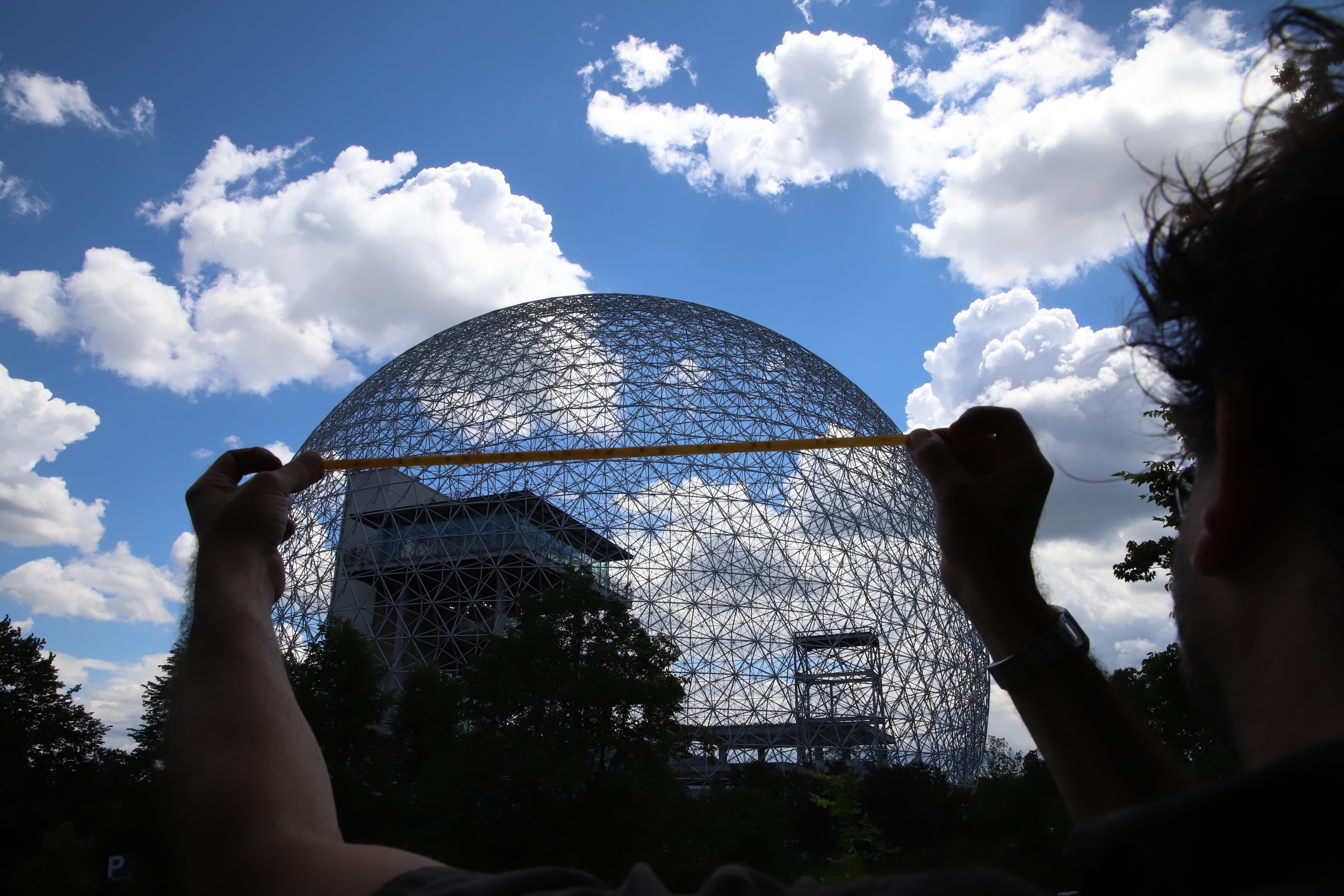
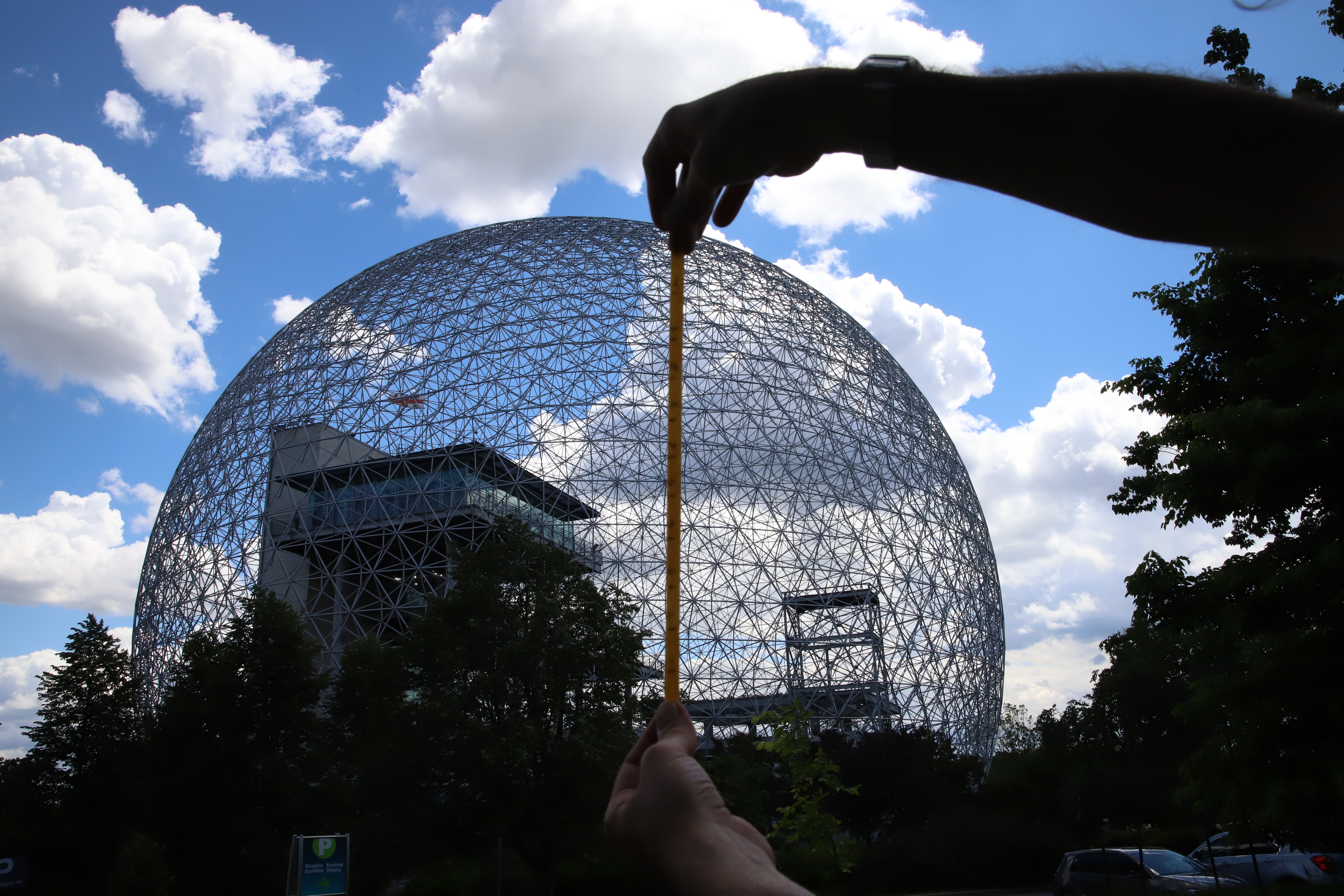
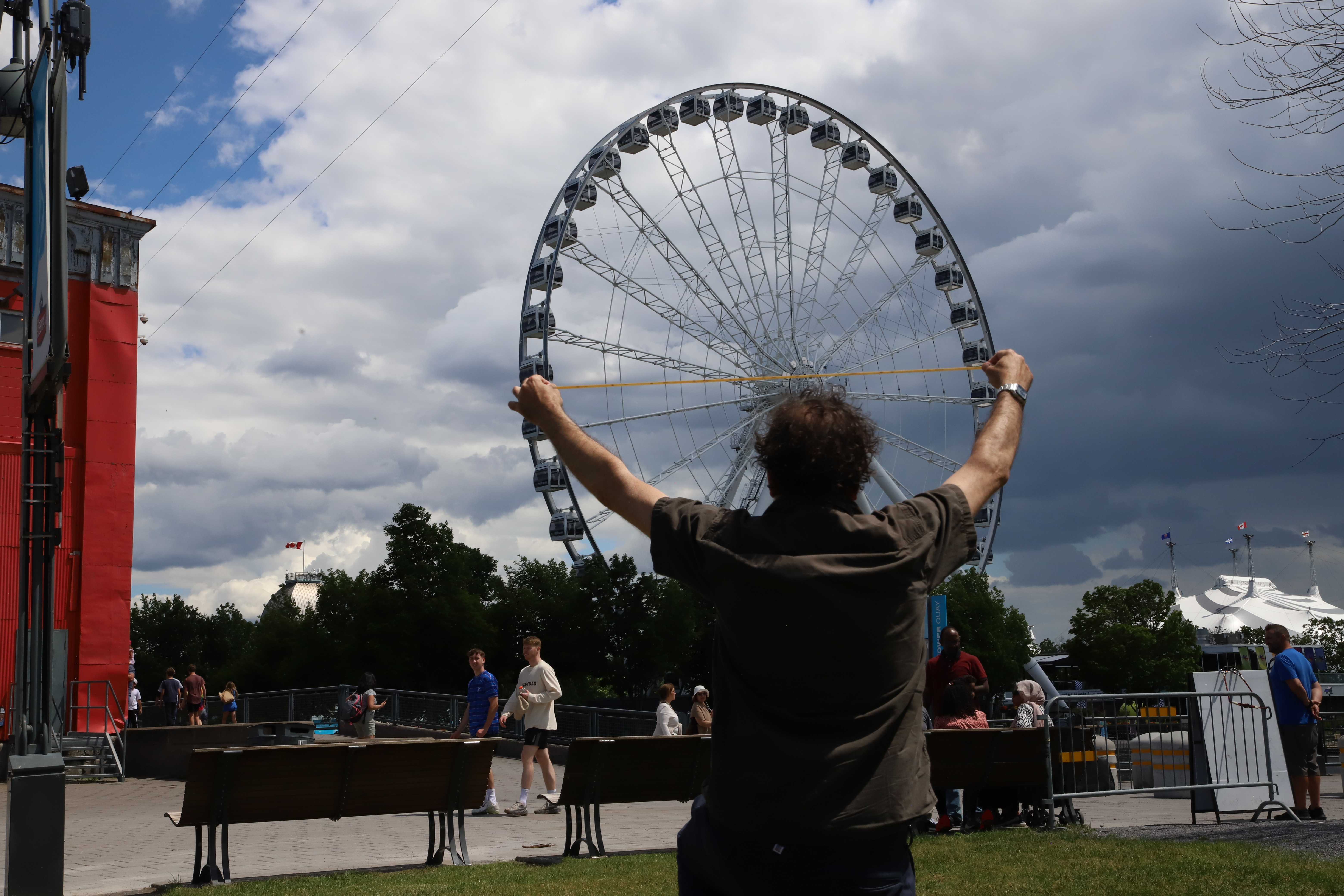
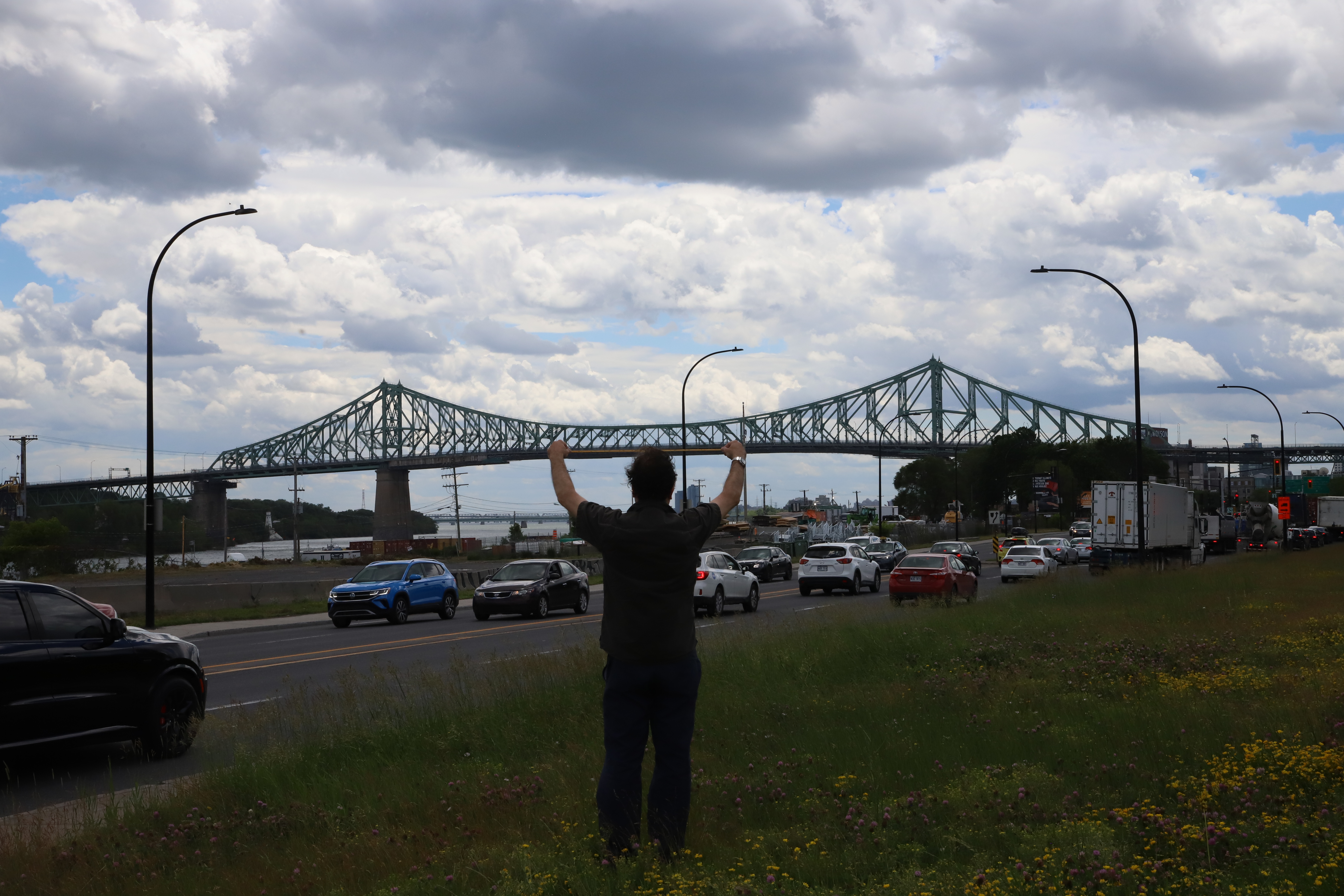
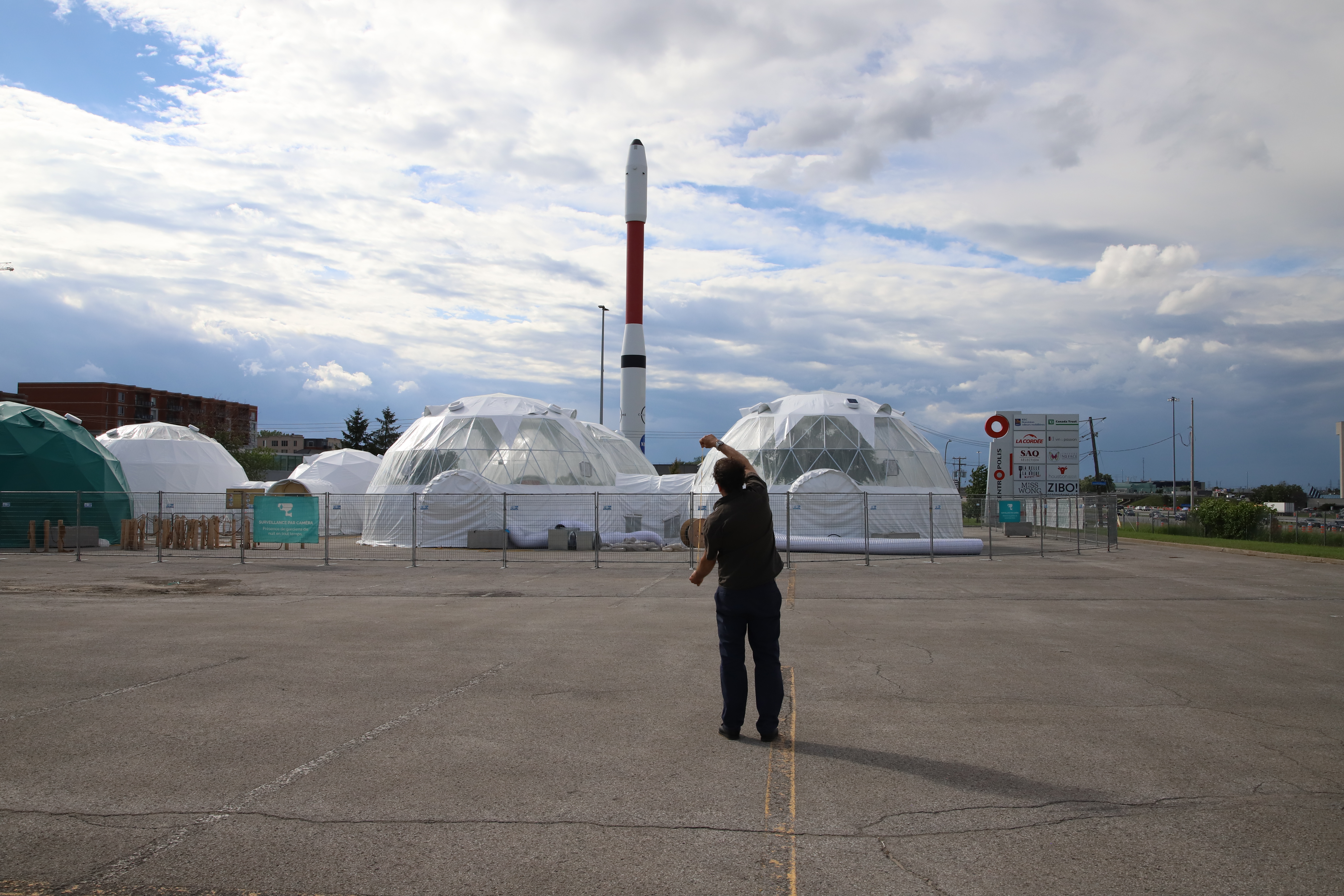
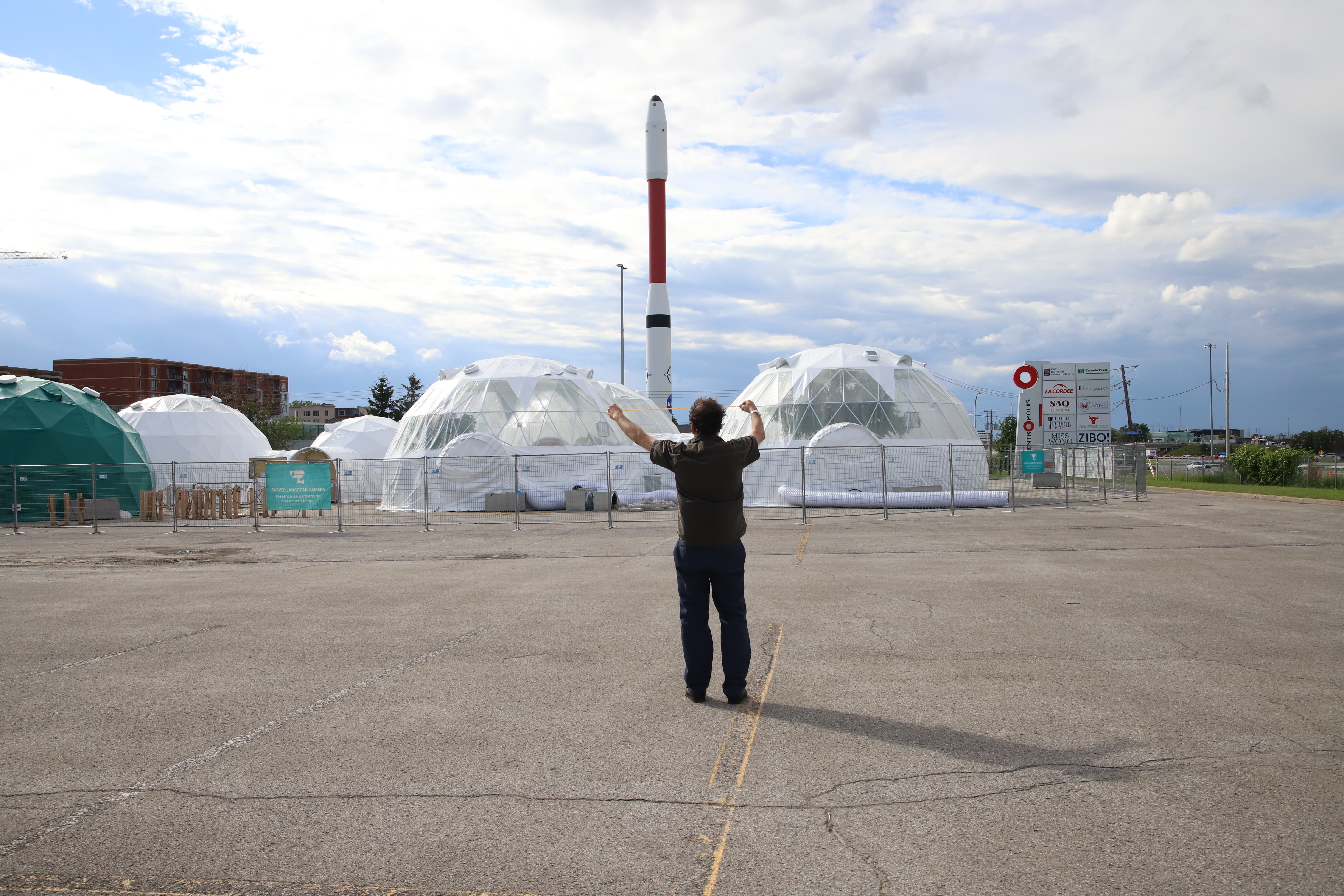
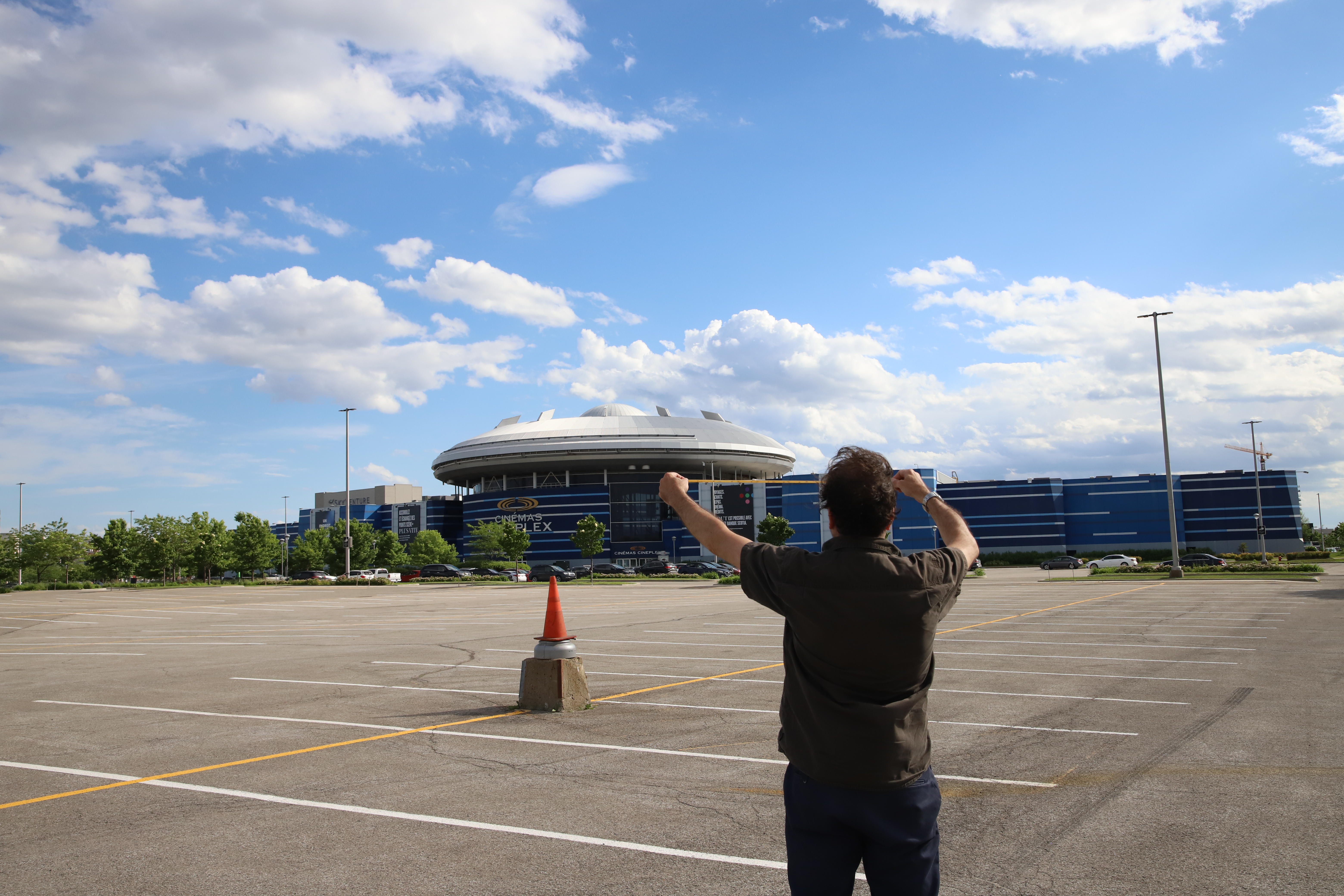
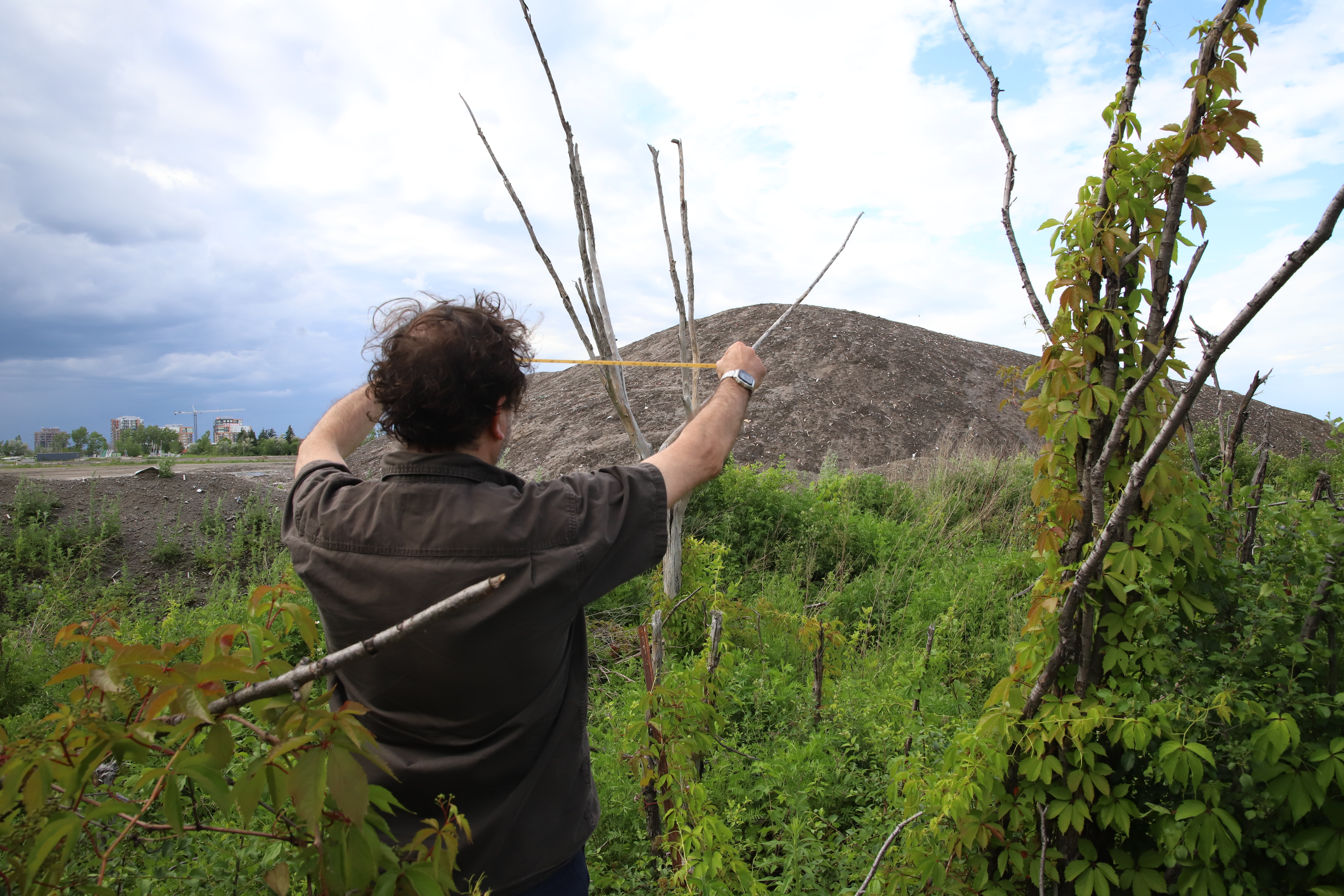
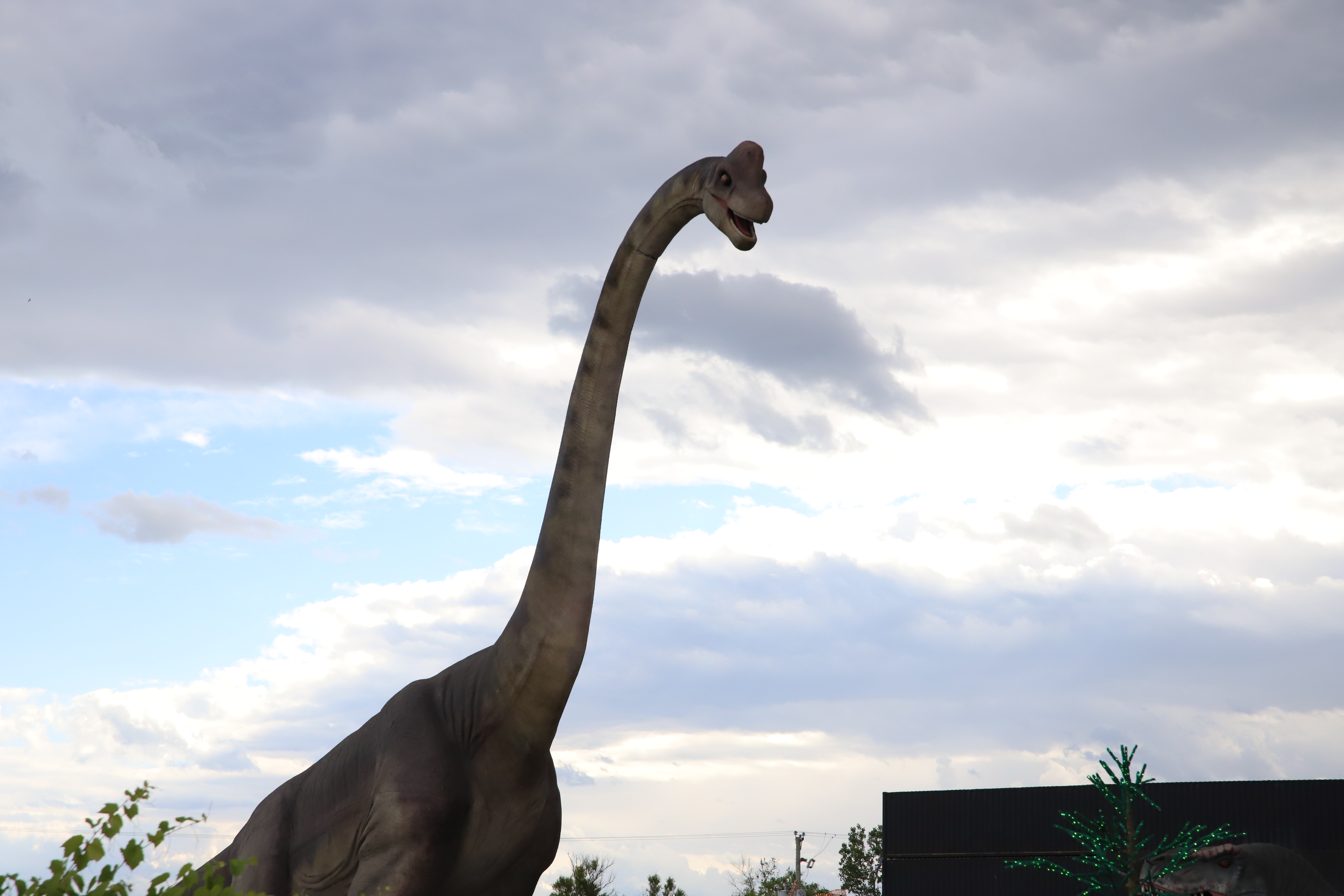
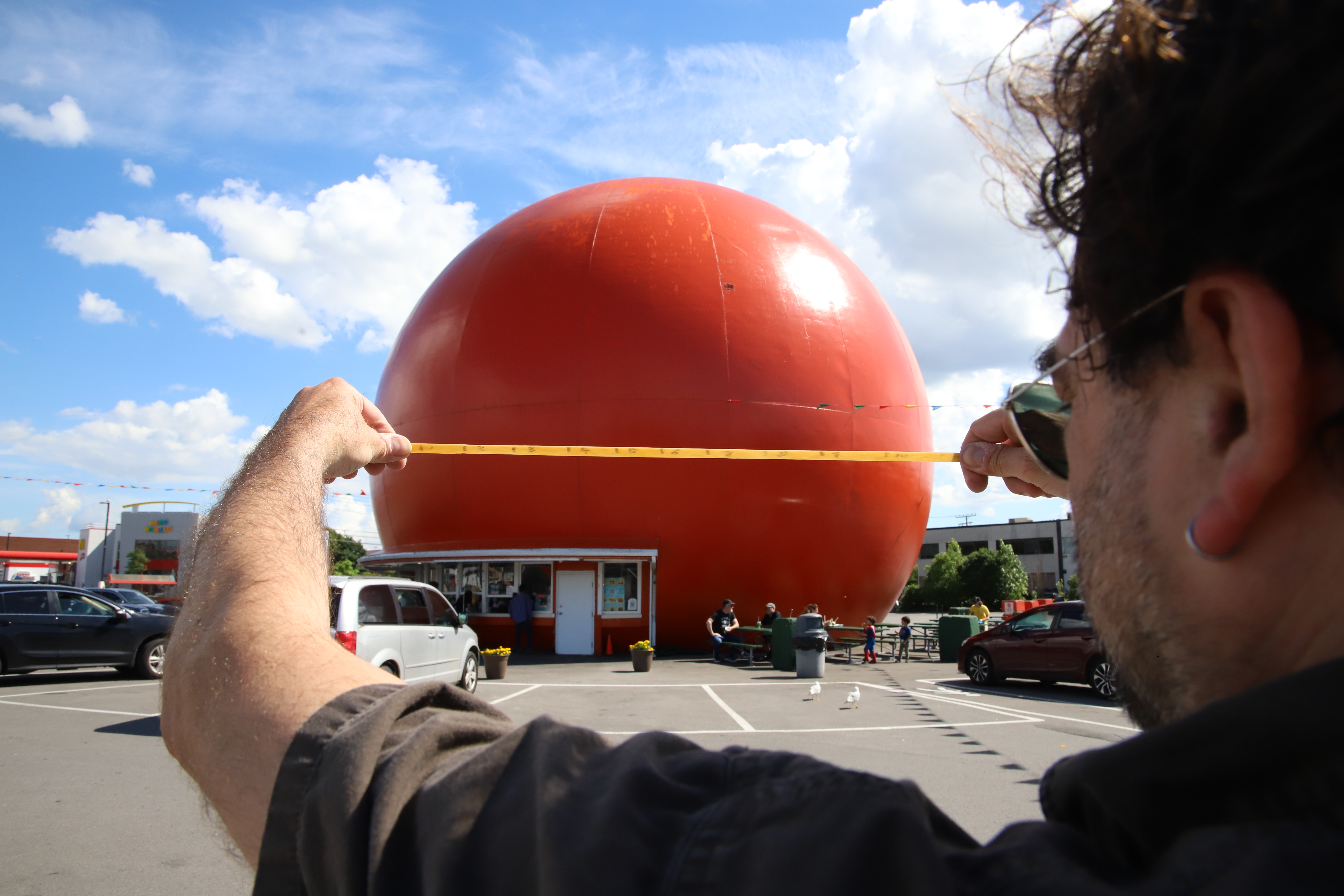
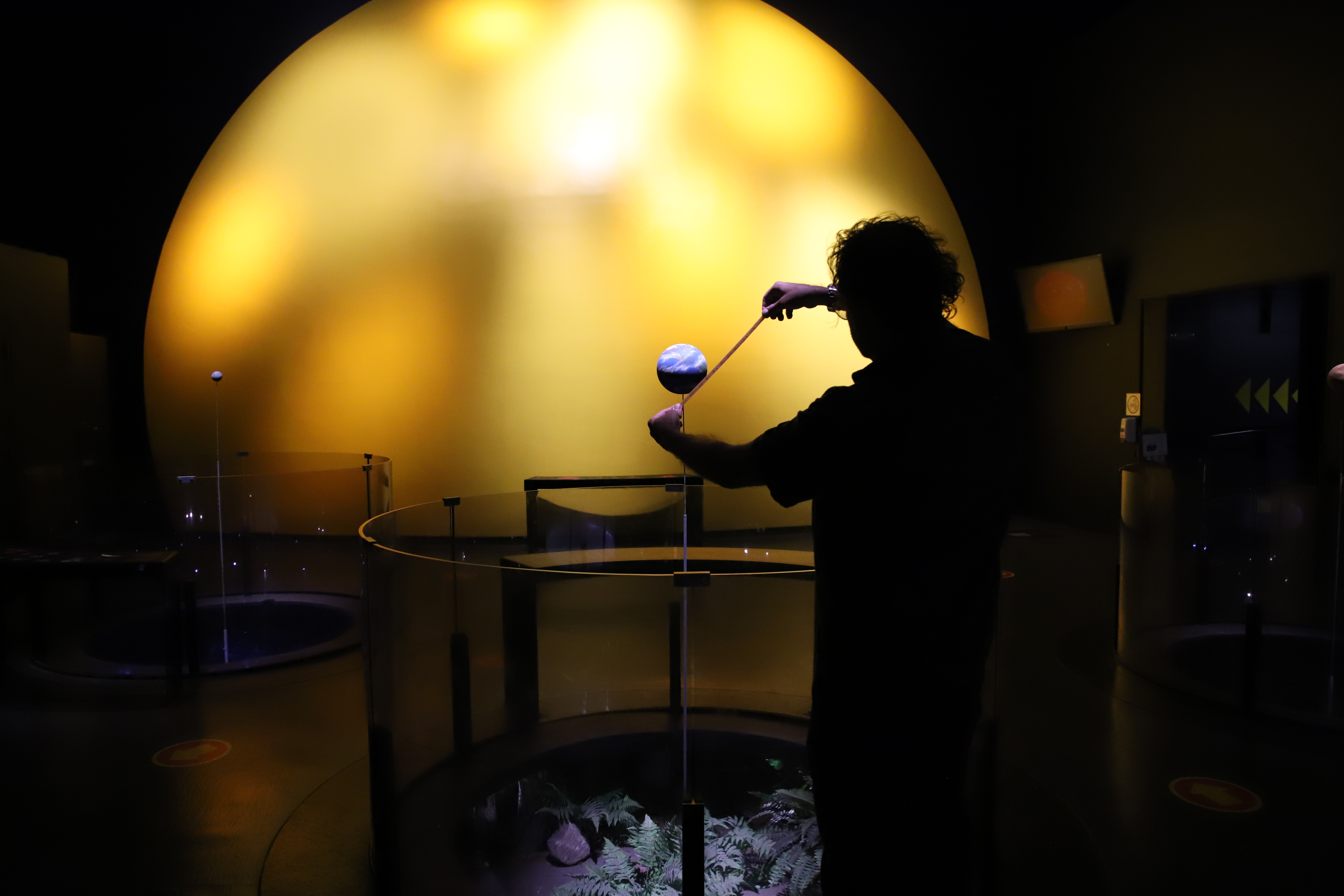
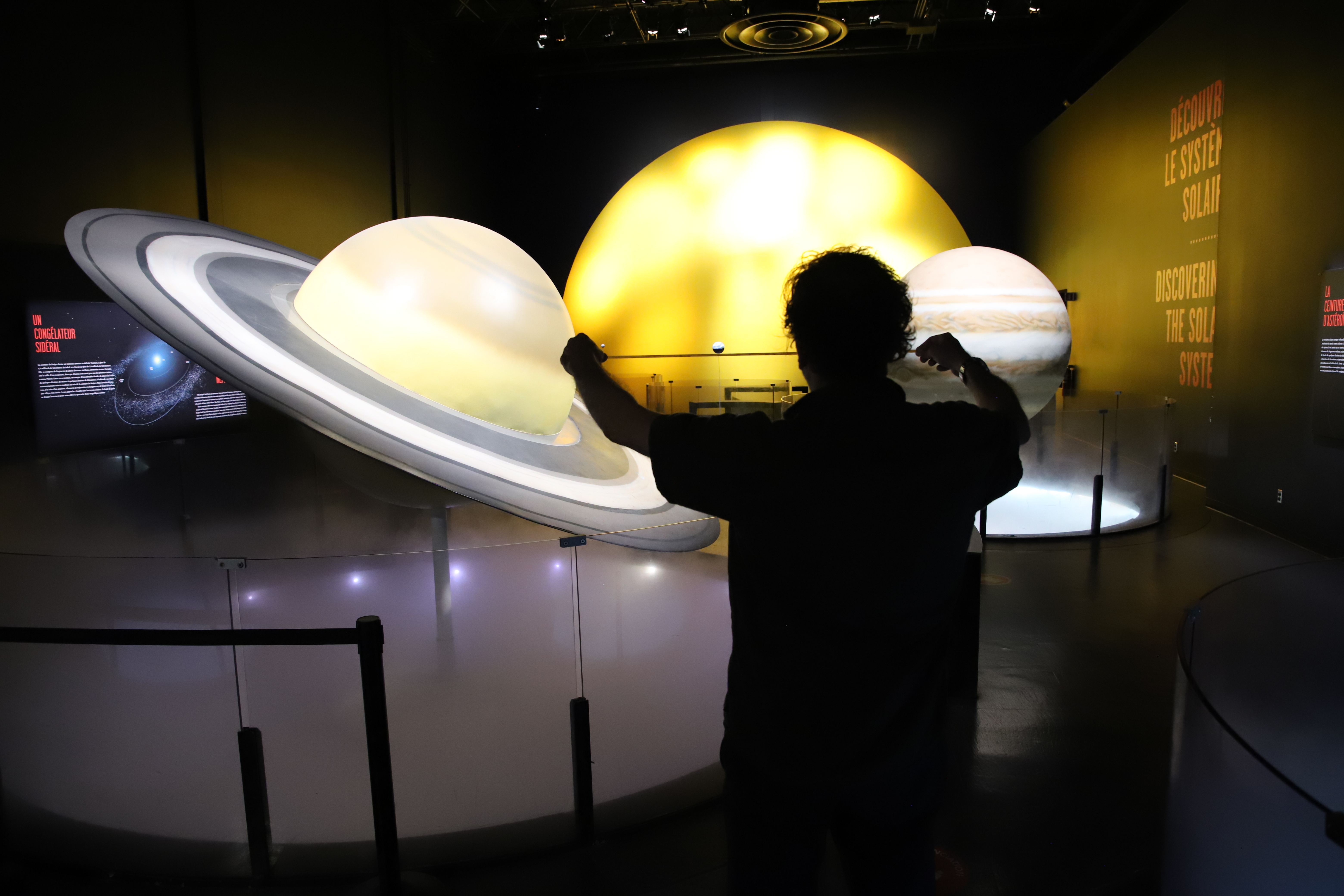
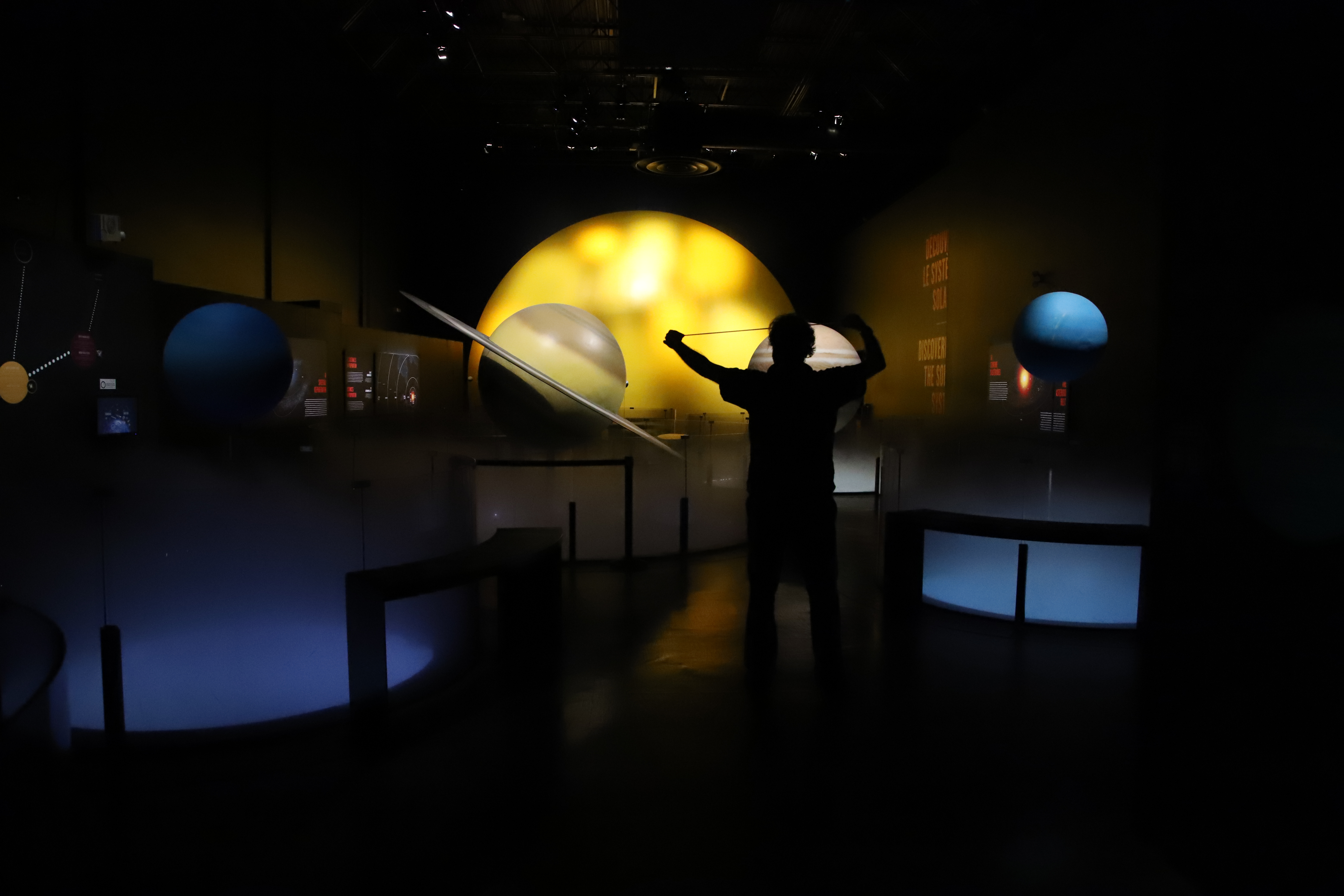
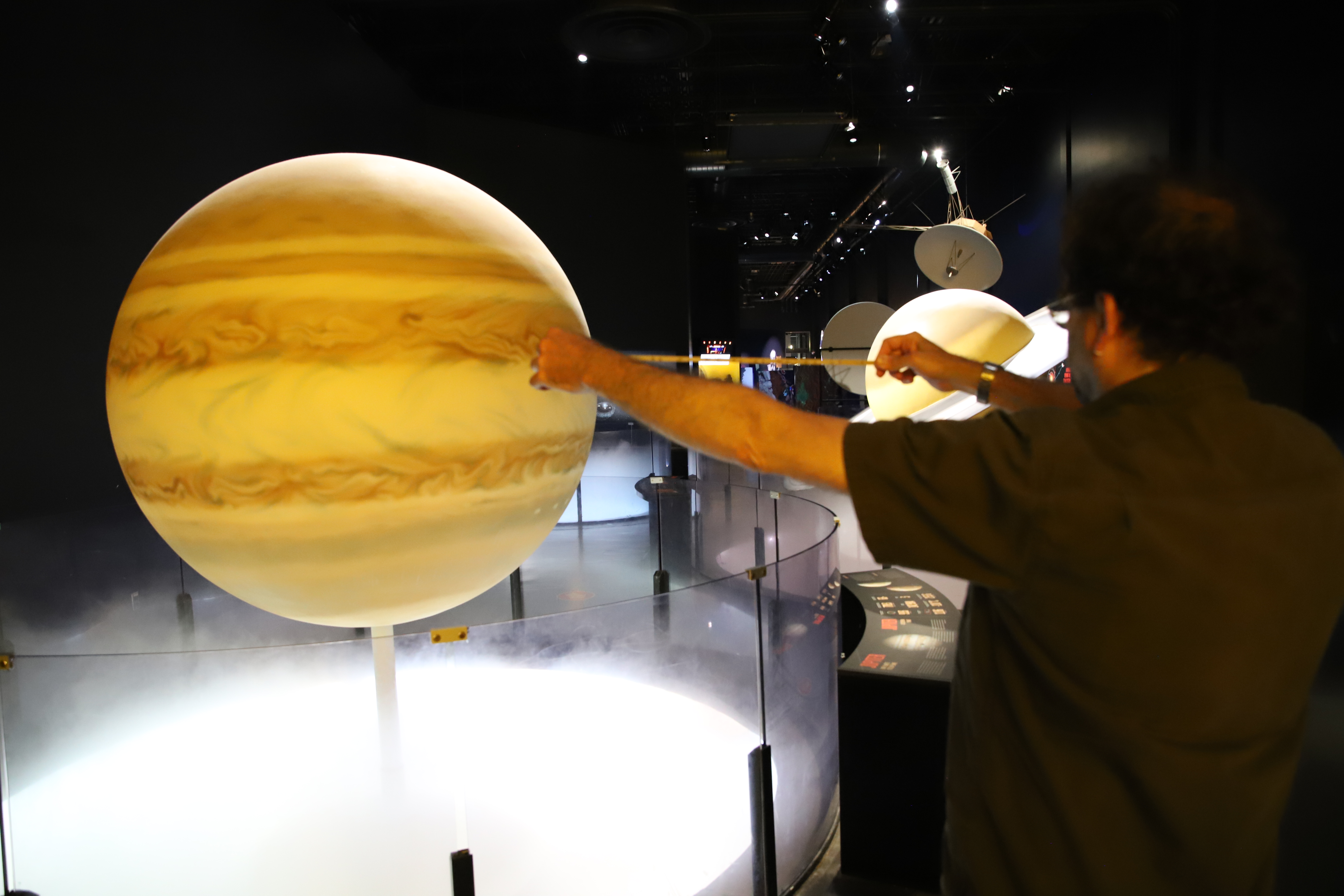
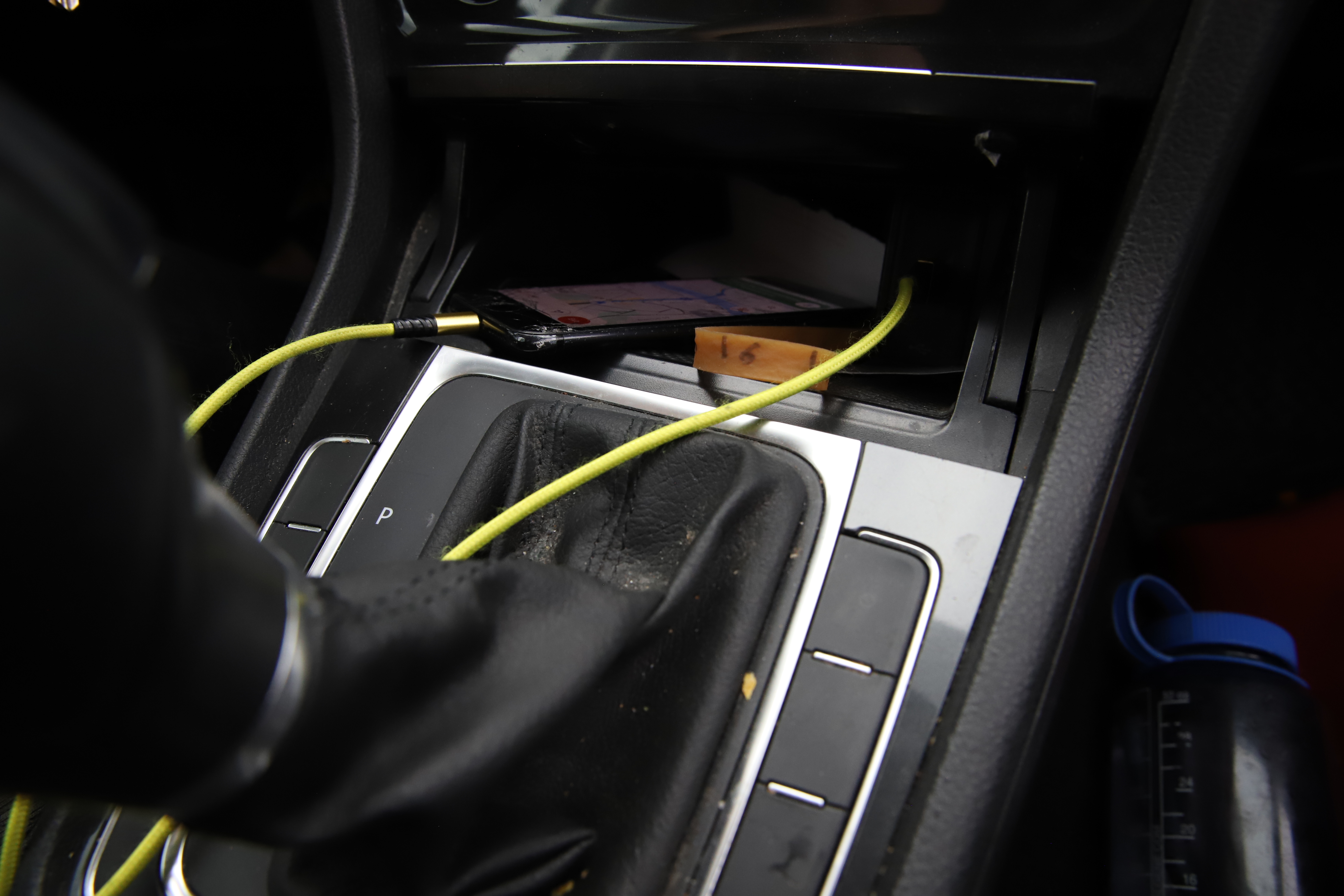
The Montreal Session traces the ruler’s pathway for measuring the complex relationship between extraterrestrial space and the city (Graham 2016; Graham and Marvin, 1996 and 2001; Bischel, 2020). It maps a trajectory that extends from the ruler’s making in the studio to its wandering in the city of Montreal, and up to its visit to the Planetarium in suburban Laval.
The visual strip diagrams an urban dérive (Debord 1958) that performs a relationship between the cosmic and the urban by means of elasticity. As the sequence shifts from image to imagination, the assemblage gives rise to a geography attuned to the expansion of the universe.
The Elastic Ruler Montreal Session makes it apparent that the distance between galaxies, planets, and stars is expanding, stretching like a rubber band. It generates affective correspondences between objects, temporalities, people, and locations. As a technique of critical measuring, it reinvests the etymology of method as “a traveling,” fostering informal trajectories driven by situated (Haraway 1988) acts of measurement.
By shifting the focus from results to process, the Elastic Ruler exposes measurement as constructed, revealing and destabilizing its underlying structures (standards, scales, authority) while opening them up to experimentation. Building on measurement as an agential and performative practice rather than a neutral act of representation, it shows how “the object of measurement is not fixed” (Barad, 2007, 114), thereby positioning measurement as a world-making practice in which matter and meaning meet, insofar as “matter and meaning do not preexist, but rather are co-constituted via measurement” (2012, 6). By refusing calibration, the Elastic Ruler forces the measuring device itself to become an object of inquiry, echoing Barad’s claim that “the measurement interaction can be accounted for only if the measuring device is itself treated as an object, defying its purpose as a measuring instrument” (2007, 114).
The Elastic Ruler is inscribed within the genealogy of critical making as a “means for projecting oneself into an abstraction” (Ratto 2011, 254), rather than as a tool for illustrating a concept. It is a “generative apparatus,” a “mode of imaginative generalization … infused with common sense” (Lamarre 2023, xiv) that formulates a methodological provocation: What might happen if all sizes and distances were considered equal? The Elastic Ruler operationalizes this question as a technique (Manning and Massumi 2014) and a practice. While conventional measurement leads to determinations and comparisons, the Elastic Ruler introduces iterative variation, agency, and reflexivity into the act. Precisely because it is not calibrated to a 1:1 scale, it produces comical measurements, scales, and perspectives that are intentionally identical. By repeating the same measurement, it scrambles hierarchies to render measurement uncanny and obsolete, fun and weird. With the Elastic Ruler, each extension, each distortion reveals rather than conceals the conditions and purposes of measurement.
The Elastic Ruler can be practiced by anyone in any location. Make yourself a “ruler,” and instead of simply reproducing inherited standards, subject them to interrogation, and perhaps even humour!
Materials: Large rubber elastic band, ruler, pen.
Directions: Cut the elastic band to make one strip, imprint the ruler’s standardized units onto its surface. You’re good to go!
[1] The Elastic Ruler was originally a gift from Dominic Gagnon to his friend, Fluxus artist Jean Dupuy.
credits
authors: Marie-Pier Boucher, University of Toronto
Dominic Gagnon, artist and filmmaker
text: Marie-Pier Boucher
photographer: Fiona Annis
graphic design: Marie-Pirer Boucher and Dominic Gagnon
financial support: University of Toronto
original idea: Dominic Gagnon
references and rights
illustration copyrights
read more read less
Copyright 2026 by the authors. Reproduced with permission.
bibliography and references
read more read less
Barad, Karen. 2007. Meeting the Universe Halfway: Quantum Physics and the Entanglement of Matter and Meaning. Durham: Duke University Press.
Barad, Karen. 2012. What Is the Measure of Nothingness? Infinity, Virtuality, Justice. Ostfildern: Hatje Cantz.
Bichsel, Christine. 2020. “Introduction: Infrastructure on/off Earth.” Roadsides 3 (February): 1–6. https://doi.org/10.26034/roadsides-202000301.
Debord, Guy. 1958. “La théorie de la dérive.” Internationale Situationniste 2.
Deleuze, Gilles, and Félix Guattari. 1987. A Thousand Plateaus: Capitalism and Schizophrenia. Translated by Brian Massumi. Minneapolis: University of Minnesota Press.
European Space Agency. n.d. “Space-Time as an Elastic Fabric.” Accessed June 24, 2026. https://www.esa.int/Science_Exploration/Space_Science/Space-time_as_an_elastic_fabric.
Friedman, Ken, Owen Smith, and Lauren Sawchyn, eds. 2002. Fluxus Performance Workbook. https://www.thing.net/~grist/ld/fluxusworkbook.pdf.
Graham, Stephen. 2016. Vertical: The City from Satellites to Bunkers. London: Verso.
Graham, Stephen, and Simon Marvin. 1996. Telecommunications and the City: Electronic Spaces, Urban Places. London: Routledge.
Graham, Stephen, and Simon Marvin. 2001. Splintering Urbanism: Networked Infrastructures, Technological Mobilities and the Urban Condition. London: Routledge.
Haraway, Donna. 1988. “Situated Knowledges: The Science Question in Feminism and the Privilege of Partial Perspective.” Feminist Studies 14 (3): 575–599.
Lamarre, Thomas. 2023. “Translator’s Introduction: A Shock to Think Together.” In Making Sense in Common: A Reading of Whitehead in Times of Collapse. Translated by Thomas Lamarre. Minneapolis: University of Minnesota Press.
Manning, Erin, and Brian Massumi. 2014. Thought in the Act: Passages in the Ecology of Experience. Minneapolis: University of Minnesota Press.
Parks, Lisa. 2018. Rethinking Media Coverage: Vertical Mediation and the War on Terror. London: Routledge.
Ratto, Matt. 2011. “Critical Making: Conceptual and Material Studies in Technology and Social Life.” The Information Society 27 (4): 252–260. https://doi.org/10.1080/01972243.2011.583819.
Stengers, Isabelle. 2010. Cosmopolitics I. Translated by Robert Bononno. Minneapolis: University of Minnesota Press.
to cite this article
Boucher, Marie-Pier and Dominic Gagnon. 2026. “The Elastic Ruler: Montreal Session.” .able journal: https://doi.org/10.69564/able.en.26038.elasticruler
cite this article
MLA
EN
Boucher, Marie-Pier and Dominic Gagnon. “The Elastic Ruler: Montreal Session.” .able journal, 2026. https://doi.org/10.69564/able.en.26038.elasticruler
ISO 690
EN
BOUCHER, Marie-Pier and GAGNON, Dominic. “The Elastic Ruler: Montreal Session.” .able journal [online]. 2026. Available from: https://doi.org/10.69564/able.en.26038.elasticruler
APA
EN
Boucher, M.-P., & Gagnon, D. (2026). The Elastic Ruler: Montreal Session. .able journal. https://doi.org/10.69564/able.en.26038.elasticruler
print this contribution
Use the links below to print this contribution. You have the choice between a high-quality format or an eco-quality format optimized to reduce environmental impact.