swamp things
design for regenerative paludiculture
about this contribution
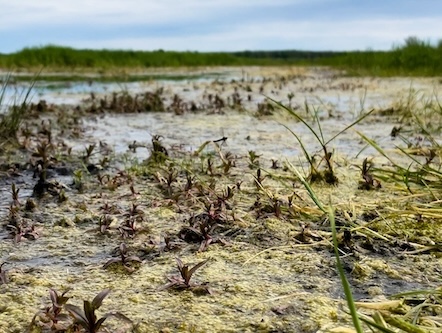
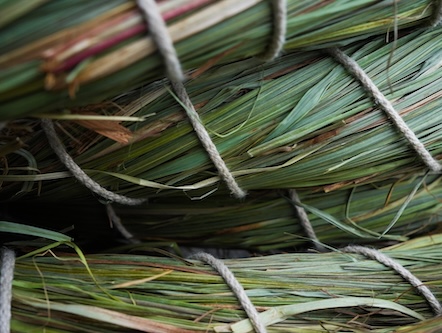
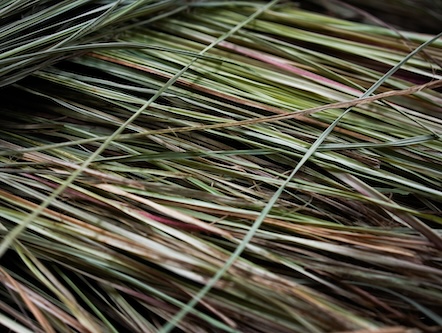
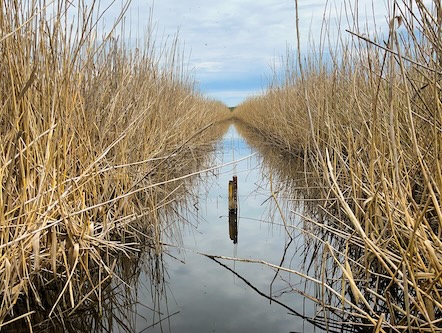
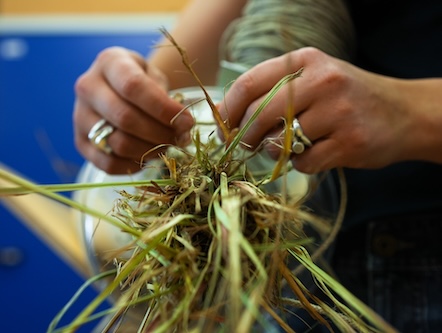
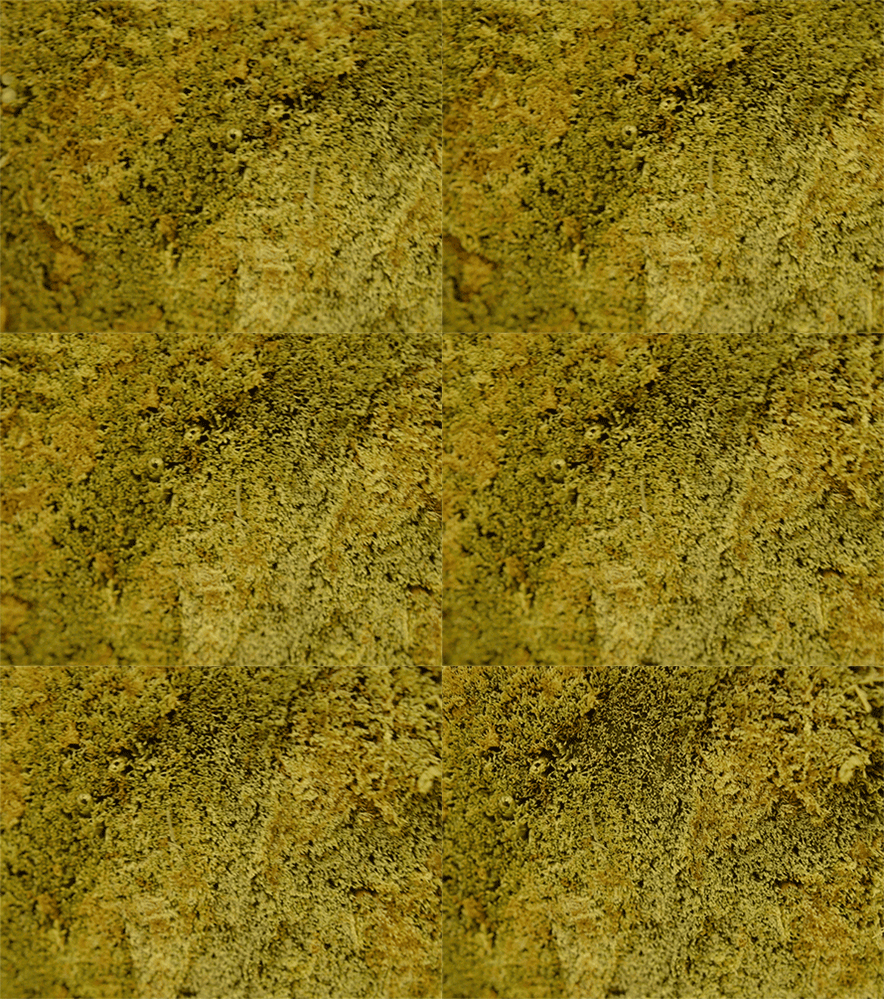
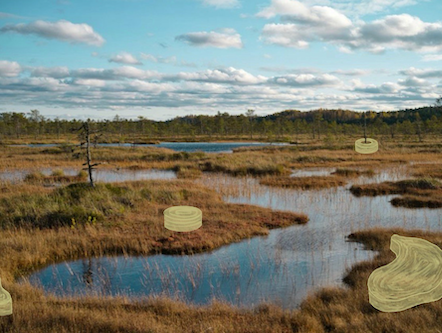
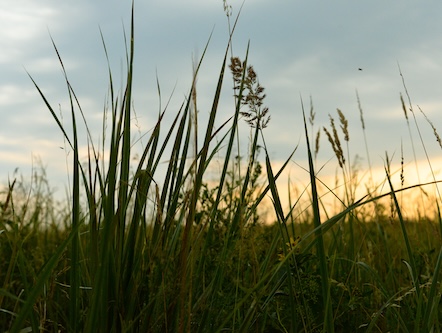
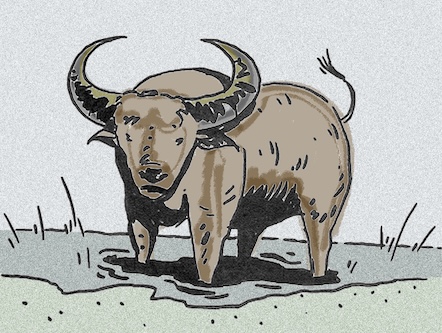
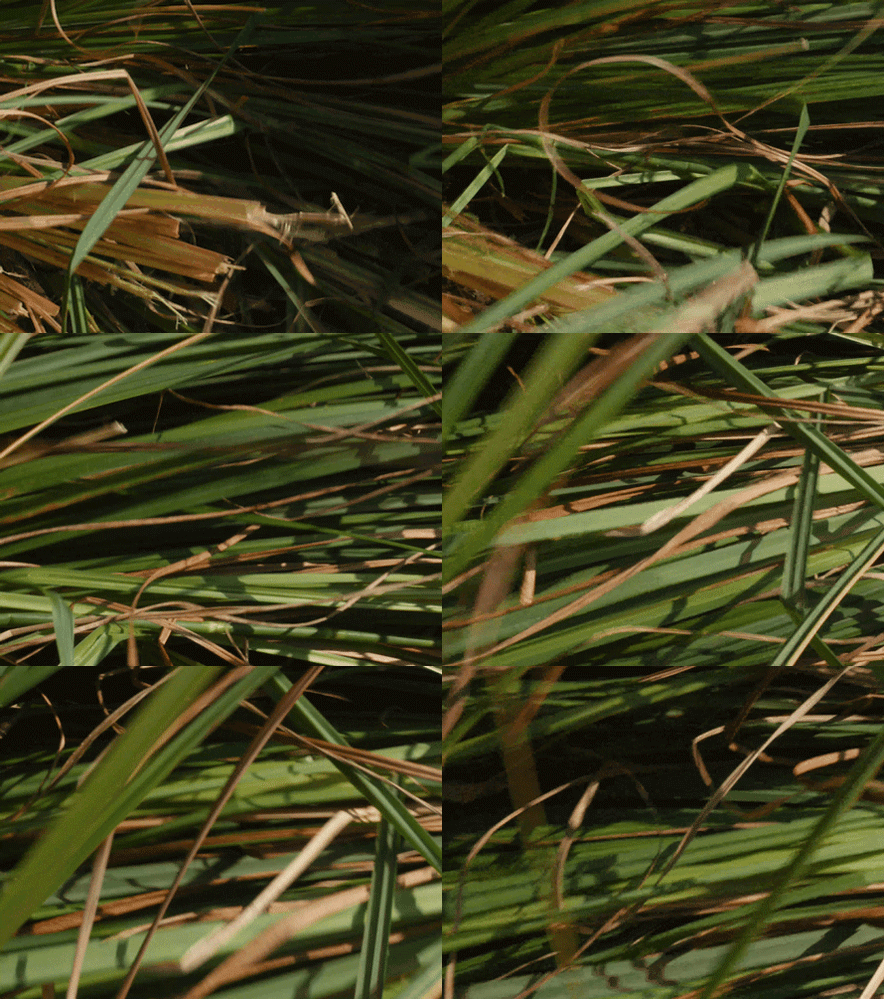
Rewetting peatlands is crucial for reducing global greenhouse gas emissions, as these ecosystems store twice as much carbon compared to forests. In Germany, 94% of peatlands have been drained for agriculture (Tanneberger and Schroeder 2023). Transitioning to sustainable wetland regeneration is crucial, and depends on farmers being able to develop viable new peatland economies, known as paludiculture from the Latin palus, meaning swamp (Furtak and Joosten 2024). Our research addresses how we can support farmers to thrive in these rewetted landscapes, to develop suitable new technologies with local resources, and speculate on future modes of living in these newly fashioned landscapes. Our research site is fenland (Niedermoor) near Kremmen, in Brandenburg, in northeastern Germany. Here we focus on the potential of peatland grasses, specifically reed canary grass (Phalaris arundinacea) and sedge (Carex spp.), as materials which could be grown in abundance in this area, and explore their properties, traditional craftsmanship methods, and modern technologies of making.
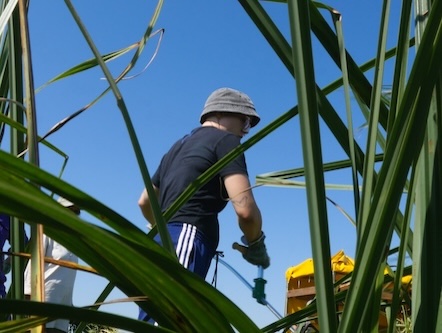
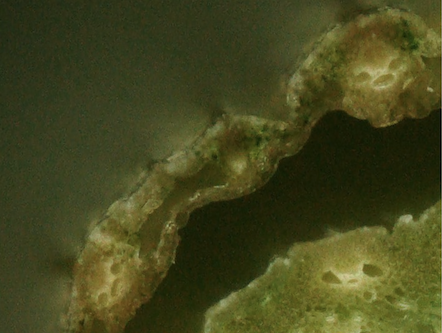
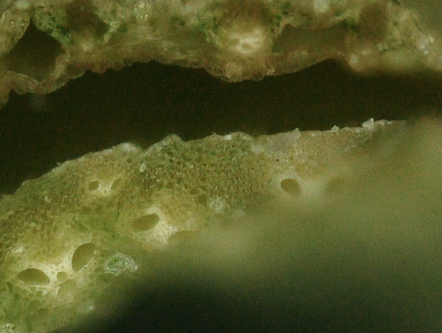
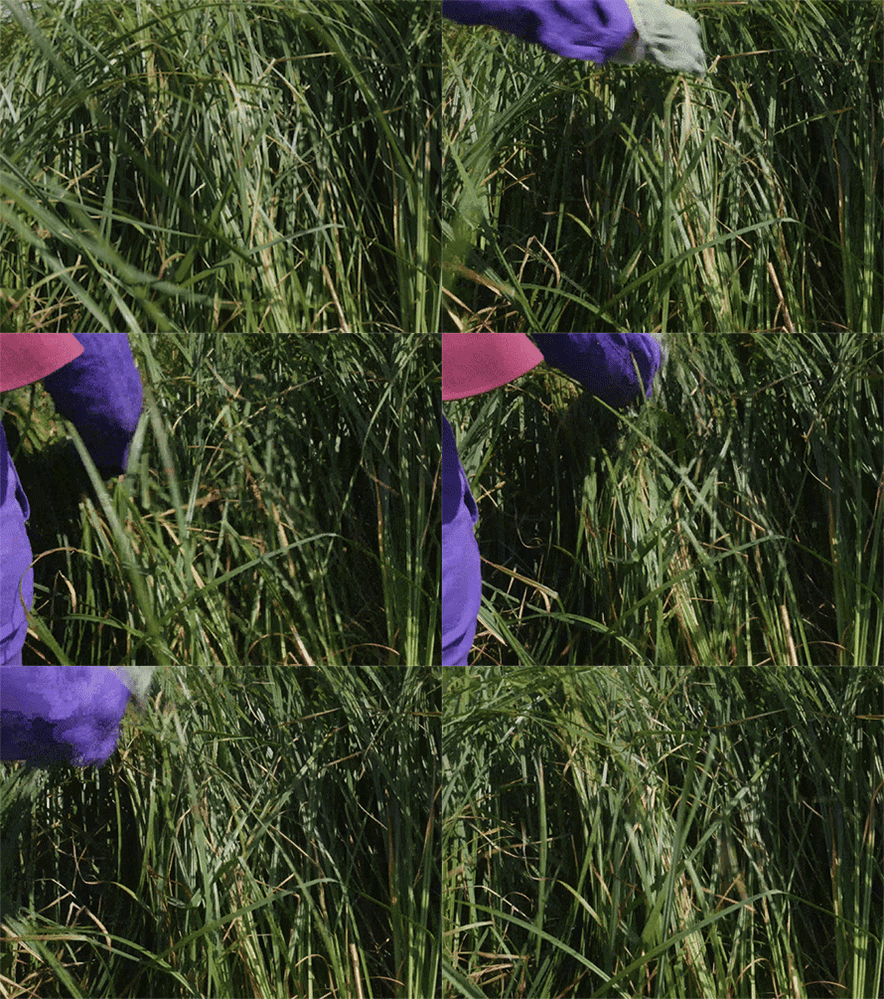
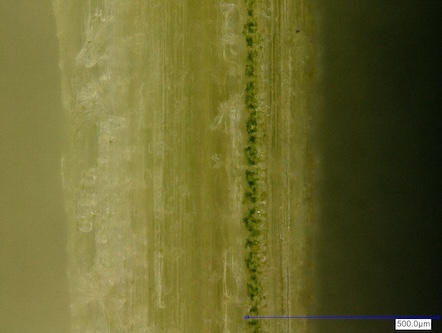
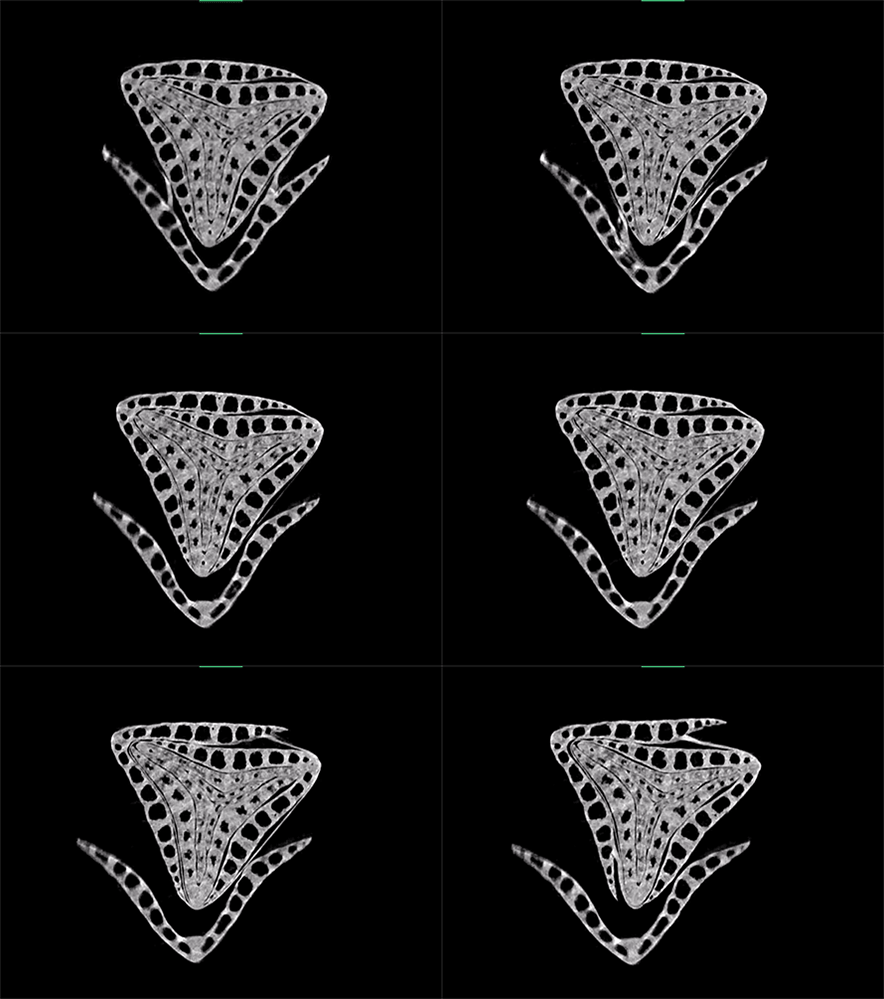
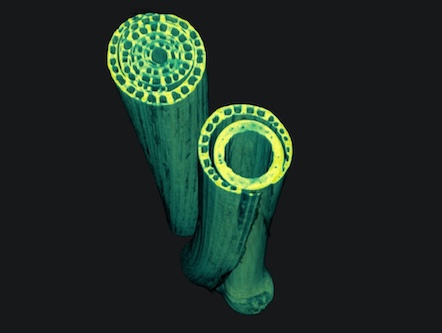
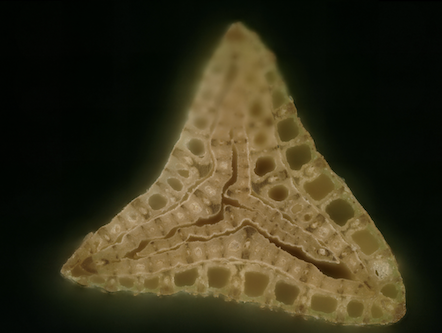
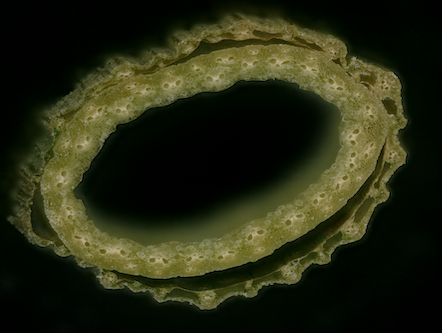
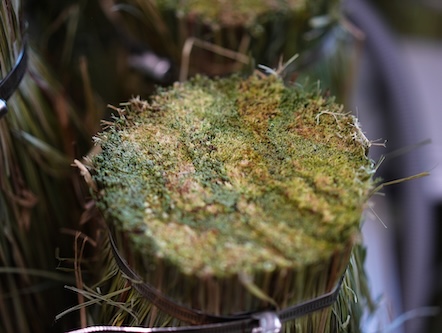
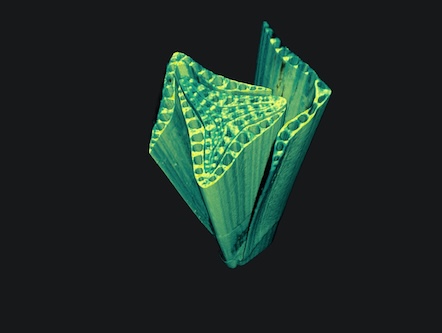
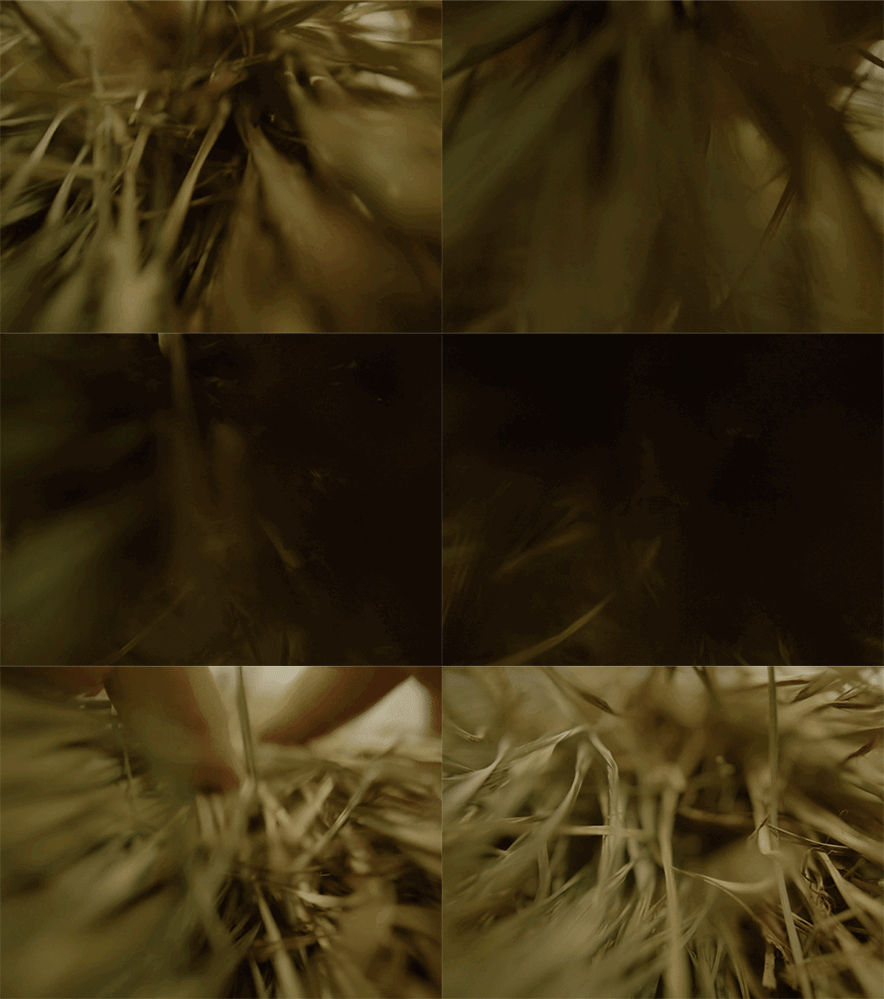
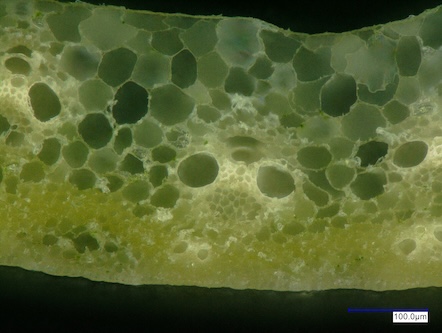
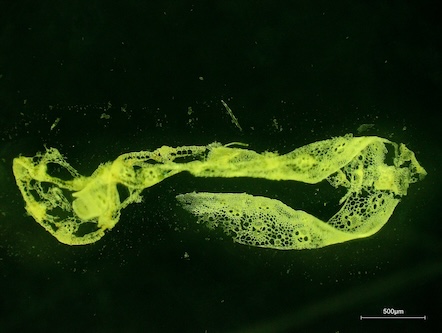
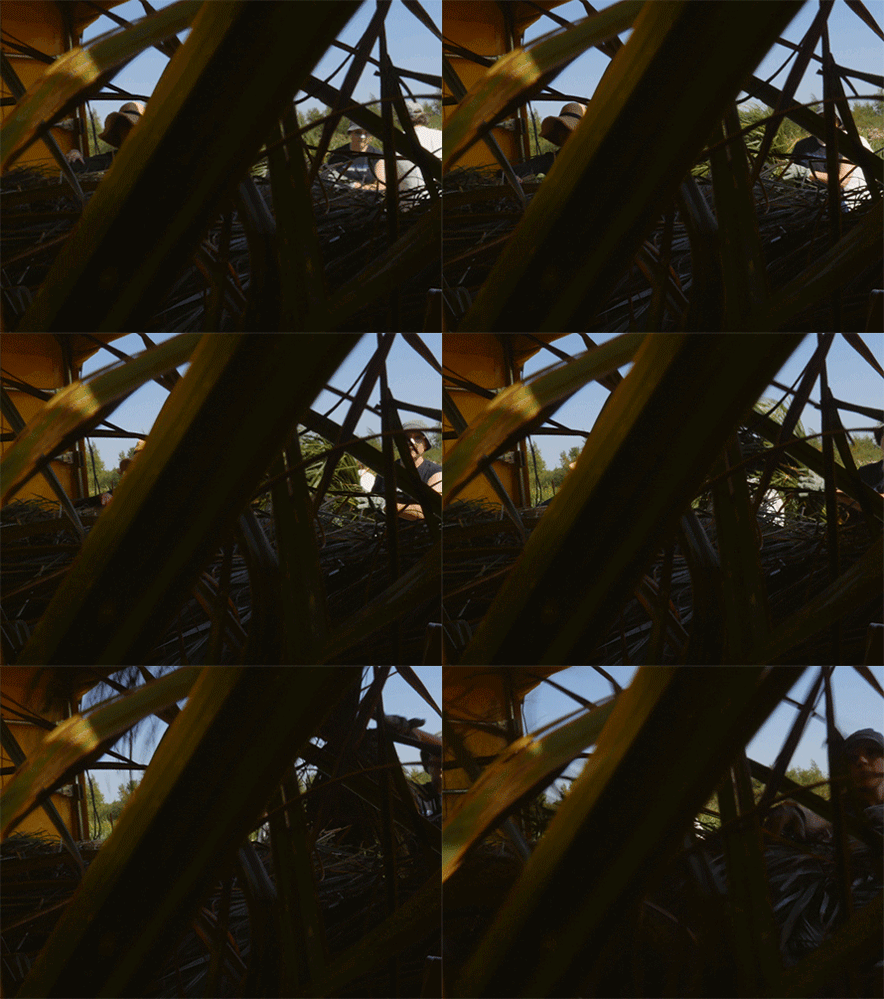
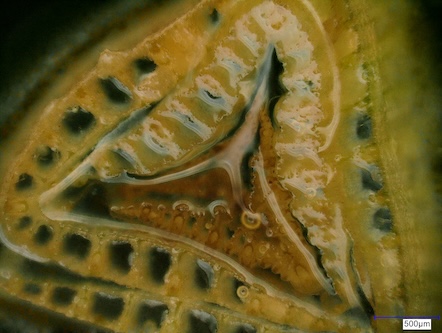
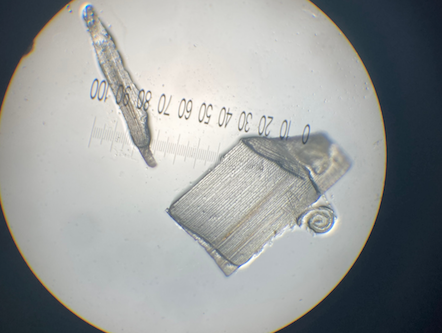
At the intersection of design research and materials science, our initial research phase has focused on understanding the harvesting process of sedges and reed canary grass, emphasizing innovative techniques for processing these materials while preserving their structure, analyzed through microcomputed tomography scans. To better understand the mechanical properties of these plants, and how their geometry shifts between wet and dry states, we study their swelling and shrinkage behavior. Initial experiments indicate significant differences in the properties of the two plant species, influencing their potential for architectural applications.
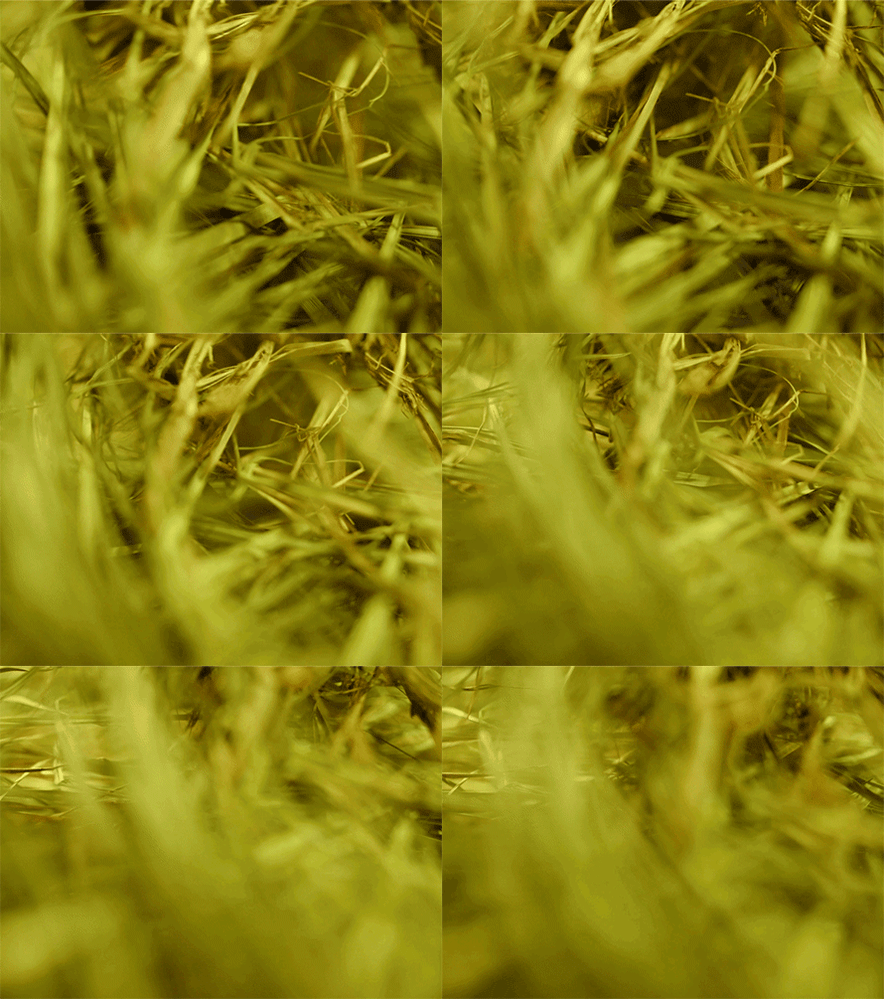
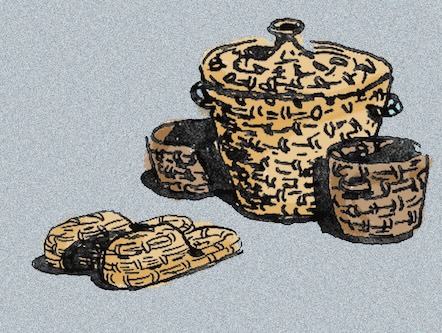
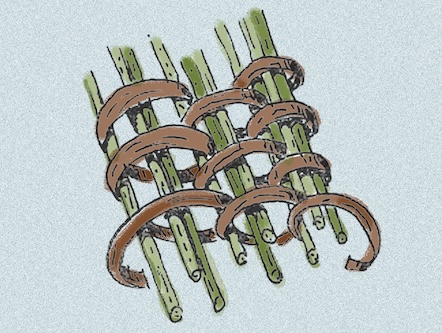
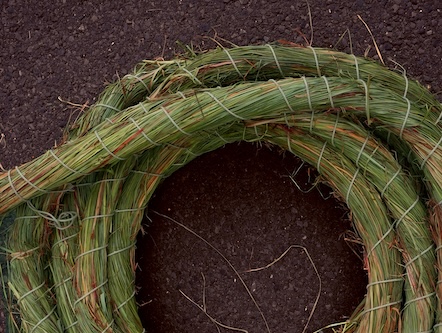
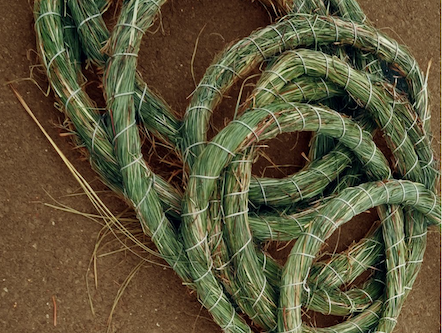
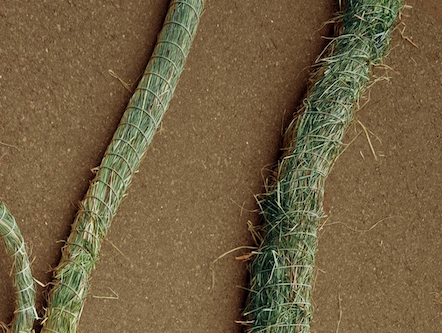
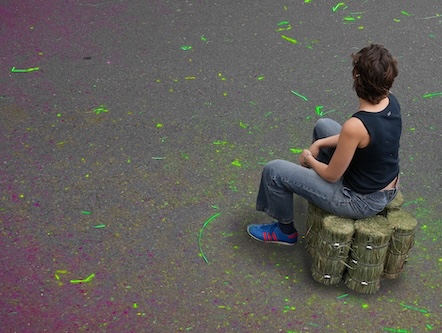
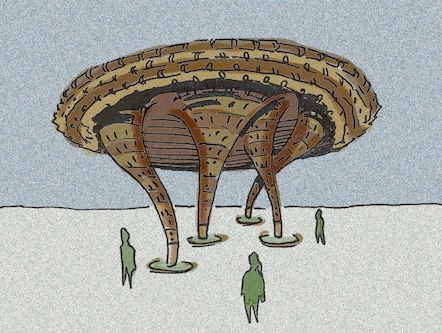
Our material-driven design approach examines how to best utilize these grasses according to their mechanical properties. By experimenting with techniques like coiled basketry, we create architectural objects that encourage a dialogue among diverse stakeholders. Coiling, an ancient basketry method, offers versatility by allowing various form adjustments based on plant density, length, and alignment. Experiments produced coils up to 30 meters in length, which were further tested as modular building elements and potential geotextiles for ecological restoration. At the end of use, paludiculture-based structures can decompose naturally without environmental toxins, potentially reintegrating into wetland ecosystems as feed for local animals or through industrial cascading for material reuse.
These coiled objects serve as “boundary objects” (Star and Griesemer 1989) bridging diverse perspectives from science, design, agriculture, and traditional crafts. As versatile symbols, they resonate differently across disciplines, representing sustainable materials in ecology, functional design in architecture, and anthropological approaches to basketry as a cultural technique. This research demonstrates how interdisciplinary insights can drive new applications for biomaterials, paving the way for sustainable design solutions.
credits
authors: Charlett Wenig, designer, postdoctoral researcher within the Adaptive Fibrous Materials research group, Cluster of Excellence Matters of Activity, Max Planck Institute of Colloids and Interfaces.
Lucy Norris, Professor of Material Cultures, Department of Theory and History, Weißensee Kunsthochschule Berlin; Associate Member, Cluster of Excellence Matters of Activity.
Janne Ebel, filmmaker and cinematographer, Berlin and New York
photography and video: Janne Ebel, Cholena de Koningh, Kira Becker
photo and video editing: Janne Ebel, Cholena de Koningh
sketches: Florian Weisz
landscape collage: Alena Stuhr, Kira Becker
collaboration partners:
Leibniz-Institut für Agrartechnik und Bioökonomie e.V. (ATB)
Petri Moorhofer Grünlandhof
financial support: C. W. and J. E acknowledge the support of the Cluster of Excellence Matters of Activity. Image Space Material, funded by the Deutsche Forschungsgemeinschaft (DFG, German Research Foundation) under Germany’s Excellence Strategy—EXC 2025-390648296. C. W. also acknowledges the support of the Max Planck Society.
acknowledgments: We would like to thank the Petri family at Moorhof Kremen for providing the grasses, Hendrik Spikermann from the Leibniz Institute for Agricultural Engineering and Bioeconomy (ATB) for their assistance with harvesting, transporting, and drying the materials. We thank Tonja Wetzel, Cholena de Koningh, Alena Stuhr, and Kira Becket who helped with the harvesting. Alena Stuhr and Kira Becker assisted with research into plant structures and developing prototypes during their internship at the Max Planck Institute of Colloids and Interfaces. We would like to thank Ralf Pecenka from the Leibniz Institute for Agricultural Engineering and Bioeconomy (ATB) for the valuable scientific exchange and for generously providing the resources needed for this work. We thank the anonymous reviewers for their constructive comments.
copy editing: Bronwyn Mahoney
references and rights
illustrations references and rights
read more read less
Copyright 2025 by the authors, photographers, videographers. Reproduced with permission.
bibliography and references
read more read less
Dewitz, Inka, ed. 2023. Mooratlas: Daten und Fakten zu nassen Klimaschützern: ein Kooperationsprojekt von Heinrich-Böll-Stiftung, Bund für Umwelt und Naturschutz Deutschland und der Michael Succow Stiftung, Partner im Greifswald Moor Centrum. Berlin: Heinrich-Böll-Stiftung.
International Union for Conservation of Nature. 2021: “Peatlands and Climate Change.” In IUCN Issues Brief.
Furtak, Swantje, and Hans Joosten. 2024. Moore Sind Wie Menschen, Nur Nasser. Greifswald: Katapult Verlag GmbH.
Star, Susan Leigh, and James R Griesemer. 1989. “Institutional ecology, ‘translations’ and boundary objects: Amateurs and professionals in Berkeley’s Museum of Vertebrate Zoology, 1907–39.” Social Studies of Science 19 (3): 387–420, https://doi.org/10.1177/030631289019003001
Tanneberger, Franziska, and Vera Schroeder. 2023. Das Moor: Über eine faszinierende Welt zwischen Wasser und Land – und warum sie für unser Klima so wichtig ist. Munich: dtv Verlagsgesellschaft
to cite this article
This article is using Chicago format for its references
Wenig, Charlett, Lucy Norris & Janne Ebel. 2026. “Swamp Things: Design for Regenerative Paludiculture.” .able Journal: https://doi.org/10.69564/able.en.26035.swampthings
cite this article
MLA
EN
Wenig, Charlett, Lucy Norris, and Janne Ebel. “Swamp Things: Design for Regenerative Paludiculture.” .able journal, 2026. https://doi.org/10.69564/able.en.26035.swampthings
ISO 690
EN
WENIG, Charlett, NORRIS Lucy, and EBEL Janne. “Swamp Things: Design for Regenerative Paludiculture.” .able journal [online]. 2026. Available from: https://doi.org/10.69564/able.en.26035.swampthings
APA
EN
Wenig C., Norris L., & Ebel J. (2026). Swamp Things: Design for Regenerative Paludiculture. .able journal. https://doi.org/10.69564/able.en.26035.swampthings
discover on social media
Use the links below to share a suitable version of this contribution on social media:
coming soon…
print this contribution
Use the links below to print this contribution. You have the choice between a high-quality format or an eco-quality format optimized to reduce environmental impact.