this is a story.able
scroll to navigate and click on images to reveal captions when available

  • 0
  • 1
  • 2
  • 3
  • 4
  • 5
  • 6
  • 7
  • 8
  • 9
  • 10
  • 11
  • 12
  • 13
  • 14
  • 15
  • 16
  • 17
  • 18
  • 19
  • 20
  • 21
  • 22
  • 23
  • 24
  • 25
  • 26
  • 27
  • 28
  • 29
  • 30
  • 31
  • 32
  • 33
  • 34
  • 35
  • 36
  • 37
  • 38
  • 39
  • 40
  • 41
  • 42
  • 43
  • 44
  • 45
  • 46
  • 47
  • 48
  • 49
  • 50
  • 51
  • 52
  • 53
  • 54
  • 55
  • 56
  • 57
  • 58
  • 59
  • 60
  • 61
  • 62
  • 63
  • 64
  • 65
  • 66
  • 67
  • 68
  • 69
  • 70
  • 71
  • 72
  • 73
  • 74
  • 75
  • 76
  • 77
  • 78
  • 79
  • 80
  • 81
  • 82
  • 83
  • 84
  • 85
  • 86
  • 87
  • 88
  • 89
  • 90
  • 91
  • 92
  • 93
  • 94
  • 95
  • 96
  • 97
  • 98
  • 99
%
close info

swamp things

design for regenerative paludiculture

Charlett Wenig, Lucy Norris & Janne Ebel - May 07, 2026

the original language of this article is english

tags :

layout format :

about this contribution

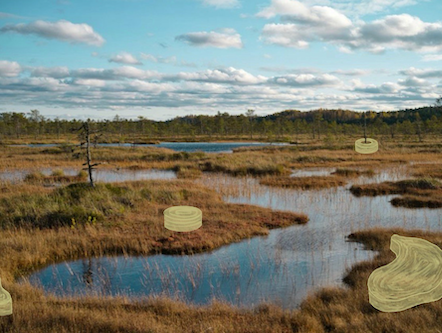
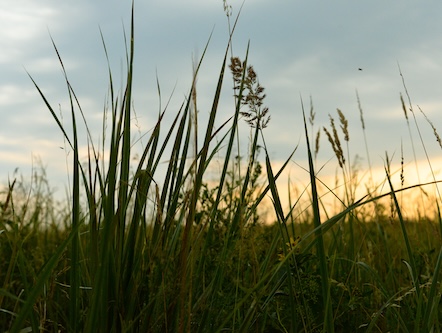
Rewetting peatlands is crucial for reducing global greenhouse gas emissions, as these ecosystems store twice as much carbon compared to forests. In Germany, 94% of peatlands have been drained for agriculture (Tanneberger and Schroeder 2023). Transitioning to sustainable wetland regeneration is crucial, and depends on farmers being able to develop viable new peatland economies, known as paludiculture from the Latin palus, meaning swamp (Furtak and Joosten 2024). Our research addresses how we can support farmers to thrive in these rewetted landscapes, to develop suitable new technologies with local resources, and speculate on future modes of living in these newly fashioned landscapes. Our research site is fenland (Niedermoor) near Kremmen, in Brandenburg, in northeastern Germany. Here we focus on the potential of peatland grasses, specifically reed canary grass (Phalaris arundinacea) and sedge (Carex spp.), as materials which could be grown in abundance in this area, and explore their properties, traditional craftsmanship methods, and modern technologies of making.

At the intersection of design research and materials science, our initial research phase has focused on understanding the harvesting process of sedges and reed canary grass, emphasizing innovative techniques for processing these materials while preserving their structure, analyzed through microcomputed tomography scans. To better understand the mechanical properties of these plants, and how their geometry shifts between wet and dry states, we study their swelling and shrinkage behavior. Initial experiments indicate significant differences in the properties of the two plant species, influencing their potential for architectural applications.

Our material-driven design approach examines how to best utilize these grasses according to their mechanical properties. By experimenting with techniques like coiled basketry, we create architectural objects that encourage a dialogue among diverse stakeholders. Coiling, an ancient basketry method, offers versatility by allowing various form adjustments based on plant density, length, and alignment. Experiments produced coils up to 30 meters in length, which were further tested as modular building elements and potential geotextiles for ecological restoration. At the end of use, paludiculture-based structures can decompose naturally without environmental toxins, potentially reintegrating into wetland ecosystems as feed for local animals or through industrial cascading for material reuse.

These coiled objects serve as “boundary objects” (Star and Griesemer 1989) bridging diverse perspectives from science, design, agriculture, and traditional crafts. As versatile symbols, they resonate differently across disciplines, representing sustainable materials in ecology, functional design in architecture, and anthropological approaches to basketry as a cultural technique. This research demonstrates how interdisciplinary insights can drive new applications for biomaterials, paving the way for sustainable design solutions.

credits

authors: Charlett Wenig, designer, postdoctoral researcher within the Adaptive Fibrous Materials research group, Cluster of Excellence Matters of Activity, Max Planck Institute of Colloids and Interfaces.

Lucy Norris, Professor of Material Cultures, Department of Theory and History, Weißensee Kunsthochschule Berlin; Associate Member, Cluster of Excellence Matters of Activity.

Janne Ebel, filmmaker and cinematographer, Berlin and New York

photography and video: Janne Ebel, Cholena de Koningh, Kira Becker

photo and video editing: Janne Ebel, Cholena de Koningh

sketches: Florian Weisz

landscape collage: Alena Stuhr, Kira Becker

collaboration partners:
Leibniz-Institut für Agrartechnik und Bioökonomie e.V. (ATB)
Petri Moorhofer Grünlandhof

financial support: C. W. and J. E acknowledge the support of the Cluster of Excellence Matters of Activity. Image Space Material, funded by the Deutsche Forschungsgemeinschaft (DFG, German Research Foundation) under Germany’s Excellence Strategy—EXC 2025-390648296. C. W.  also acknowledges the support of the Max Planck Society.

acknowledgments: We would like to thank the Petri family at Moorhof Kremen for providing the grasses, Hendrik Spikermann from the Leibniz Institute for Agricultural Engineering and Bioeconomy (ATB) for their assistance with harvesting, transporting, and drying the materials. We thank Tonja Wetzel, Cholena de Koningh, Alena Stuhr, and Kira Becket who helped with the harvesting. Alena Stuhr and Kira Becker assisted with research into plant structures and developing prototypes during their internship at the Max Planck Institute of Colloids and Interfaces. We would like to thank Ralf Pecenka from the Leibniz Institute for Agricultural Engineering and Bioeconomy (ATB)  for the valuable scientific exchange and for generously providing the resources needed for this work. We thank the anonymous reviewers for their constructive comments.

copy editing: Bronwyn Mahoney

references and rights

illustrations references and rights

read more read less

Copyright 2025 by the authors, photographers, videographers. Reproduced with permission. 


bibliography and references

read more read less

Dewitz, Inka, ed. 2023. Mooratlas: Daten und Fakten zu nassen Klimaschützern: ein Kooperationsprojekt von Heinrich-Böll-Stiftung, Bund für Umwelt und Naturschutz Deutschland und der Michael Succow Stiftung, Partner im Greifswald Moor Centrum. Berlin: Heinrich-Böll-Stiftung.

International Union for Conservation of Nature. 2021: “Peatlands and Climate Change.” In IUCN Issues Brief.

Furtak, Swantje, and Hans Joosten. 2024. Moore Sind Wie Menschen, Nur Nasser. Greifswald: Katapult Verlag GmbH.

Star, Susan Leigh, and James R Griesemer. 1989. “Institutional ecology, ‘translations’ and boundary objects: Amateurs and professionals in Berkeley’s Museum of Vertebrate Zoology, 1907–39.” Social Studies of Science 19 (3): 387–420, https://doi.org/10.1177/030631289019003001

Tanneberger, Franziska, and Vera Schroeder. 2023. Das Moor: Über eine faszinierende Welt zwischen Wasser und Land – und warum sie für unser Klima so wichtig ist. Munich: dtv Verlagsgesellschaft

to cite this article

This article is using Chicago format for its references

Wenig, Charlett, Lucy Norris & Janne Ebel. 2026. “Swamp Things: Design for Regenerative Paludiculture..able Journal: https://doi.org/10.69564/able.en.26035.swampthings 

discover on social media

Use the links below to share a suitable version of this contribution on social media:
coming soon…

discover other projects

To achieve the EU’s climate neutrality goal by 2050, member states need to cut greenhouse gas emissions by at least 55% by 2030. Peatlands play a vital role in this effort, as they hold twice as much carbon globally as all forests combined (International Union for Conservation of Nature 2021).
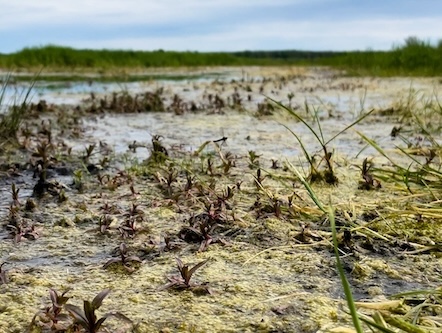
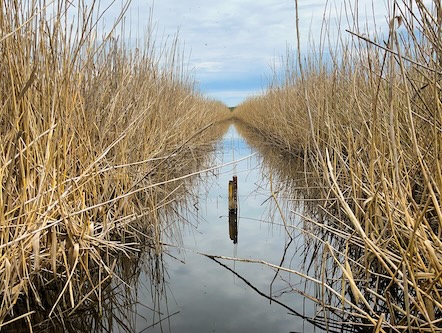
In Germany, over 94% of peatlands are drained, often for farming (Tanneberger and Schroeder 2023). Formed after the last Ice Age, they have been used since prehistory and in modern times, heavily drained. Brandenburg holds 15%, with 75% farmed (Dewitz 2023). In Kremmen, some farmers restore wetland farming.
A major question is how rewetted peatlands can generate income for farming communities. Transitioning from conventional to wetland farming requires not just new machinery, but also new knowledge, harvesting cycles, and adjustments to cultural identity.
Paludiculture refers to cultivating biomass on wet peatlands, offering a sustainable farming alternative. To make this transition viable for farmers, there is a strong need to establish new markets for paludiculture products.
Most paludiculture crops serve as a raw material to extract fibers or chemicals. These processes destroy the plant structure and limit the reuse in a cascade utilization approach.
Our method aims to make use of the intact plant structure, avoiding modification that restricts reuse.
-
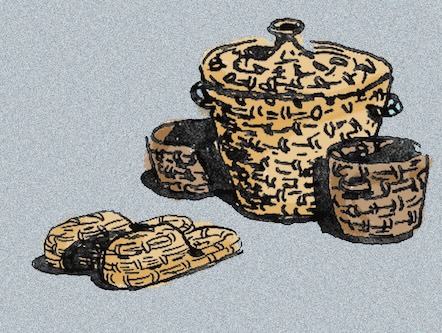
Historically, paludiculture plants were used in various non-industrial ways, such as boat-building and thatching with reed straw. They were also crafted into baskets, beehives, furniture, shoes, and other household items.
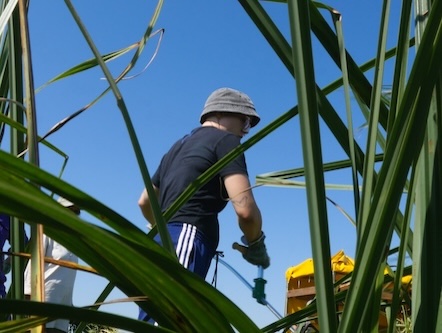
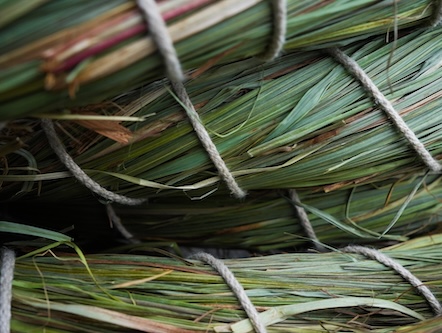
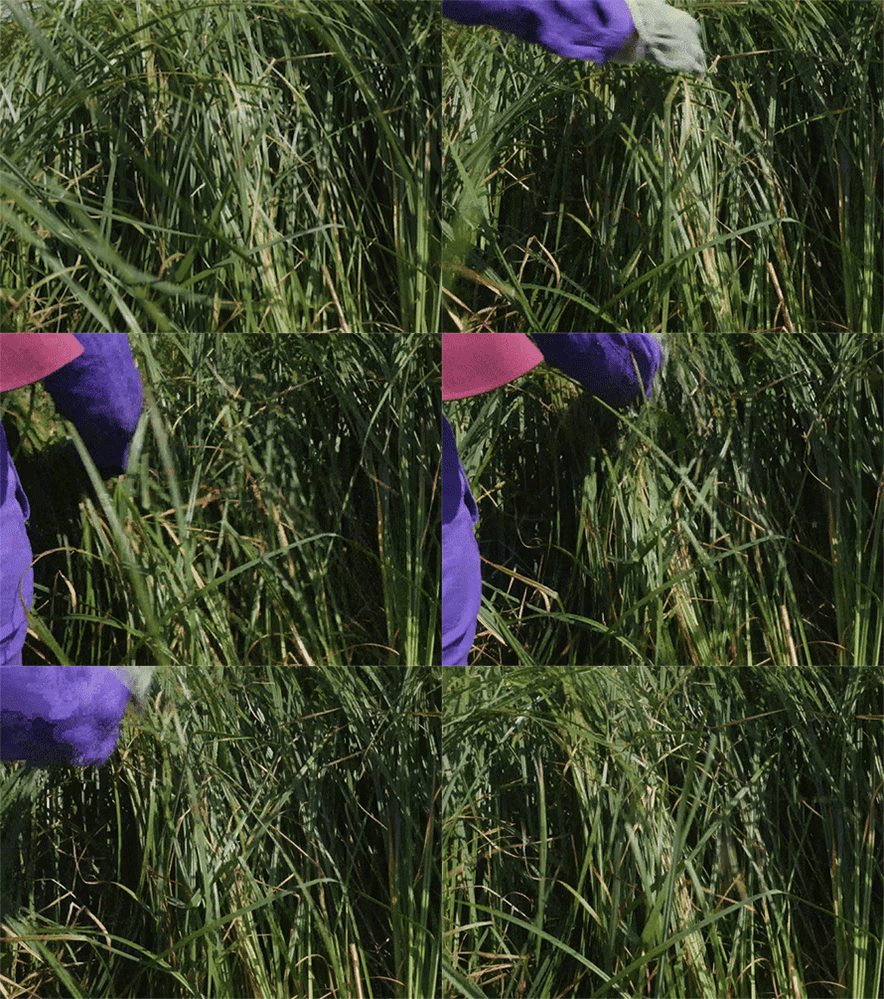
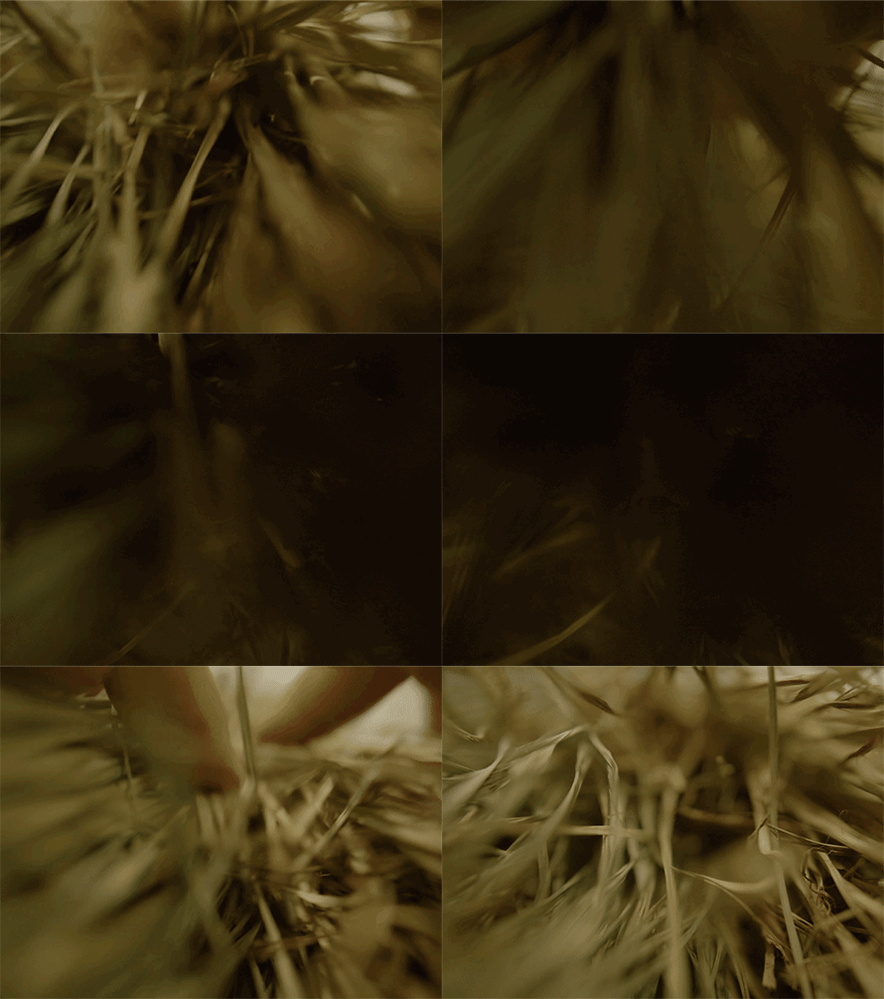
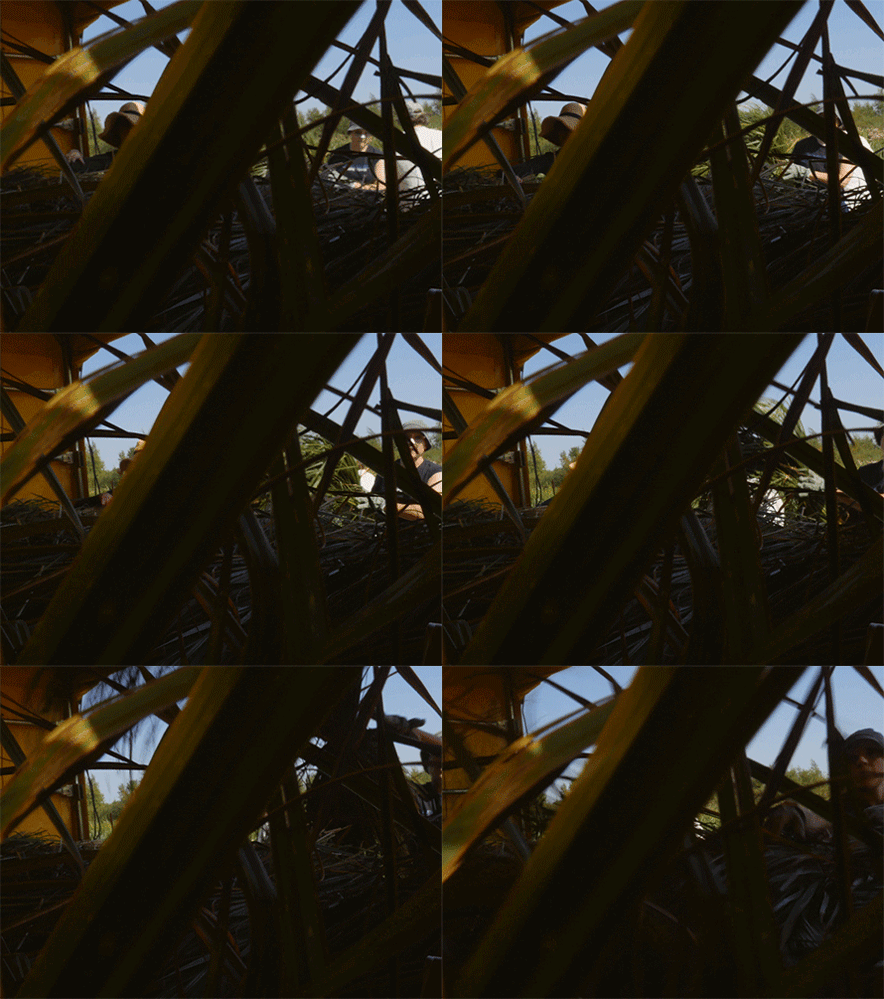
The initial phase of research focused on understanding the harvesting process. Unlike conventional methods where plants are cut and pressed into hay bales, we experimented by cutting plants at their full length.
At Moorhofen Kremmen, harvesting occurred in late spring and summer. Rewetted fields on the Petri family farm serve both research and economic purposes. In partnership with the Leibniz Institute for Agricultural Engineering and Bioeconomy, plants were harvested at various times to study their properties.
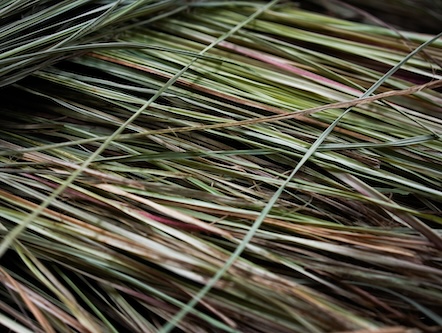
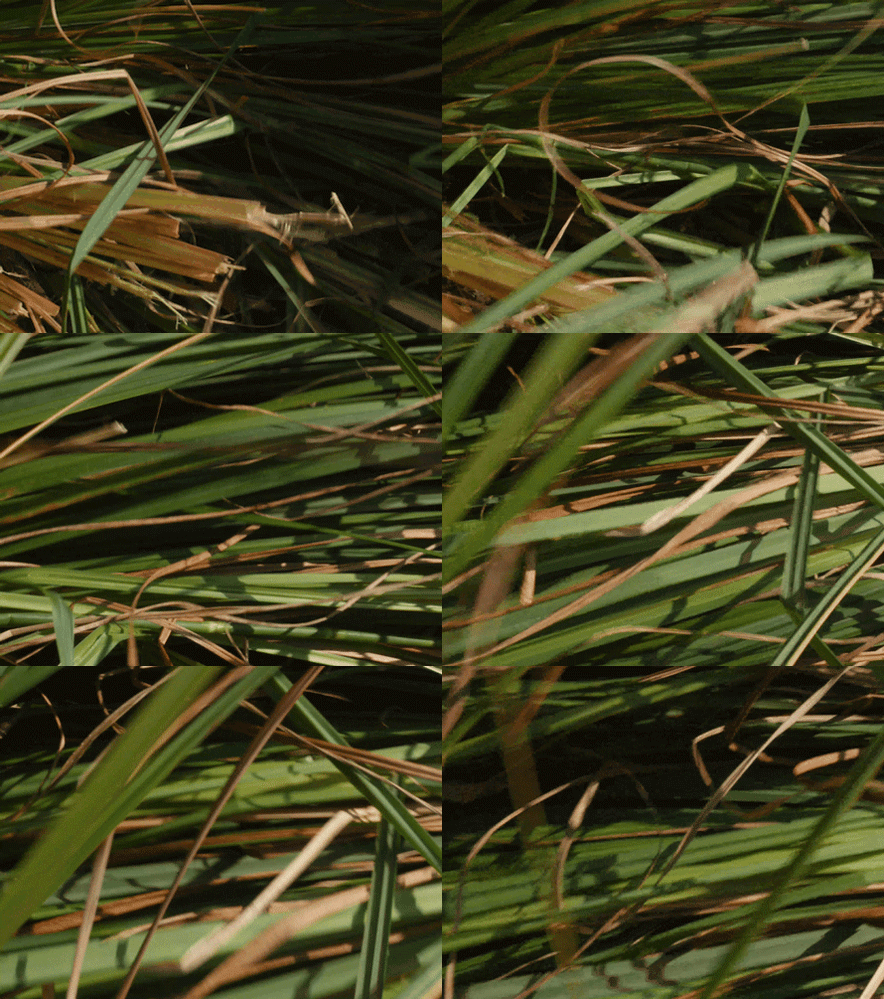
This research primarily focuses on two types of plants: sedges (Carex spp.) and reed canary grass (Phalaris arundinacea).
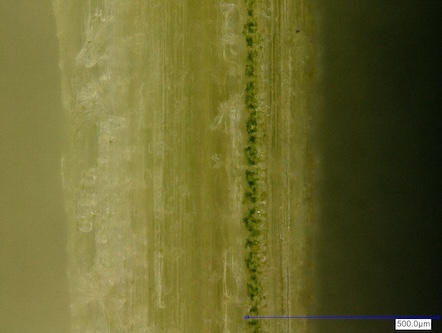
These native plants grow in mixed cultures on the wet meadows and are farmed as fodder. This research compared their structure and mechanical properties and how these change with low-impact fabrication. Tests under identical conditions showed suitability for crafts such as coiling.
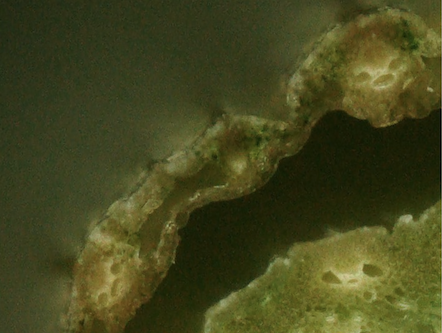
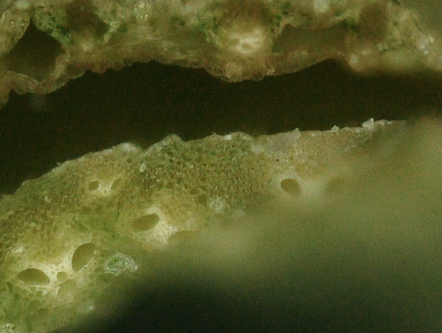
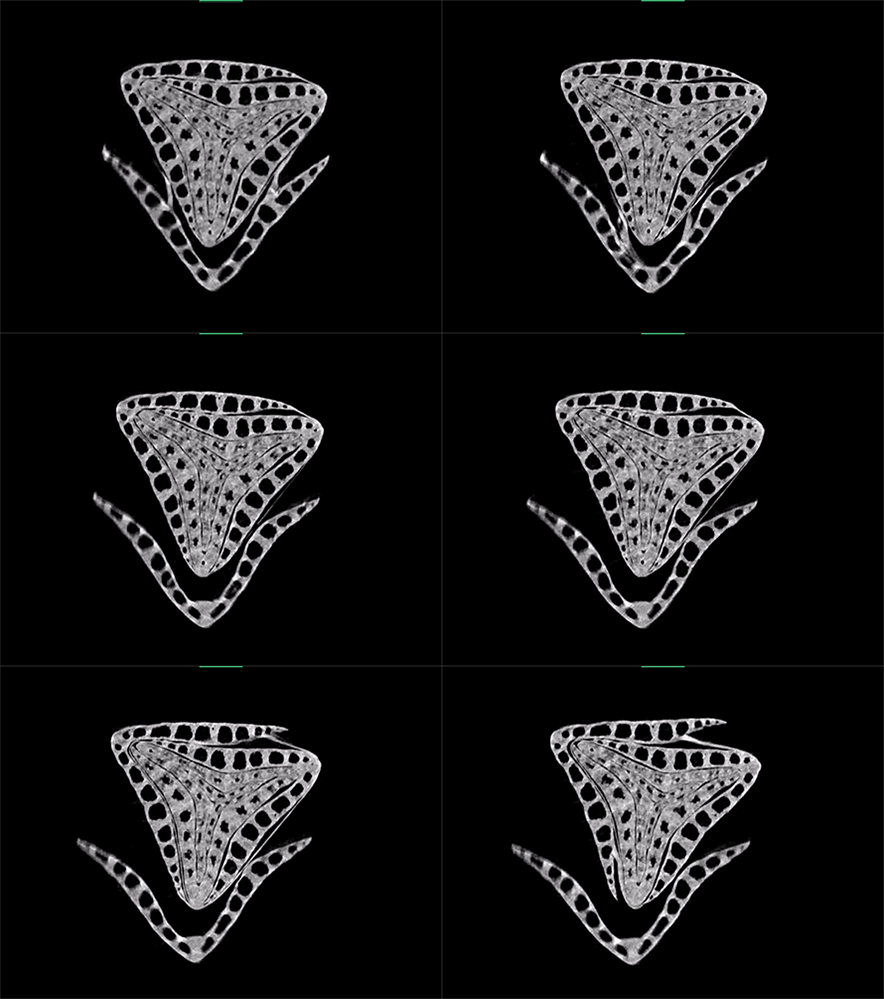
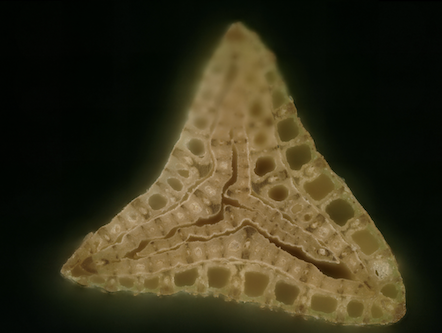
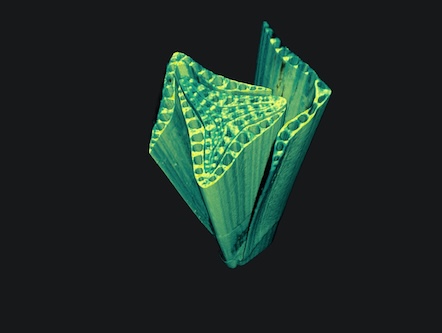
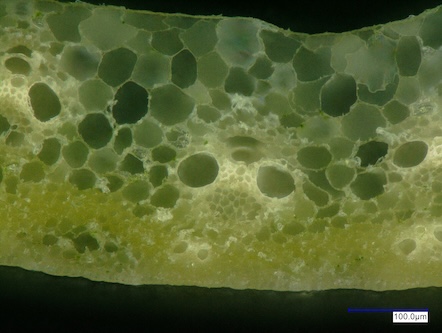
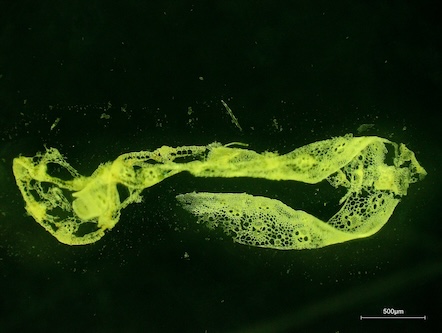
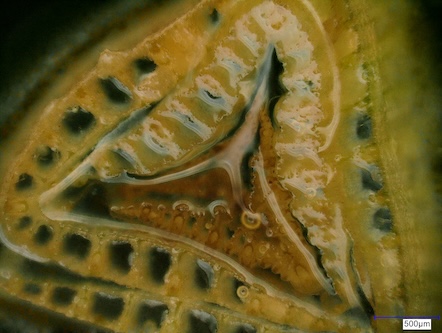
To understand the 3D structure of sedges and reed canary grass, microcomputed tomography scans are used. Here, sedges appear triangular and leaves run around each other in a helical pattern.
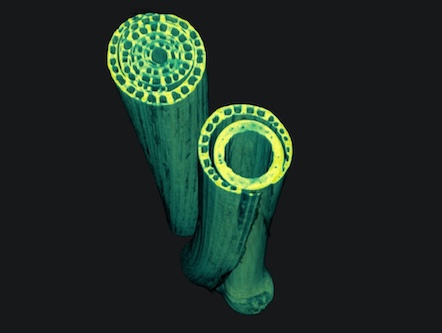
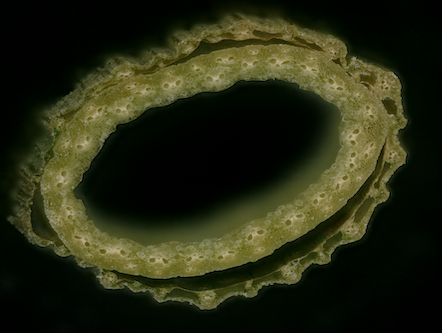
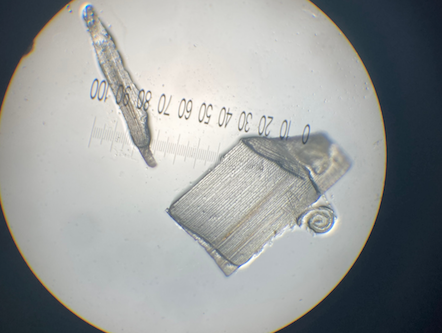
Reed canary grass has hollow, jointed, round stems.
Water saturated sedge possess a similar leaf geometry as in the dry state as shown in the CT scan.
Similar to sedge, reed canary grass possesses a similar leave and stem geometry as in the dry state as shown in the CT scan.
By combining knowledge of plant structure and properties with traditional craft techniques and exploring future technologies, new design and architectural applications can be developed. One key technique being explored in this research is coiling.
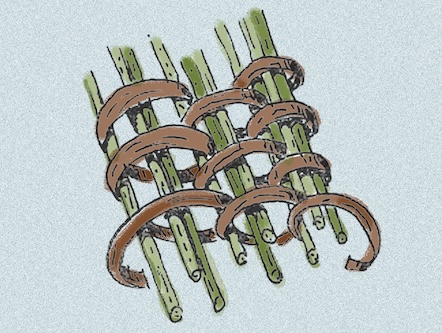
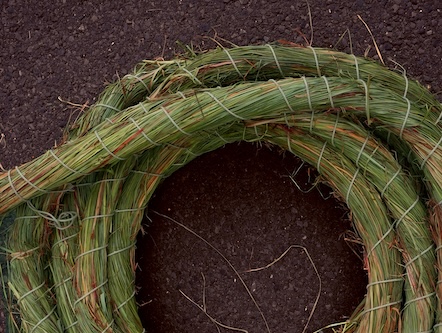
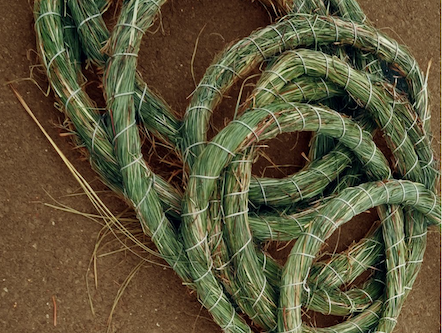
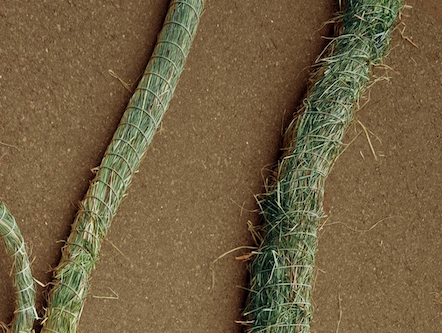
Coiling is one of the oldest basketry techniques, where a continuous fiber is wound around a core of fibers, here whole plants. This is only one form of coiling, which can also mean bundling fibers and holding them together with a continuous fiber.
In initial experiments, whole plants were formed into coils. Unlike traditional basketry, the technique focuses on creating a separate coil, allowing more freedom in form creation rather than building a fixed three-dimensional shape.
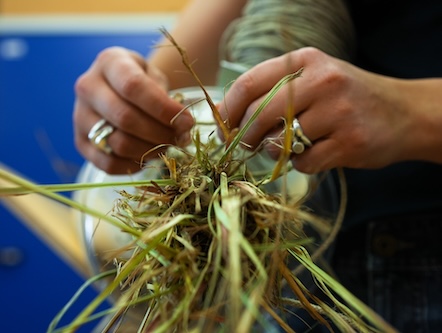
The plants were sorted by species and fed through funnels made of plywood. A custom tool was used to wrap a hemp rope around the plants. The coil’s diameter, the tightness of the hemp rope, and the wrapping angle can be adjusted to achieve different results.
Creating the coil before forming the final shape allows for increased flexibility in designing and improvising different forms. This process simplifies upscaling compared to traditional basketry where both the final shape and the length of the coil must be known from the beginning.
During the making process, further insights emerge on how the properties of the coils can be modified. For example, the density or amount of plant material inside the coil determines flexibility and rigidity.
Another important factor is the length of the plants, which varies depending on when they are harvested, and how parallel the plants are aligned.
Using shorter, less aligned plants results in a more flexible coil, but with lower resistance to tension and twisting.
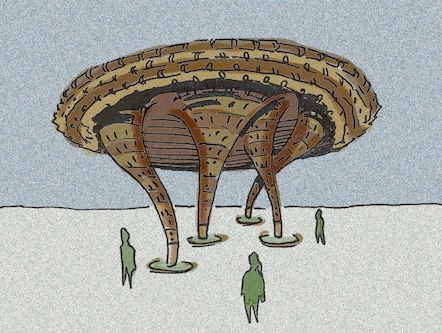
The creation of a 30-meter-long coil enabled experiments with various forms. One of the first shapes created was a platform, or “island.” The method was inspired by traditional coiled baskets, where the beginning and end of the coil are secured to form a closed object.
Initial tests on form, connection, and stability showed that a firmer coil is needed to withstand pressure; otherwise, the coil shifts when stepped on. This prototype offers insights into fabrication and design while raising new questions.
-
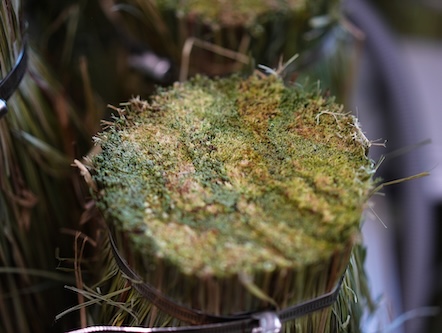
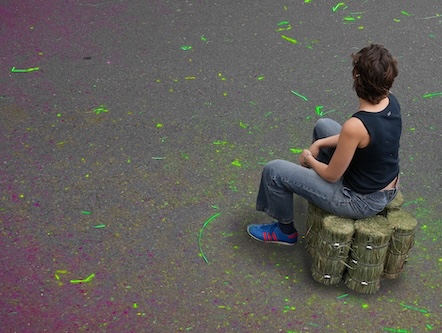
Another approach uses the material in urban spaces. Grass coils were clamped and cut into segments, creating building blocks that retain their shape but can shift internally based on packing density. This approach allows for stacking and connecting the blocks without additional material.
The mechanical stability of the coil exceeds that of the individual plants by far. While individual plants may not be stable enough for architectural use, when combined in large quantities as coils, they become more stable and can be shaped into forms.
As a biomaterial, grasses have a shorter lifespan than most synthetic materials. Working with biomaterials naturally requires managing their decay and impermanence. This can involve ongoing maintenance or accepting the material’s eventual breakdown.
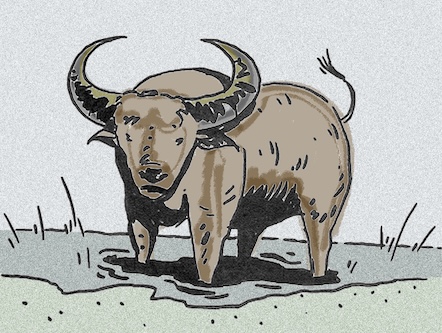
Once coiled structures have fulfilled their purpose, they can be returned to natural material cycles. Since no toxins or long living substances are used in their production, objects made from paludiculture plants can decompose naturally or even be consumed by local wetland animals, such as water buffalos.
Our design aims to research the properties of the full-length plants and their potential at architectural scales. Afterwards, materials can be industrially processed in a cascading use approach, where plant structures are disassembled for further lower-value applications.
A central goal of this research project is to explore how boundary objects can foster new connections across various research fields. The coiled objects produced in this study serve as boundary objects (Star and Griesemer 1989).
Our research objects embody an interdisciplinary blend of science, traditional craftsmanship, and design disciplines, aligning with the concept of boundary objects. They exist at the intersection of multiple fields, allowing each discipline to interpret and use them in unique ways.
-
The research objects have flexible meanings: as biological resources, sustainable materials, functional forms, and mediators between craft, design, and digital fabrication. Their versatility demonstrates how boundary objects foster dialogue across diverse perspectives.
read more